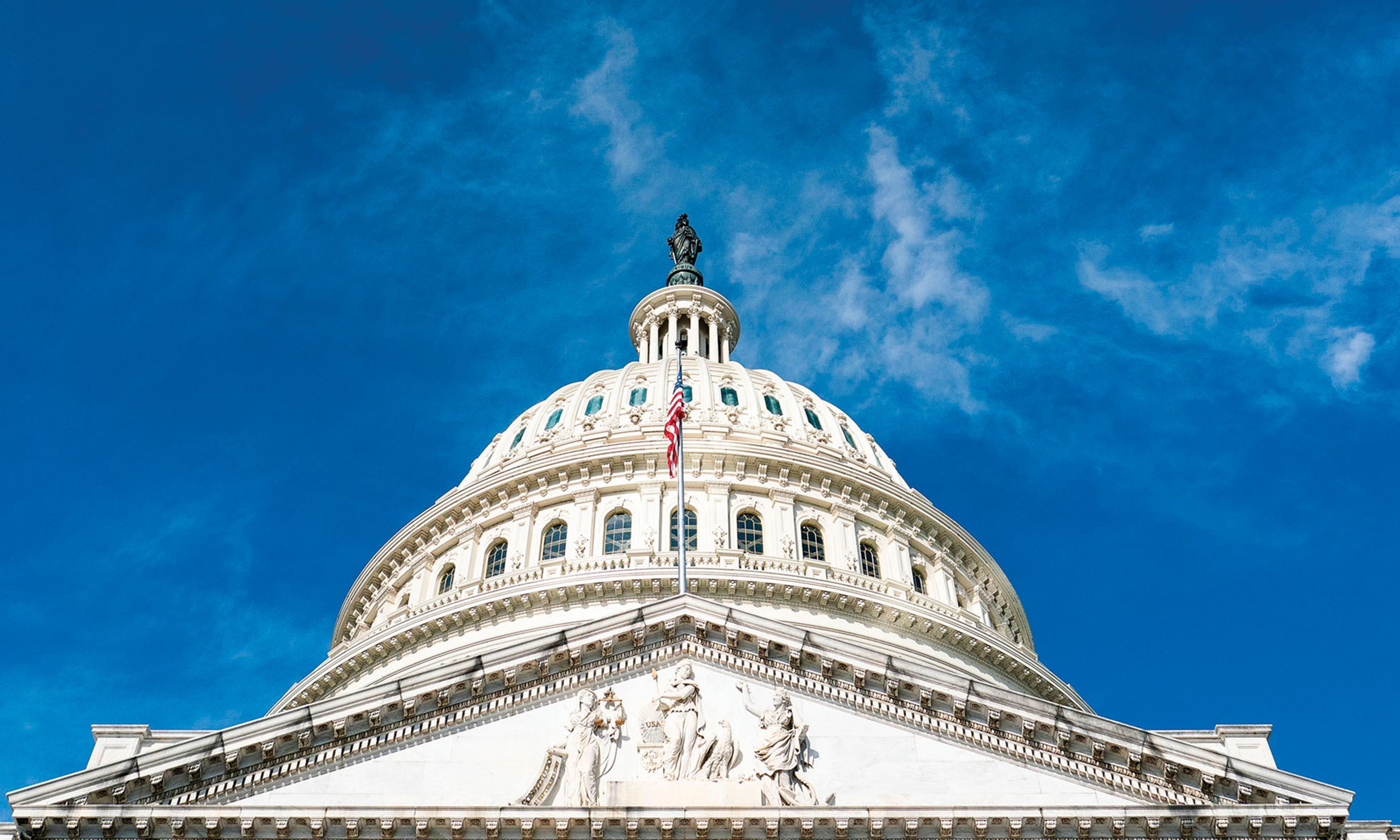
After the election of 2004, Republicans controlled 55 seats in the Senate. It is anyone’s guess whether after this election they will have even 41 seats — the minimum number to prevent cloture, which requires 60 votes. If they cannot filibuster, conservatives face a grim future. Come January, it could include a President Obama with no checks whatsoever on his ability to enact new legislation and tilt the Supreme Court significantly to the left.
Potential losses abound for Senate Republicans this year, with even a single pickup unlikely. Early on, the GOP simply failed to mount a credible challenge to the ailing Tim Johnson of South Dakota, whom they had nearly defeated in 2002. Their best pickup opportunity is against Mary Landrieu of Louisiana, but her challenger, Louisiana treasurer John Kennedy, lags far behind in the polls.
The real action is on the defensive side, where Republicans’ future is even cloudier. The categories for races there include “Hopeless,” “Pretty Bad,” and “Still Pretty Bad.” There is also the one-member category of “Maybe, If He Is Acquitted”; believe it or not, that may be one of the GOP’s more promising races.
The open Republican seats in Virginia and New Mexico fall into the “Hopeless” category. Neither of the Republican candidates — former governor Jim Gilmore in Virginia, and Rep. Steve Pearce in New Mexico — has managed to cut into his opponent’s double-digit lead. Both of these races were left for dead early on by the national Republican party.
The category of “Pretty Bad” includes several races in states that were once believed to be at least competitive for Republicans. Democrats enjoy clear leads in Minnesota (over incumbent Norm Coleman), New Hampshire (over incumbent John Sununu), and Colorado (where a seat is open).
Sununu, who made no serious mistakes during his freshman term in the Senate, has managed through dogged persistence to narrow a double-digit deficit against Jeanne Shaheen, a former governor, to the single digits, but he trails all the same. Shaheen’s most effective tactic has been to pin President Bush to the incumbent’s tail with her advertising, even using the song “Where You Lead, I Will Follow” to describe their relationship. She has vigorously attacked Sununu’s vote in favor of the financial bailout, to great effect. It is a dramatic reversal of 2002, when Bush’s popularity helped Sununu narrowly defeat Shaheen.
In Colorado, Republican Bob Schaffer, a conservative who left the House in 2003 in accordance with a pledge to serve no more than three terms, trails Rep. Mark Udall, the Democrats’ Senate candidate. Schaffer’s efforts to highlight Udall’s left-wing record have had little success in diminishing the Democrat’s edge. This race may be as close as it has been in part because of Schaffer’s popularity and in part because of ineffective Democratic tactics — they spent the spring demonizing Schaffer as a tool of Big Oil because of his stance in favor of more oil drilling, right before gasoline hit $4 a gallon and even Udall had to endorse offshore drilling. But Schaffer remains a clear underdog in a state where the Obama campaign has invested heavily.
Republicans believed they had caught a break in Minnesota when Norm Coleman drew comedian Al Franken as his opponent. It has not proven to be so funny. As Obama surges in Minnesota, Franken has taken a narrow lead in most polls. The entry of Independence-party candidate Dean Barkley into the race, however, has made it unpredictable, since he attracts nearly 20 percent support. Coleman has now promised to stop running negative ads — a novel strategy that in most situations would fail, but the consequences of which cannot be predicted in the current environment, especially in a state that prides itself on being “Minnesota nice.” Recall that Coleman won here in 2002 after Democrats put on a public display of bitter partisanship at the funeral of the late Paul Wellstone.
The “Still Pretty Bad” category also includes three states once believed to be safe for incumbent Republicans. In Oregon, Sen. Gordon Smith, a GOP moderate, tried to buck this year’s trend by boasting of his ties to, and willingness to work with, Obama. After leading through most of the summer, Smith trailed Jeff Merkley, speaker of the state house, in the two most recent surveys.
At this point, few Republicans are confident about the reelection of Sen. Elizabeth Dole in North Carolina. In six of the seven most recent surveys, she trailed Democrat Kay Hagan, a state senator who has eviscerated Dole for her residency in Washington and an alleged neglect of affairs back home.
The outcome of Alaska’s Senate race, between Republican incumbent Ted Stevens and Anchorage mayor Mark Begich, may turn on a legal proceeding — Stevens’s ongoing federal trial. If he is acquitted of lying about alleged gifts from a corrupt oil-services firm on his Senate financial-disclosure forms, Stevens might survive the election. For now, he trails narrowly in the race, but a judge has thrown out much of the critical evidence against him.
At least three other Senate races are also uncomfortably close for Republicans playing defense. In Mississippi, Roger Wicker, who was appointed to office upon Trent Lott’s resignation, is holding a slim lead as he tries to keep his seat in a special election. Strong Obama turnout could hand the seat to Democrat Ronnie Musgrove, a former governor. It does not bode well for Republicans that Democrats seized Wicker’s vacated House seat in a special election after he entered the Senate late last year. Sen. Saxby Chambliss, a Georgia Republican, enjoys slightly better prospects, but he too clings to a single-digit lead in his deep-red state.
Even Senate minority leader Mitch McConnell, of Kentucky, is in a much closer race than Republicans would like to admit. His method of staving off the challenge has been to promise heaping servings of legislative pork to Kentucky. His advertisements mention his ability to bring earmarks to the state, and his wife, U.S. labor secretary Elaine Chao, recently boasted of the $500 million her husband brought home in pork projects last year. The pork strategy has not prevented McConnell’s opponent, Bruce Lunsford, from narrowing the gap to single digits.
Anything can happen in this campaign’s final weeks, but Republicans have too many vulnerabilities to defend in the Senate, and they are facing a bloodbath that could leave a President Obama completely unchecked. A filibuster-proof Democratic majority in the Senate would offer Obama a chance to reshape America’s social and fiscal policies, perhaps permanently.
This year’s failed cloture votes provide some indication of what that could mean, as do Obama’s campaign promises. The Employee Free Choice Act, which would abolish workers’ guarantee of secret-ballot elections when they decide whether to be represented by a labor union, received 51 votes toward cloture in June 2007, with Sen. Tim Johnson, a South Dakota Democrat, absent. With just a few more seats, Democrats could also put middle-class children into government health care through the State Children’s Health Insurance Program (SCHIP). Carbon cap-and-trade legislation, which would significantly increase consumer energy prices, received 48 of the 60 votes needed for cloture, but that was in the absence of Obama, Hillary Clinton, Joe Biden, Ted Kennedy, and two other Democrats. The Democrats’ energy bill, which provided no actual new energy but did include a crackdown on “speculators” and a 25 percent windfall-profits tax on oil companies, failed in June with 51 votes toward cloture, with three liberal Democrats absent.
Obama’s plans for higher income and capital-gains tax rates could be made permanent immediately in a filibuster-proof Senate. His judges, no matter how radical, probably would be confirmed without any serious difficulty.
A filibuster-proof Democratic majority could also help Obama keep his promise to Planned Parenthood to sign the Freedom of Choice Act, which would re-legalize partial-birth abortion and strike down all the other incremental gains that pro-lifers have made in law on the issue. The bill, which has never received a floor vote, currently has 19 Senate co-sponsors, all of whom are certain to be in the Senate next year, except for Obama himself.
Voters may well hand Democrats a 60-seat Senate majority in the 111th Congress. Before they do, they should at least be aware that they would be handing the Left the keys to the store.





Comments