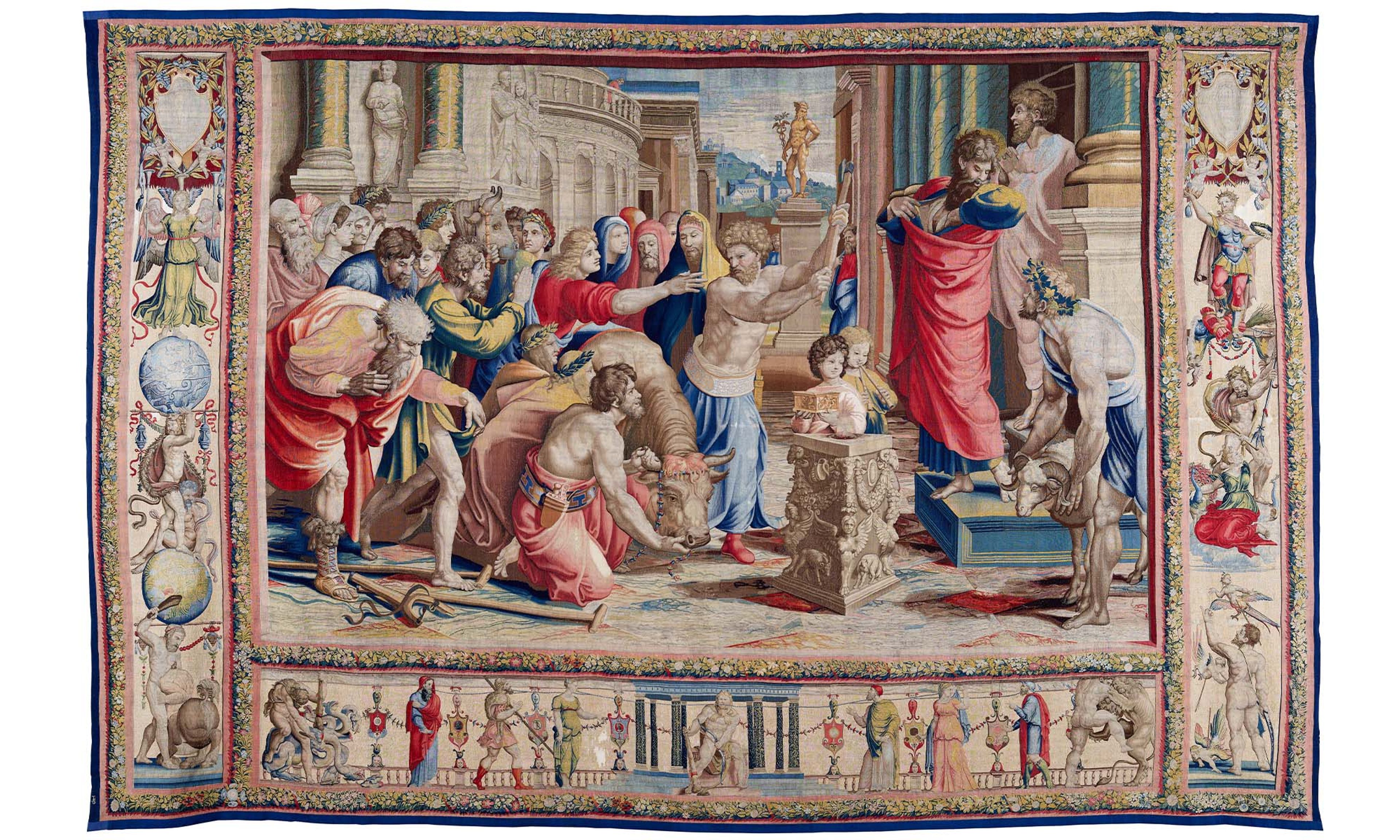
This past weekend, I reviewed the first half of the Met’s Raphael: Sublime Poetry, ending with some of his portraits, among them his depiction of the young Florentine banker Bindo Altoviti, a picture the artist and early art historian Vasari called “stupendissimo.” So is the Met exhibition. With more than 40 Raphael paintings and over a hundred of some of his most vibrant drawings, there’s splendor galore. It’s the first New York blockbuster covering the work of the Renaissance’s famous, revered savant, tastemaker, and visionary.
Raphael (1483–1520) shot to fame and fortune fast, moving from cultured, rich, but tiny Urbino to Florence by the time he was a bit older than 20. His signature Madonna and Child paintings and a handful of altarpieces made his reputation as both an innovator and a man bound for Rome. There he landed in 1508, as a papal intimate at the Vatican. Pope Julius II, from the della Rovere family, and his successor, Pope Leo X, from the Medici family, hated each other as only Italian Catholics can, lobbing malocchios — the evil eye — the size of Uranus at each other, but both adored Raphael.

Comments