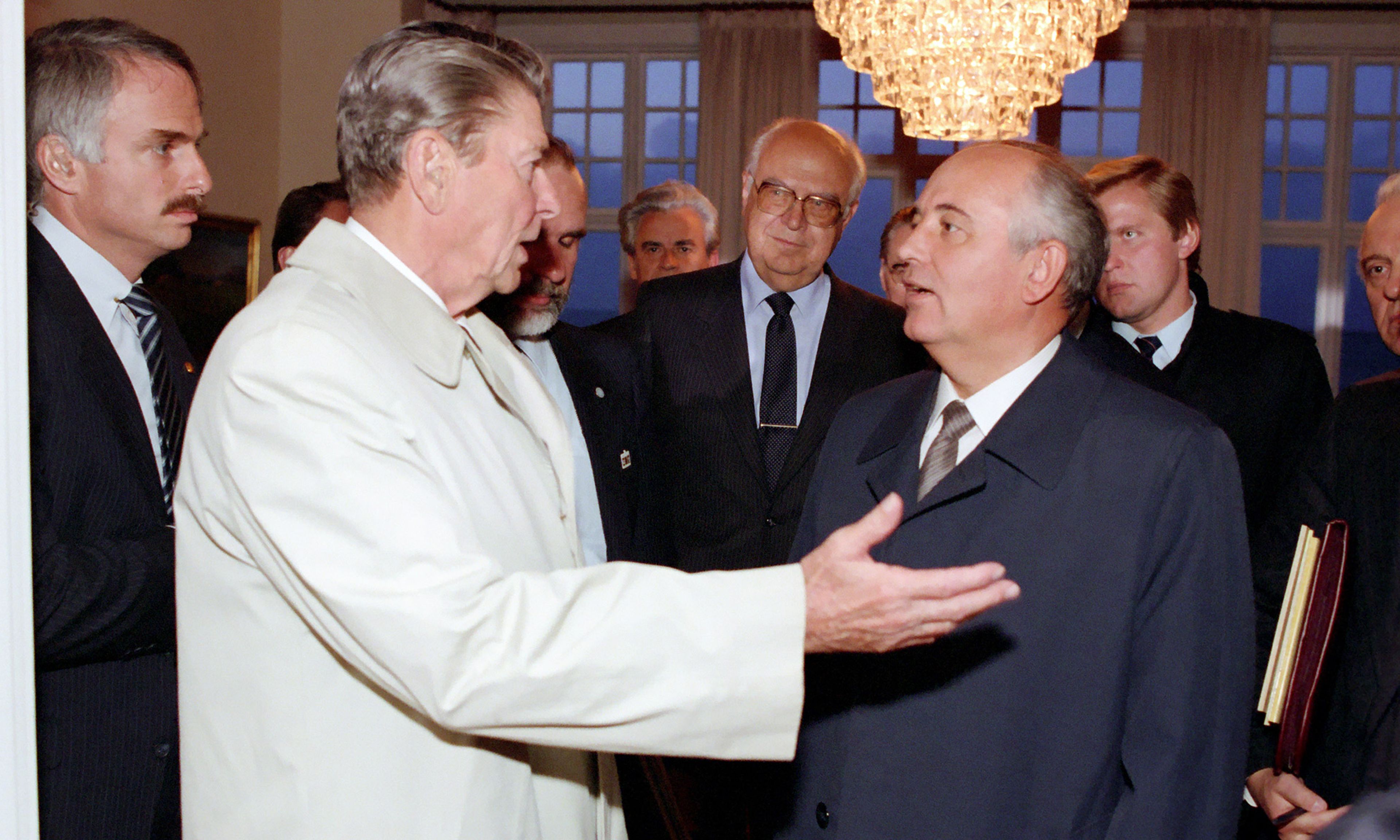
President Ronald Reagan’s approach to foreign policy was not to preside over a system or to perpetuate a set of arrangements but to change the system, alter arrangements, and take us to a better place. He was troubled by the stalemate of the Cold War. He knew that conflicts in the developing world could be debilitating and was keenly aware of the budgetary drain of defense spending. But didn’t each of these concerns also apply to the Soviet Union? With the right approach, the right tools, and the right initiatives, the Soviet Union would be the one worried about a stalemate or developing-world conflicts or economic pressures. Its system could not survive an all-out competition. When asked his view of the Cold War, Reagan replied: “We win; they lose.”
Reagan adopted six tactics to push back against the Soviets: (1) Get the economy moving again, to reassure the general public and pay for defense increases. (2) Articulate an affirmation of liberty and Western values, to remind the world that this was not merely a geopolitical rivalry but that there was a profound moral dimension as well. (3) Rebuild America’s defenses, to meet or best the Soviets in every sphere of military competition. (4) Focus on technology, so that the U.S. could outcompete the Soviets. (5) Raise the cost of Soviet adventurism in Central America and elsewhere: the Reagan doctrine. (6) Do all this in an alliance structure that would earn the support of the free world.




Comments