
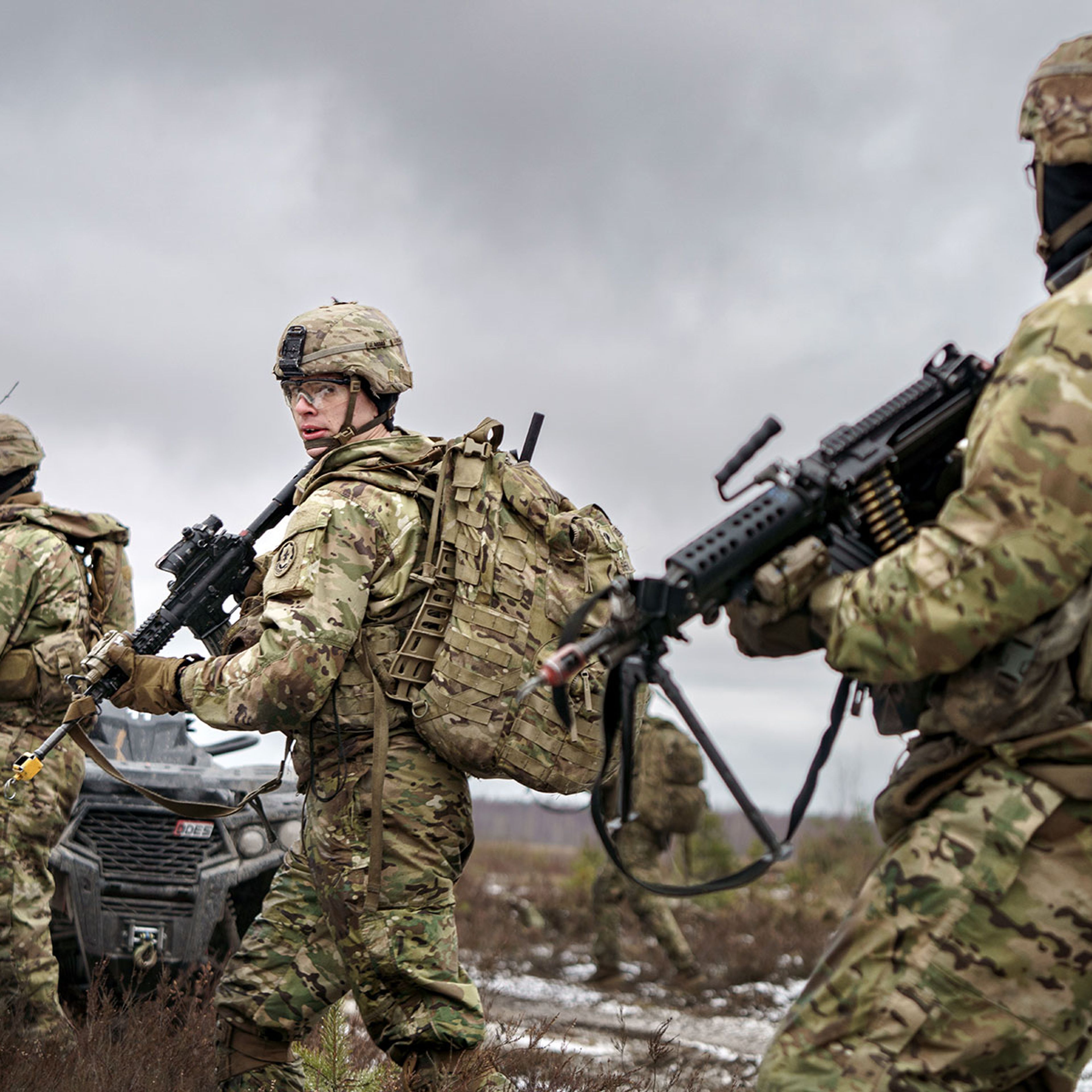
In every movement or institution, there is a generational turnover that can be discomfiting. A shift of emphasis or perspective can be taken as an accusation. This is currently happening on the right as younger voices advocating for more “restraint” in the use of America’s military rise in stature in the party and in the broader conservative movement. Their critique is starting to sting, and, consequently, the yelps are getting louder.
Such a thing should be expected. If anyone had forgotten, Matthew Continetti’s recent century-spanning history of the American right demonstrates that skepticism of American foreign adventurism, and a genuine repudiation of anything that smacks of imperialism or entangling alliances, is native to the American right and was natural for many American conservatives before the Cold War, even for William F. Buckley Jr. No surprise then that, as we enjoy more and more distance from the Cold War, more conservatives are coming to the same conclusion that Cold Warrior Jeane Kirkpatrick did in the early 1990s. “Most of the international military obligations that we assumed were once important are now outdated. Our alliances should be alliances of equals, with equal risks, burdens, and responsibilities,” she wrote. “It is time to give up the dubious benefits of superpower status and become again an unusually successful, open American republic.”



Comments