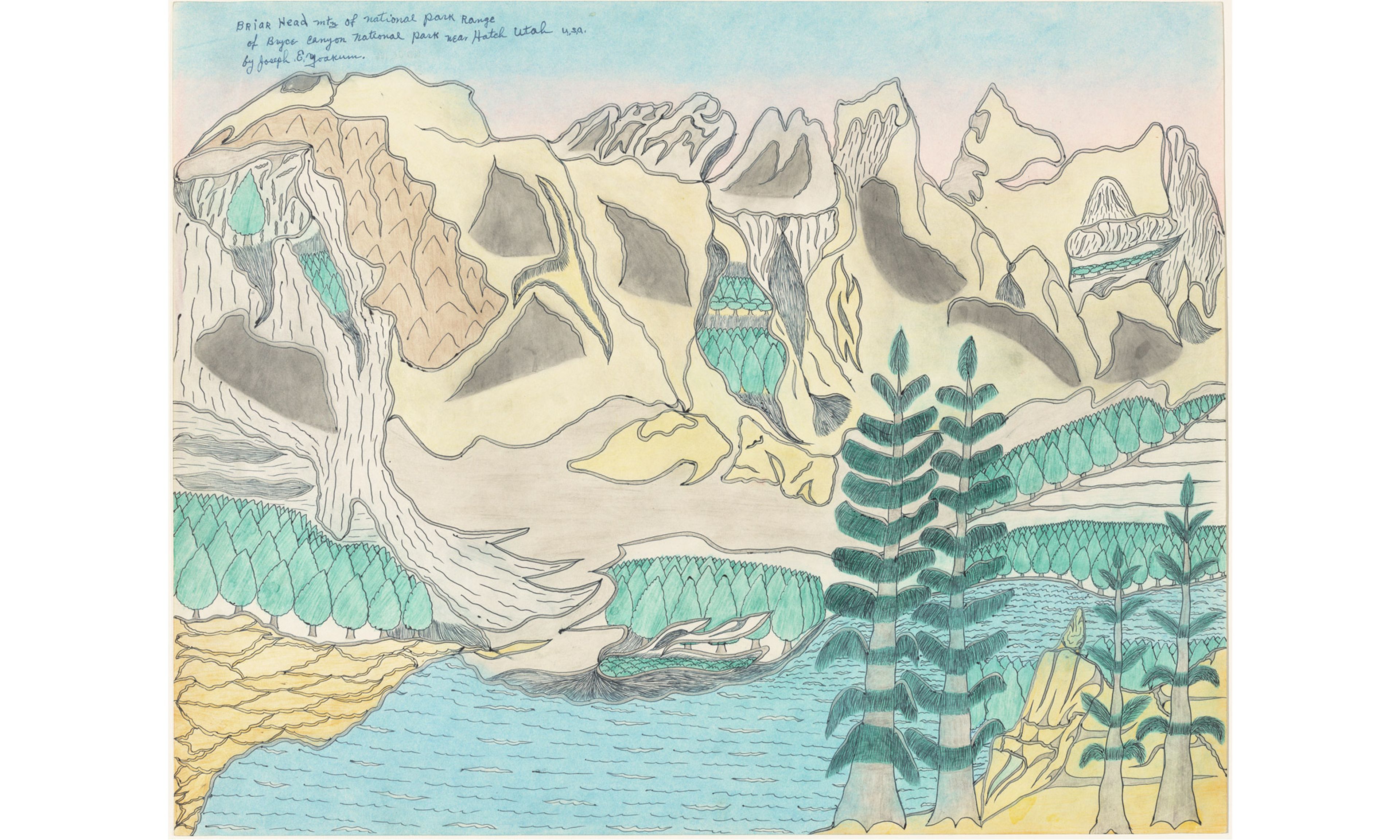
Outliers and American Vanguard Art at the National Gallery is a brilliant, rambling show. I’d recommend it for its wild art alone but there’s a serious conversation happening. It’s about hierarchies and boundaries and how we judge what’s mainstream and what’s marginal, as well as who is “we.”
The divide on the docket is a tricky one. On one side are “credentialed” artists — artists trained in good art schools, living on the East Coast or West Coast, who breathe the oxygen pumped from dealers, collectors, academics, and critics. On the other lie the “outliers.” Over the years, these artists have been called folk artists, outsiders, even makers of “art brut.” They’re unschooled, most live under rocks, many have ecstatic or spiritual visions, some are patently crazy. The show qualifies the two groups further. The credentialed artists it includes are the avant-garde ones, the pushers of envelopes who try new things while still orbiting established taste. They acknowledge debts to the past. The “outsiders” can’t be charming, hokey, or sentimental. Grandma Moses is nowhere to be found. All these qualifications work without the show feeling like too much inside baseball.
[jwplayer QK8DmWJb-wKJ9CRQU]
The show focus on three periods when American avant-garde artists were most engaged with outsiders. The will to classify is tough when we’re thinking about these artists, because no one’s a team player, ever. Still, grouping people is a natural human impulse and a useful way to consider quality.
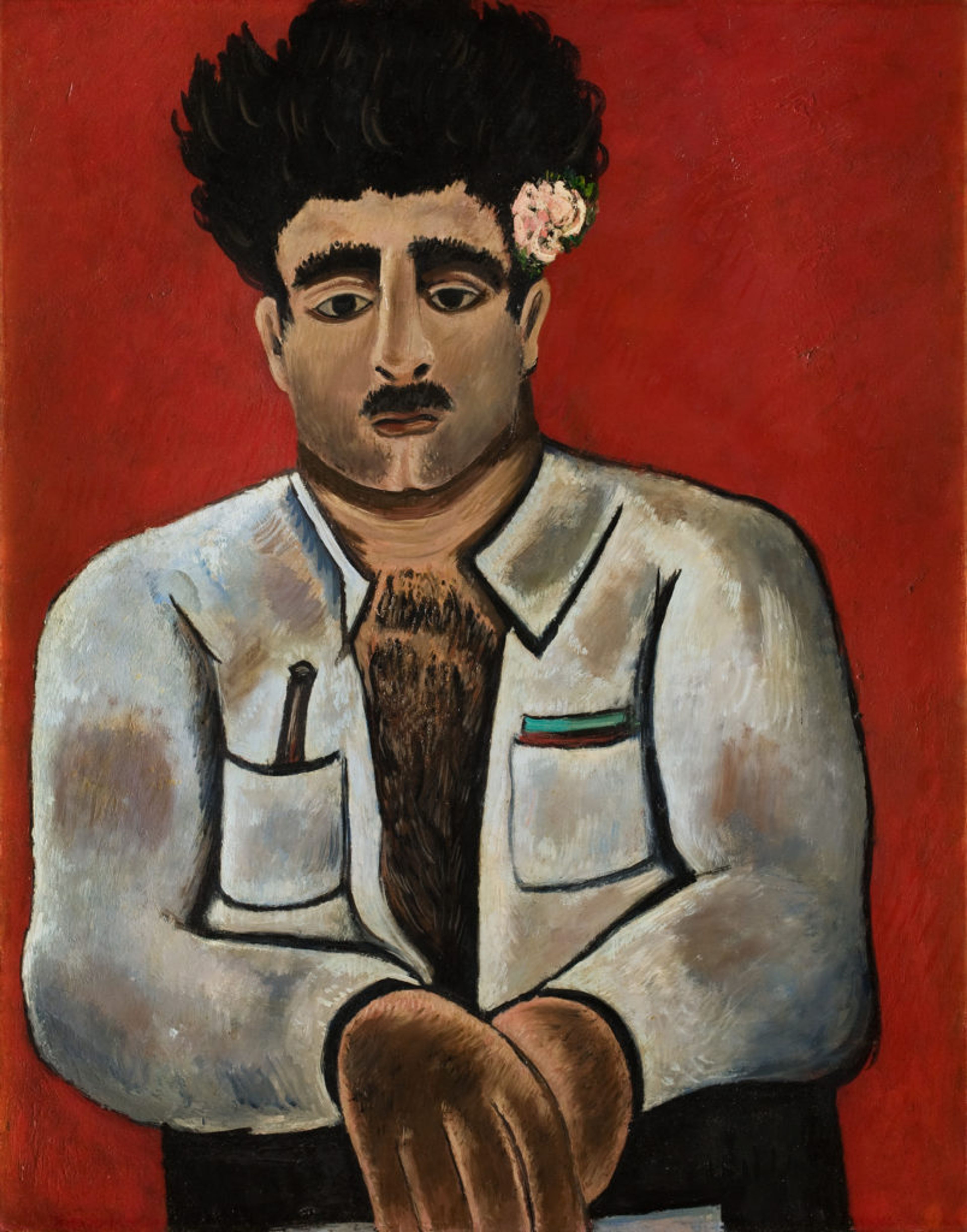
The first period is straightforward. Starting in the early 1920s and through the early 1940s, artists, dealers, critics, and collectors began to appreciate the bold colors, flat surfaces, and simple, geometric shapes of portraits painted by itinerant artists in the Northeast in the 19th century, what most of us call “folk art.” The work might have been primitive, but it was authentically American. It was WASP aboriginalism. Marsden Hartley and Charles Sheeler are examples of artists who absorbed its rough, totem-pole qualities. Folk art’s early collecting class was born. The curator Alfred Barr found weirdness, subversion, and degrees of quality in its naïveté, and he mounted landmark shows at the then new Museum of Modern Art.
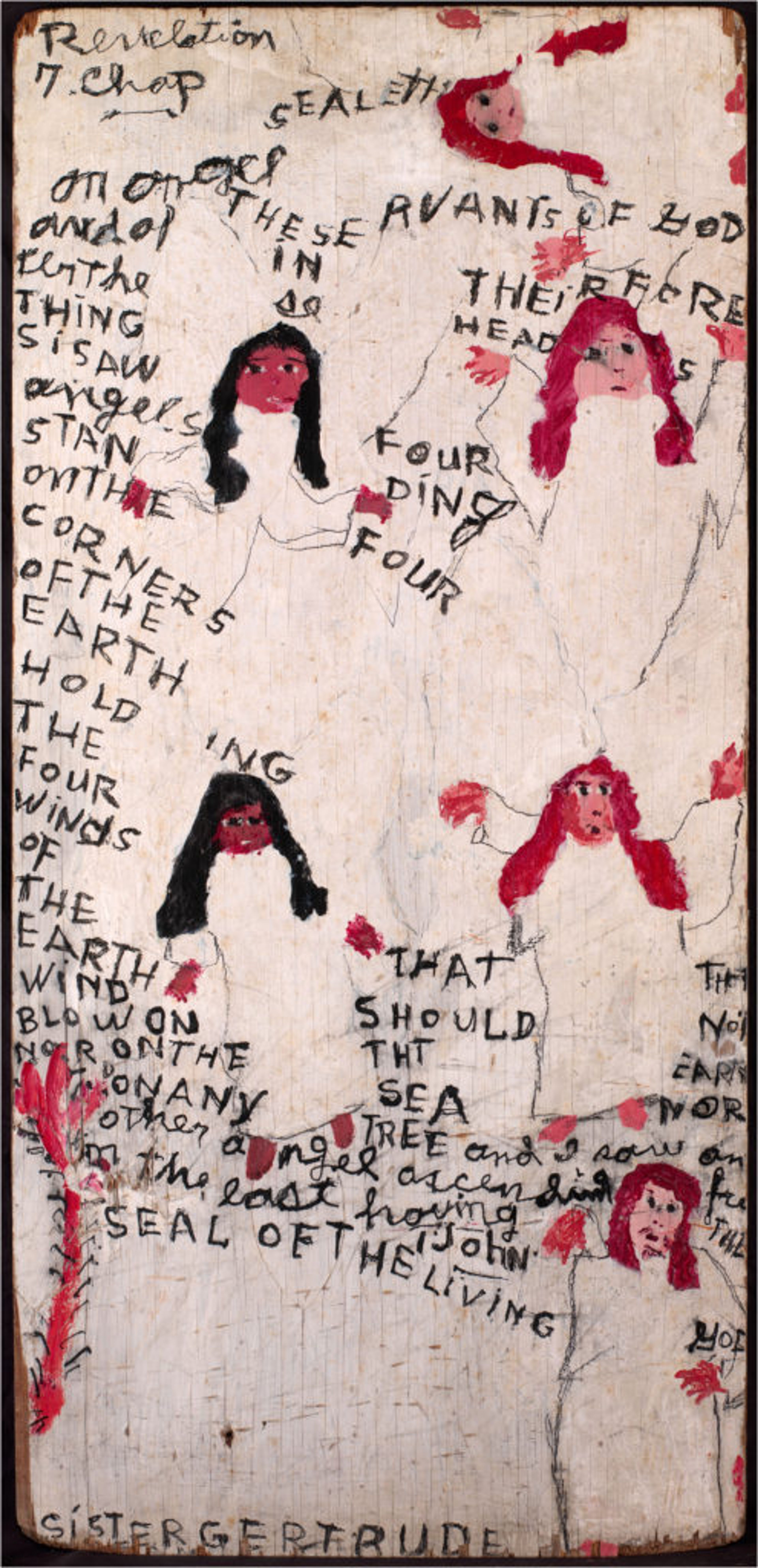
Between 1968 and 1992, another take unfolded. Outsiders with certified mental illness came into vogue. Others, psychotic or not, were autodidacts and fantasists such as Joseph Yoakum and the coincidentally named Jim Nutt. They created their own hermetically sealed universe. An off-the-beaten-track home helped them gain attention, and so did race. Critics and curators began to look at African-American artist communities in the South. Sister Gertrude Morgan was black and intensely, joyously, undogmatically religious. What was, in the past, the province of anthropologists newly appealed to makers of cutting-edge taste. It should come as no surprise that this period began in 1968, a date that triggered all sorts of rebellious thoughts, and included the acid-laced 1970s.
A third period between 1998 and 2013 was marked by “selective enfranchising.” A new consciousness was developing. It held that the art-history canon — what’s taught in colleges and universities and what critics reviewed — needed to open its doors to artists excluded because of sexism, racism, and “heteronormativity.” The “outliers” became more conventional in materials and forms but were likely to be women, gay, black, or transgendered. Arrow Shirt Men need not apply.
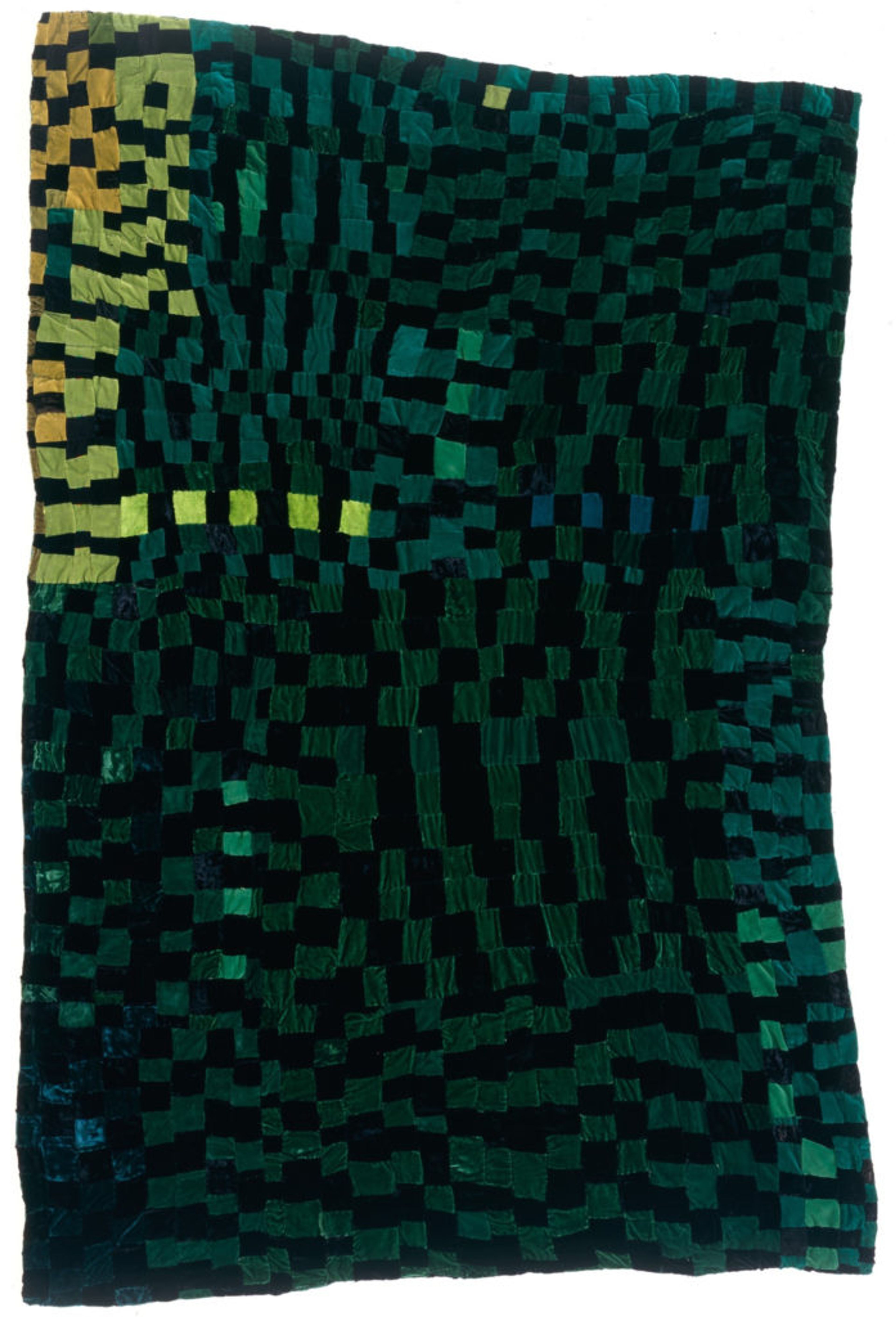
Each period, regardless of impulse, brought lots of new, good artists into the critical and creative mix and gave them markets for their work. Standards of quality sometimes eroded. A seminal show from this period was the overrated Gee’s Bend quilt show from 2002. The human-interest story behind the artists was compelling and should have been a Hollywood movie. The art — jazzy quilts — was nice and fun but nothing more.
The Outliers and American Vanguard Art catalogue is beautiful and copious, but there’s not much examination of individual works of art. It recounts the historiography of outsider art and how mainstream artists and critics categorized it and absorbed it. In that respect, Outliers might as well have been a book with no show. Some art scholarship doesn’t need an exhibition, or an exhibition of the relevant art isn’t engaging. My dissertation concerned the Spanish subjects of Washington Allston. There are only two. Hey, I’m a focused guy. I am the first to admit it would have made for a boring, arcane, and very small show. Outliers is enormous and rich with engaging art, but the art is a placeholder for mostly sound new thinking on critics, dealers, and how art history is made and taught. It’s still good art, though.
The last section does become a mess, in part because it explores a time when collapsing boundaries left lots of dust, smoke, and rubble. James Benning’s Two Cabins project includes, as the catalogue tells us, “a pair of cabins modeled on those built by Henry Thoreau and Ted Kaczynski, theorists of solitude who shared a love of nature and a commitment to civil disobedience.” Oh, and one made IEDs, killed three people and injured many more, but let’s not talk about that. At this point and elsewhere, curatorial discrimination and categorical distinctions seem to break down. The pudding loses its theme. For a few moments after I entered a gallery of work by Greer Lankton, Cindy Sherman, and other artists who would call themselves feminists, I thought I’d wandered into a different show by mistake. The exhibition had evolved into a showcase for funky artists the curators liked. I think what’s really happening is that the art market is now so diverse and so internationalized, that gatekeepers of all stripes no longer have power. Laissez faire has finally come to the art world. Our taste is at its most catholic. That’s not a bad thing.
[pullquote align=”left”]Americans as a people are ruthless appropriators and omnivorous consumers of inspiration. We beg, borrow, and steal with unique abandon and élan.[/pullquote]
America is an enormous, polyglot country. There’s never been a central taste-making academy like the Academy des Beaux-Arts in Paris. New York hasn’t been the art world’s hub for years. There’s great art coming from all parts of the country, by artists who never come to New York City and who draw not only on their personal visions or values but also on distinctive local traditions, be they tribal, African-American, Latin-American, or religious or driven by local materials. Americans as a people are ruthless appropriators and omnivorous consumers of inspiration. We beg, borrow, and steal with unique abandon and élan. Through new media, dissemination and attention grabbing are easier than ever. Mainstream versus marginal matters less than ever, if it matters at all.
Outliers is really three separate shows — at least. Its catalogue essays are so disparate that they don’t really reinforce one another or build a linear narrative. The show might have needed an intervention to impose more focus. Moreover, it was only one of three big shows on view at the National Gallery when I visited. Though the biggest and most complex, it wasn’t the museum’s headliner; the Cézanne portrait show was, and this raises a marketing and budget issue. Cézanne’s portraits, Outliers, and the Sally Mann photography retrospective each could hold an entire season on its own. In mounting these shows at the same time, the National Gallery competes against itself. No one would have the stamina to see all three, not to mention the smaller, divine loan shows on view, such as the Michel Sittow retrospective. Then there’s the superb permanent collection. Every curator wants to do his or her own scholarship, so there are many mouths to feed, but our big museums are now on a rotating-exhibition treadmill. Some rationing might be in order. Catalogues need to go on a diet, too. A few of the essays in Outliers could have appeared anywhere, with or without the show. Sometimes, less is indeed more.
I learned today that 51 of 54 students enrolled in Columbia University’s prestigious visual-arts MFA program met with the school’s provost to demand a refund of their $63,961 yearly tuition. For many reasons, they think the degree isn’t worth the money. Maybe the unschooled artist from a flyover state hearing strange voices as he sculpts with plastic straws has stumbled on a great truth.






Comments