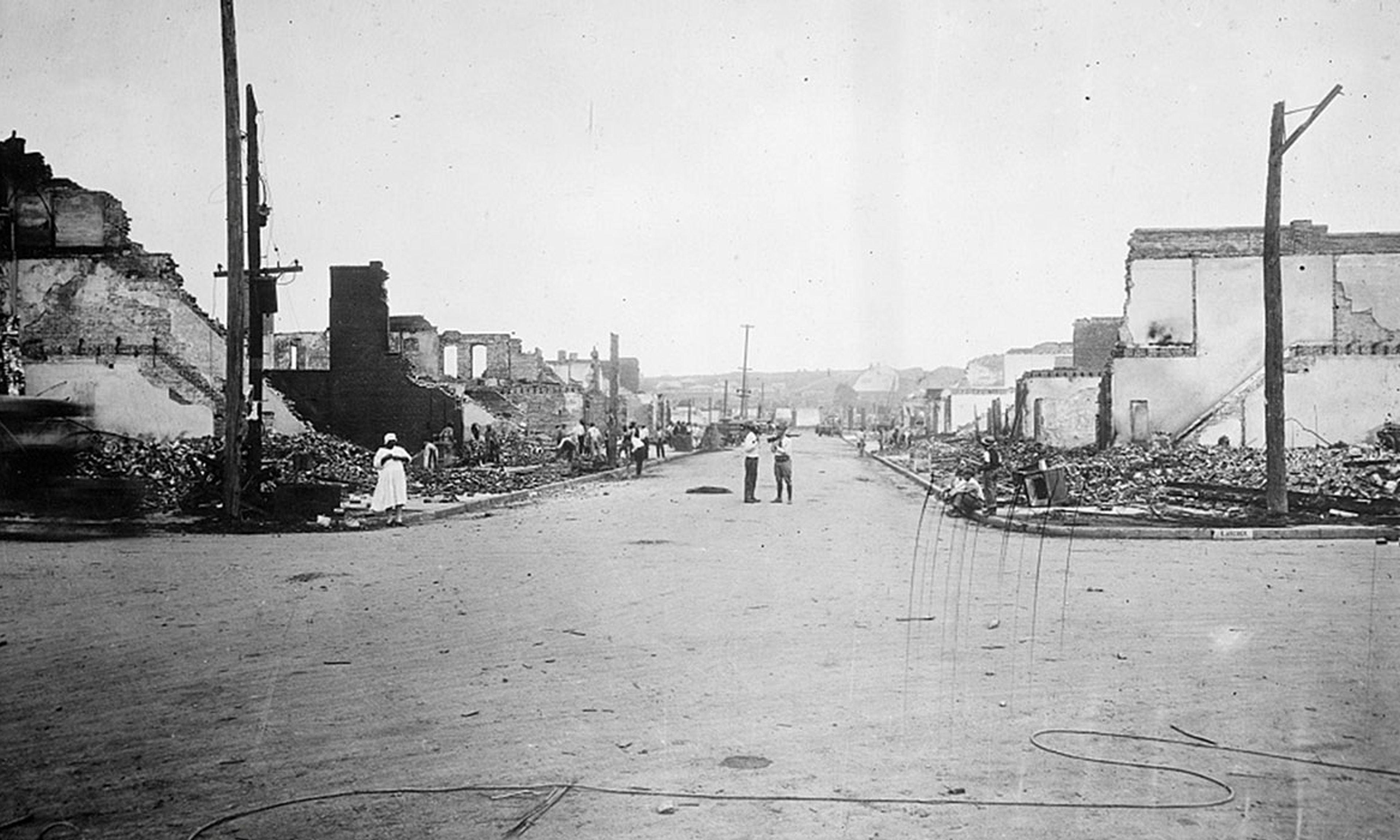
The city of Tulsa, Okla., recently joined the lengthy list of metropoli that are considering paying reparations to African Americans.
The city recently unveiled a $105 million “apology plan,” targeting not only surviving victims of what’s been known for decades as the 1921 Tulsa race riot — and is now being called the Tulsa race massacre — but also their descendants. The plan centers on a centi-million-dollar charitable trust, and includes $60 million to rehabilitate buildings in Tulsa’s Greenwood District, $24 million for “housing and home ownership for descendants of the massacre,” and $21 million for a “legacy fund” focused on paying for black-only college scholarships and acquiring land for black business concerns. The mayor of Tulsa, Monroe Nichols, also signed off on a decree making each June 1 the official city holiday of Tulsa Race Massacre Observation Day.




Comments