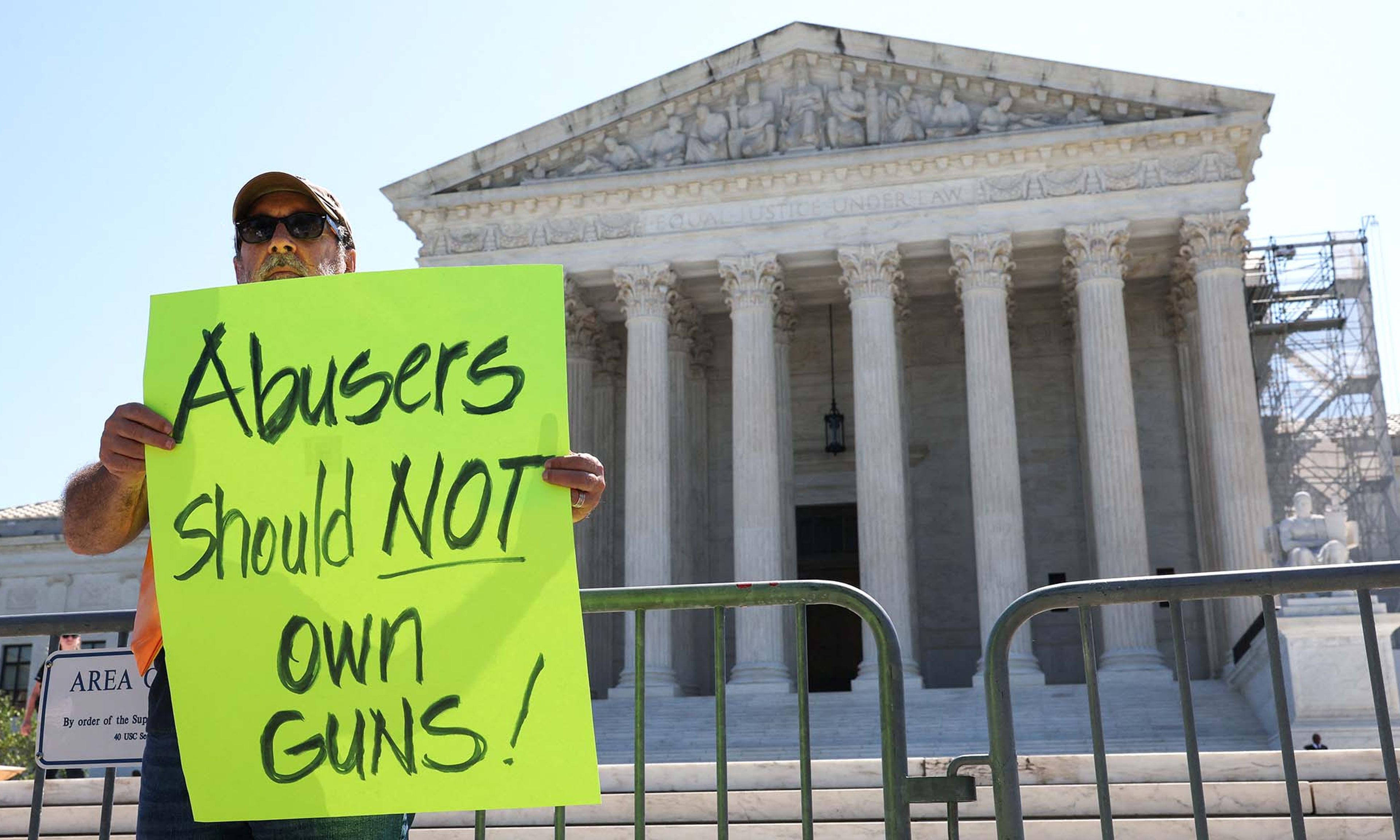
The Supreme Court has spent the 16 years since District of Columbia v. Heller (2008) defining the rights protected by the Second Amendment: the individual nature of the right to keep and bear arms, its applicability to the states, what kind of guns are “arms,” and what it means to “bear” them in public. All along, the Court has observed that the government always had the power to keep arms out of the hands of certain dangerous people. Today, in United States v. Rahimi, the Court began defining who those dangerous people are, and how the government may prove they are dangerous.
The Court ruled 8–1, in an opinion by Chief Justice John Roberts, that “when a restraining order contains a finding that an individual poses a credible threat to the physical safety of an intimate partner, that individual may — consistent with the Second Amendment — be banned from possessing firearms while the order is in effect.” The Court thus found that the federal law criminalizing gun ownership by someone under a domestic-violence-protection order, 18 U. S. C. § 922(g)(8), had been constitutionally applied to the defendant in this case. Only Justice Clarence Thomas dissented, arguing that Section 922(g)(8) went further than Founding-era laws: “the Court and Government do not point to a single historical law revoking a citizen’s Second Amendment right based on possible interpersonal violence” without a criminal conviction. The case nonetheless spawned five separate concurring opinions filled with lively debates about how courts use history. And it brushed aside, at least for now, serious questions about whether the protective-order system provides adequate due process of law.





Comments