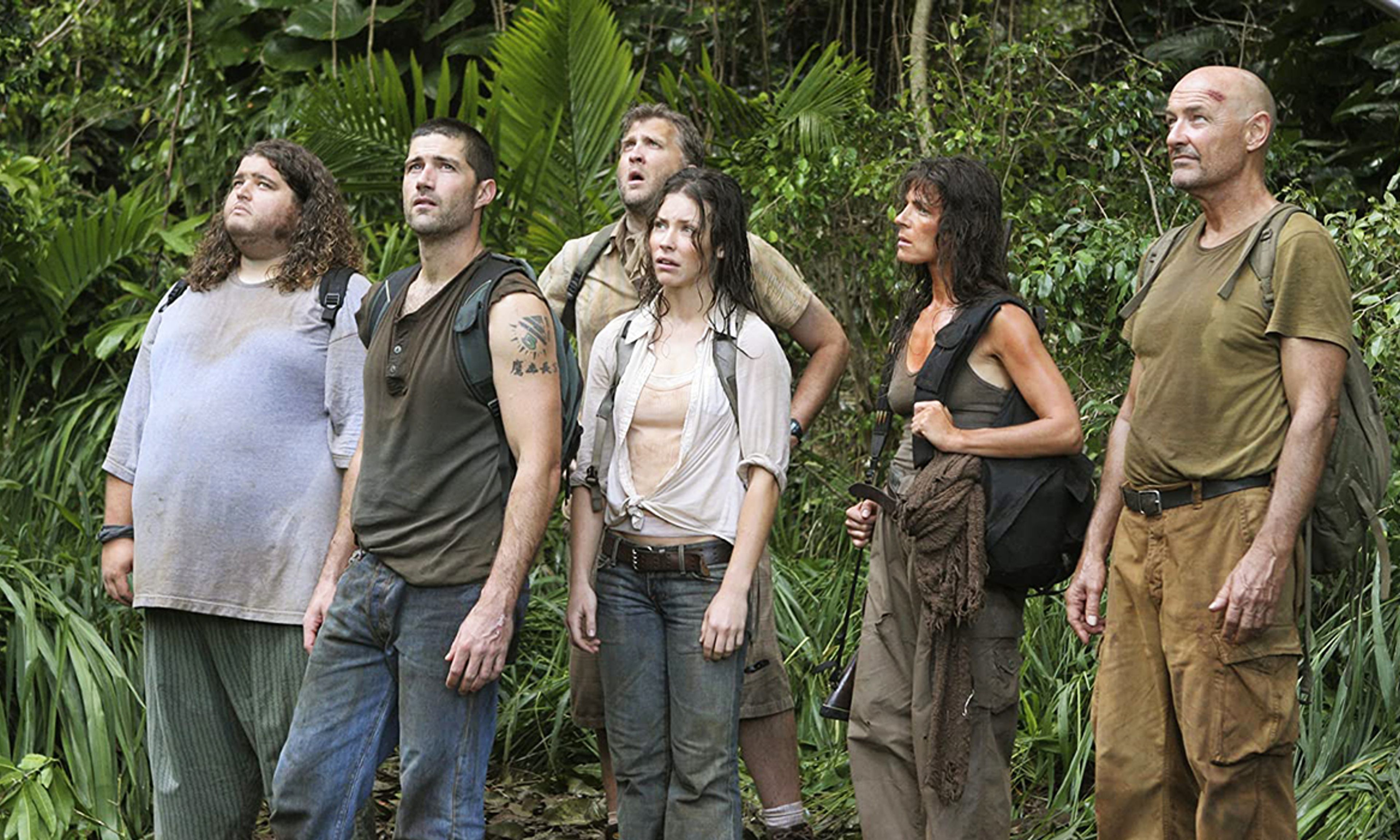
A man in a suit opens his eyes in the middle of a jungle. He doesn’t know how he got there. He is hurt but not seriously injured, though definitely disoriented. Out of nowhere, a yellow Labrador pops out of the dense foliage, then disappears back into it. The man gets up. He runs through the trees around him, reaching a beach. He looks around, as noises of creaking machinery and human anguish fill his ears. Before him are the remains of a plane crash. He was one of the passengers.
These were the opening moments of LOST, which premiered on ABC on September 22, 2004. Created by J. J. Abrams, Jeffrey Lieber, and Damen Lindelof, LOST was — to vastly simplify things — the story of the survivors of a plane crash that brought them to a mysterious island of far greater importance than it first appears. From its very first moments, it was an arresting, ambitious, and mysterious program, which had production values and a cast (and a budget) that more resembled those of a Hollywood movie than a network TV show. Many fans hooked by that first episode quickly became obsessed with this enigmatic, ensemble-driven drama. Fans like me. I watched every episode, browsed fan forums and Lostpedia obsessively, listened to the discussion podcast that showrunners Carlton Cuse and Lindelof hosted, and discussed LOST with other fans in the real world. For much of its run, LOST combined the devotion typically engendered only by cult phenomena with a strikingly mainstream appeal: At around 20 million viewers an episode at its peak ratings, it was one of the most popular shows on television.





Comments