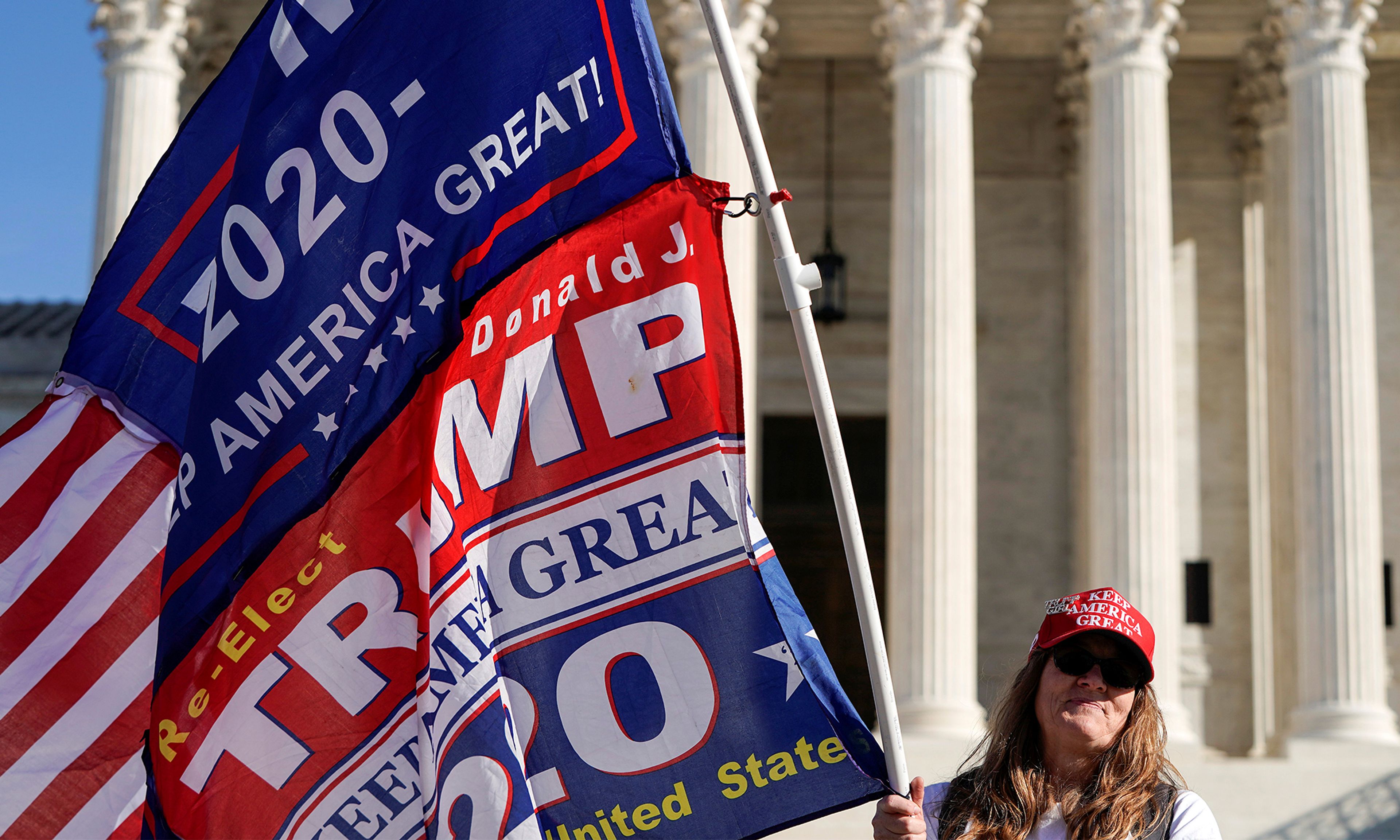
Even Donald Trump’s supporters should welcome the Supreme Court’s decision late Friday to deny Texas’s claim that four battleground states had unconstitutionally run their 2020 presidential elections. It reaffirmed the half-century conservative effort to restore constitutional limits on the power of the federal courts. It rightly returns to the political process the question of whether any widescale fraud occurred in the presidential election. President Trump technically can still contest the 2020 results, but under a process set out in the Constitution where such challenges have never succeeded.
In Texas v. Pennsylvania, Texas attorney general Ken Paxton filed an emergency complaint a mere week ago claiming Pennsylvania, Georgia, Michigan, and Wisconsin had violated the Constitution’s presidential-election system. Article II states that “Each State shall appoint, in such Manner as the Legislature thereof may direct, a Number of Electors.” In the four states, according to Texas, “executive and judicial officials made significant changes to the legislatively defined election laws” in violation of Article II. On the grounds that the COVID-19 pandemic required changes to election procedures, “these non-legislative changes did away with statutory ballot-security measures for absentee and mail-in ballots such as signature verification, witness requirements, and statutorily authorized secure ballot drop-off locations.”





Comments