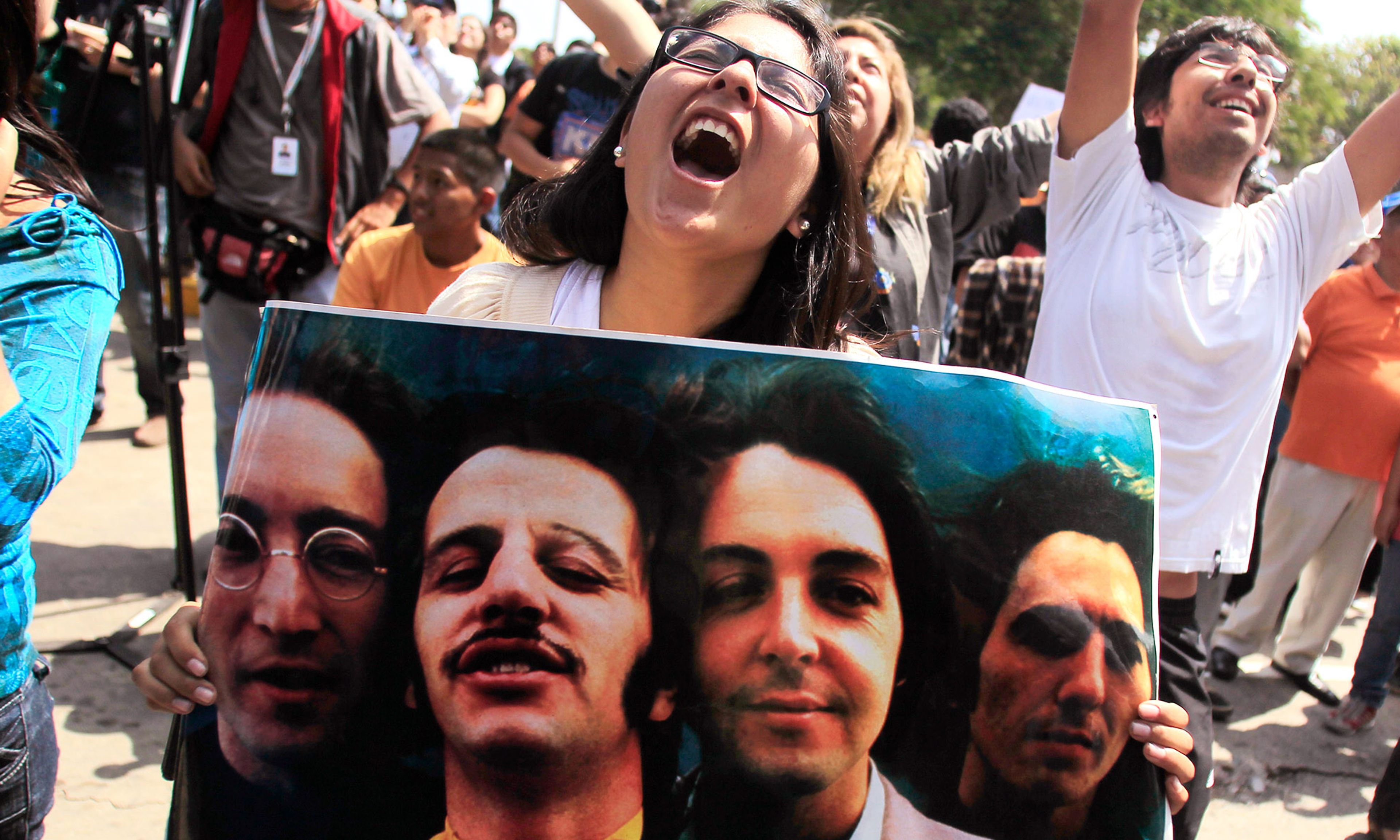
At the beginning of this week, we find ourselves in the eye of the hurricane as far as the Democratic and Republican conventions are concerned. The Democrats have just finished, the Republicans are about to begin, and the rest of us will soon be plunged back into the whirlpool of vacuous platitudes, self-serving propaganda, and partisan grievance from which we just emerged.
In the meantime, however, we should talk about the Beatles, simply because there’s never a bad time to talk about the Beatles. The endlessly generative music of the Fab Four has been playing on a loop as the soundtrack to our civilization ever since the sexual revolution of the ’60s. But there have been precious few attempts to reckon with Beatlemania as a lasting sociological phenomenon — as something as integral to the sexual revolution as the automobile or the birth-control pill. This is strange, and vaguely Marxist to boot. Undoubtedly, material factors are hugely important when it comes to explaining historical developments and trends, but conservatives and old-fashioned liberals have always rejected the idea that this approach to history is an exhaustive one. This rejection was articulated with eloquence by Churchill during one of his wartime broadcasts:





Comments