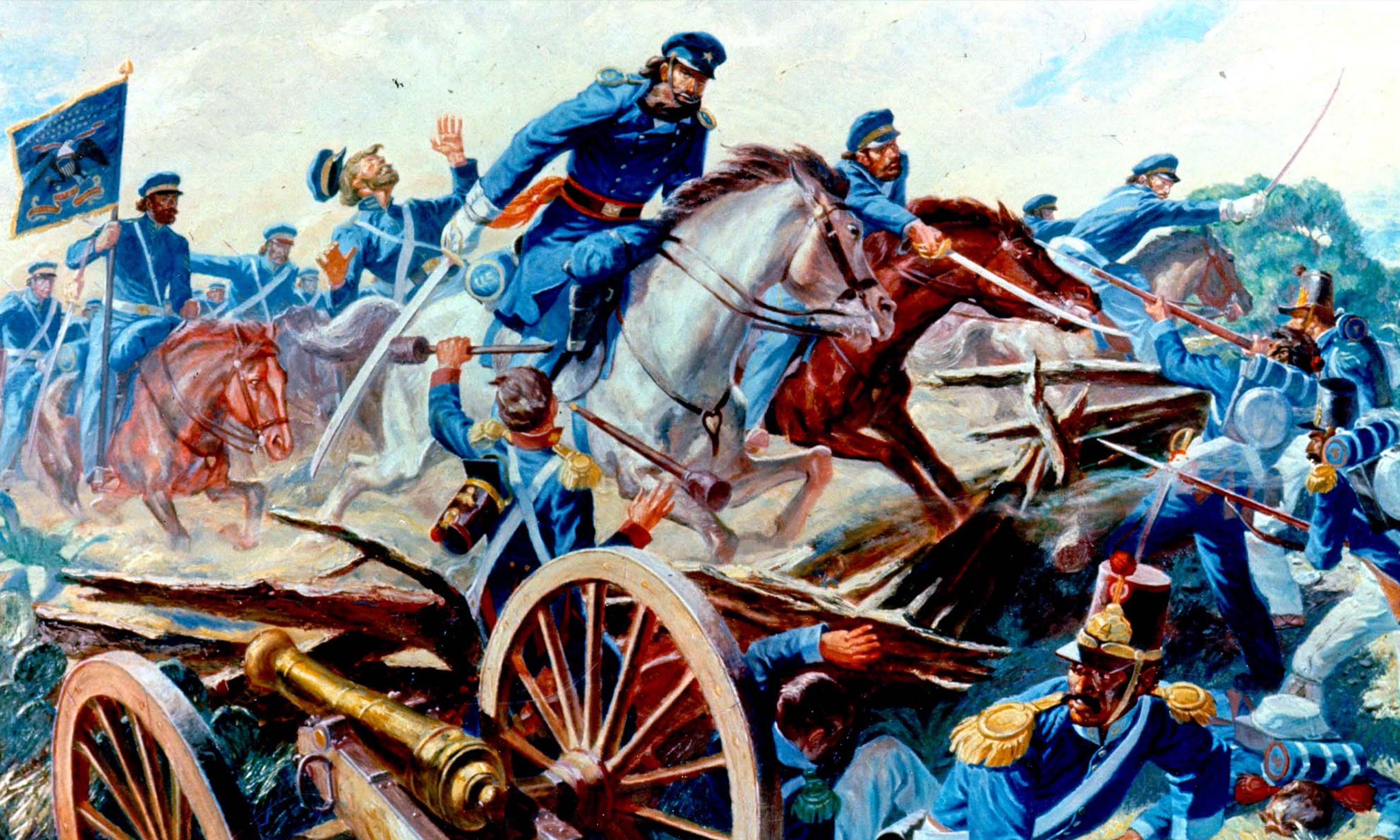
When Americans walk the National Mall, they see monuments to the great struggles that shaped our nation. World War II, Korea, Vietnam — each has a fitting place in our capital’s national memory. Yet the war that made the United States a continental power, the U.S.–Mexican War of 1846–1848, is conspicuously absent. There is no national memorial in Washington to honor the 13,000 Americans who died and the more than 100,000 who served in that conflict, or the immense national transformation that flowed from their sacrifice.
This is a startling omission. The Mexican War was the third-most-important territorial war in American history, behind only the Revolution and the Civil War. It expanded U.S. territory by nearly 25 percent, including the territory that became the State of California. It resolved the Texas question, established a durable border with Mexico that was defined by treaty, and propelled America into the Pacific world with deep-water ports and new trade routes. Within months of peace, the 1848 Gold Rush began, drawing global migration to San Francisco and fueling the rise of America’s industrial might. Without the Mexican War, there would be no continental republic, no Pacific gateway, and no secure foundation for the United States’ emergence as a world power.


Comments