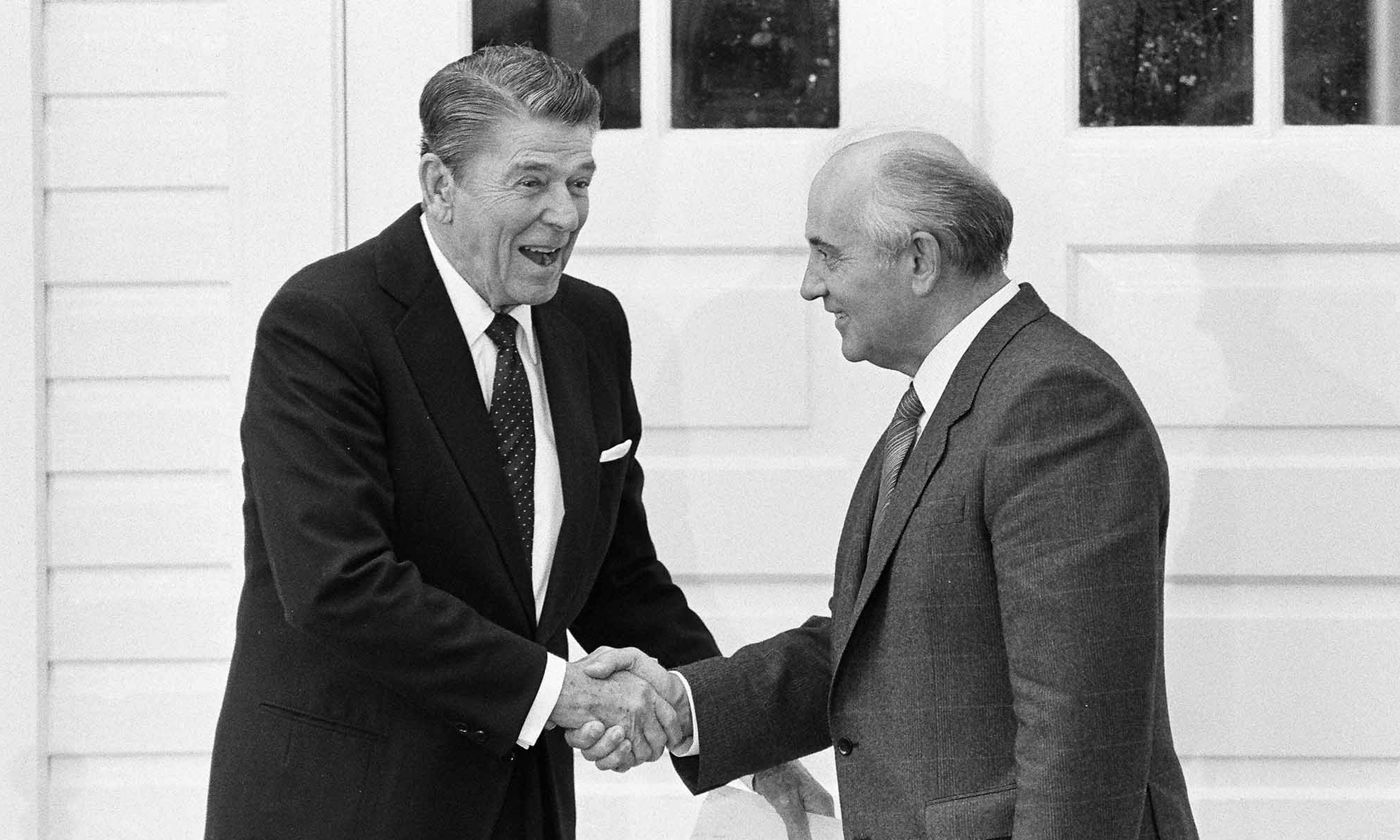
Even before he made it to the very top, Mikhail Gorbachev came across as a different type of Soviet leader (an impressed Mrs. Thatcher described him as someone with whom she could do “business”), but much of this was a matter of style over substance. He was energetic, approachable and, it seemed, open, here and there, to new ideas. After a period in which the USSR had been led by a senile drunk, an intelligent but ailing kidney patient, and an aged bag-carrier, it wasn’t much of a challenge for the energetic and outgoing Gorbachev, a stripling in his mid fifties, to make a good impression, both at home and abroad, when, in 1985, he took over in the Kremlin.
In his first speech as the Communist Party’s general secretary, Gorbachev included references to democratization and glasnost (openness), but these were words designed to signal only that he intended to mount a serious attempt to reverse the USSR’s all-too-visible decay. Drawing inspiration, even at this late date, from, dispiritingly, Lenin, he remained a true believer, not in what the increasingly moribund Soviet Union had become — for all its strategic power, no one with any brains could believe in that — but in what he still saw as the potential and the promise of the revolution that had set it on his way. This was a system, Gorbachev thought, that could be reformed from within, and on its own terms, with the planned economy revived and the party’s creativity unleashed by greater internal debate (that was what he meant by democracy).

Comments