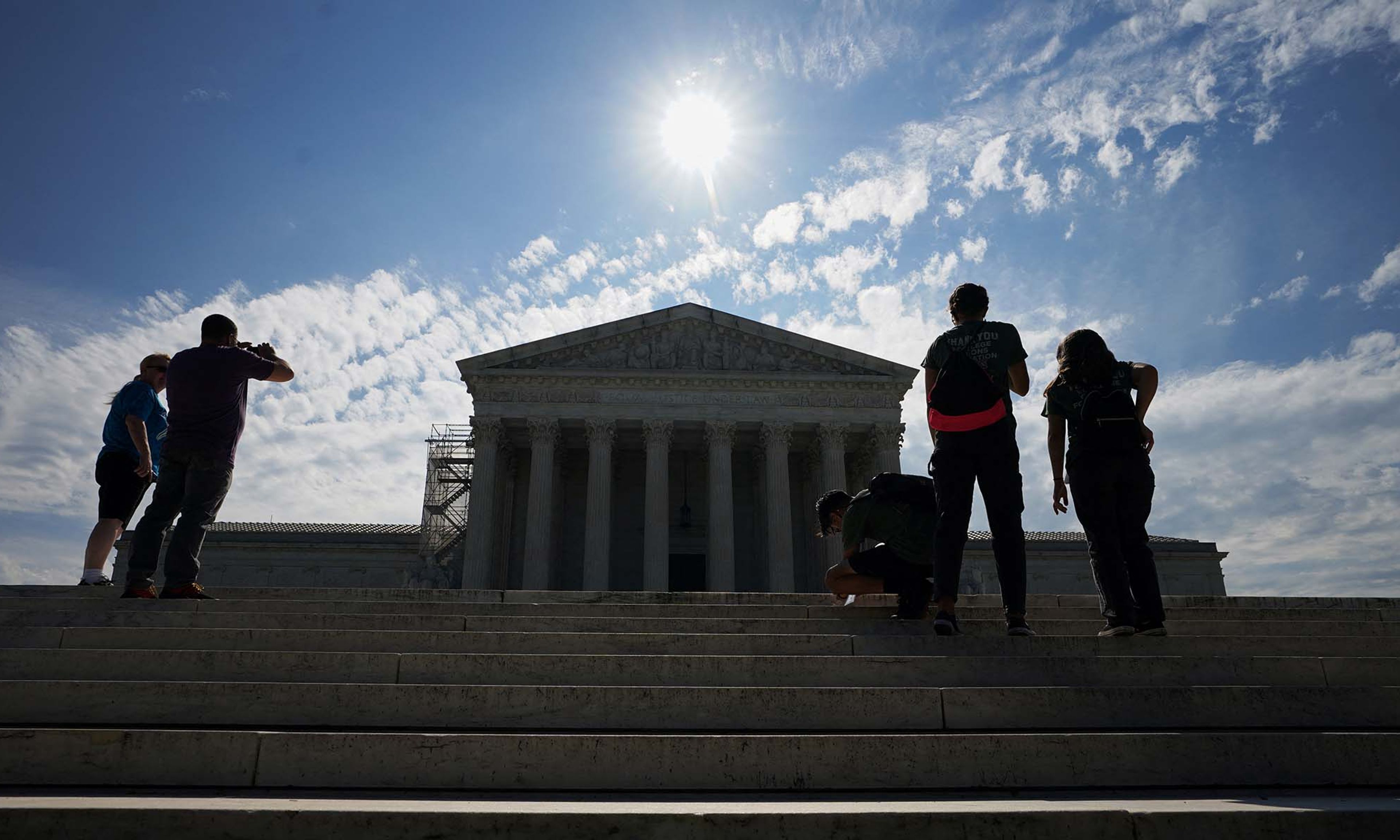
At first blush, the Supreme Court’s decision this morning in Moore v. Harper appears to deal a heavy setback to efforts to prevent state courts from deciding federal elections. By permitting state judicial review of congressional maps and election laws under state law — including the invalidation of specific laws by reference to open-ended state constitutional provisions — the decision raises the stakes of battles to control state supreme courts, which remain empowered to override the work of elected state legislatures. The decision also preserves the power of state referenda to constrain the drawing of legislative districts and the terms of voting laws.
But can creative liberal state courts just rewrite legislative rules on whatever basis strikes their fancy? That has been the position of progressives, but today’s decision does not go that far. By a 6–3 vote, the Court rejected the strongest version of the “independent state legislature” doctrine under which the federal Constitution gives primacy to state legislatures in writing laws governing federal elections for the presidency and Congress. It preserved a place for state courts not only in construing state election laws, but in invalidating them under state constitutions.


Comments