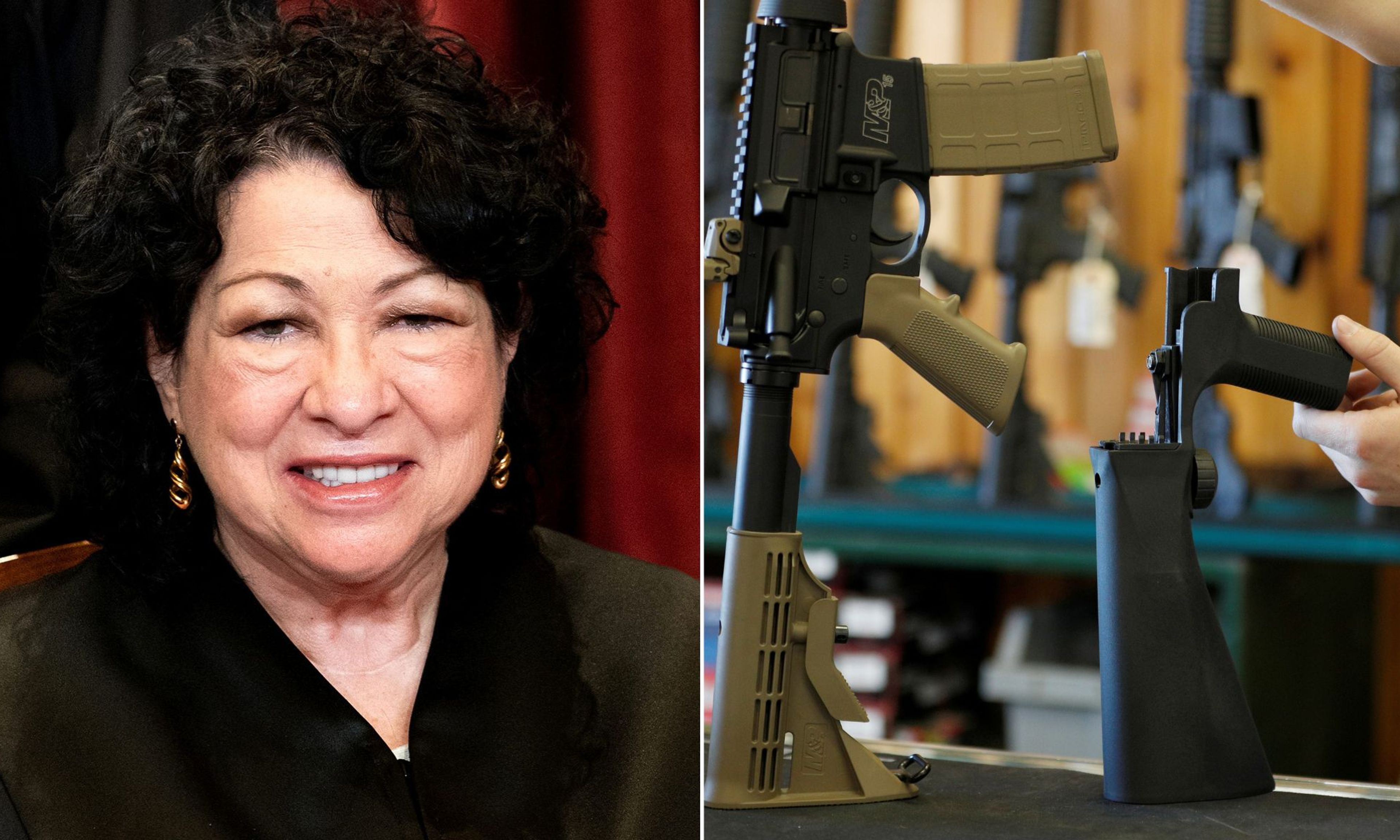
This morning’s Supreme Court decision in Garland v. Cargill, overturning the Trump-era Bureau of Alcohol, Tobacco, Firearms and Explosives rule banning “bump stocks,” was both an easy case and a limited one, for reasons Charlie Cooke has explained here and here, and which are apparent from reading Justice Clarence Thomas’s opinion for a 6–3 majority. As Justice Samuel Alito’s concurrence emphasized, Cargill left Congress free to ban bump stocks; it simply concluded that it had not already done so in 1934 when it heavily regulated machine guns.
That’s a modest ruling, respectful of how the statutory language was treated in practice for 80 years. ATF for decades had agreed that the law largely prohibiting “machineguns” did not also ban bump stocks. That didn’t change because of new scholarship or somebody suddenly noticing that everybody had been wrong all along about the language of the law; it changed because of political pressure to do something (proving that the Trump administration wasn’t so different from past administrations in this regard). Even when the agency did an about-face after the 2017 Las Vegas shooting, it did not conclude that all methods for bump-firing of a non–machine gun converted the weapon into a machine gun.





Comments