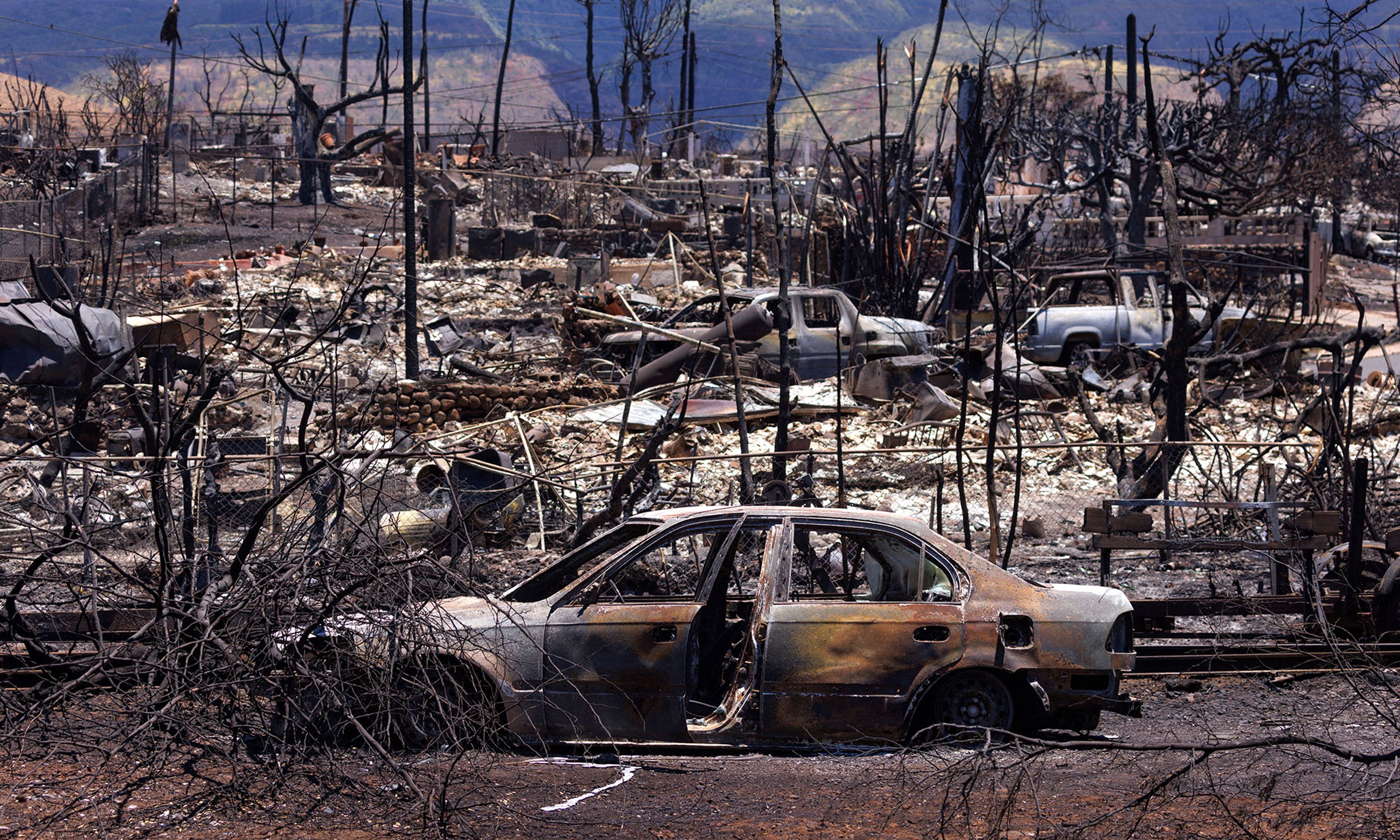
The recent fires in Maui provide awake citizens and inveterate bureaucrat-watchers like myself with an unexpected bi-fecta: a tragic but instructive collision of a once-in-a-decade disaster and a once-in-a-decade example of Narrative Creation.
What happened in Maui, in plain empirical terms, is simple enough to describe. On August 8, 2023, “a brush fire ignited in West Maui,” near the popular resort town of Lahaina. Strong winds pushed the fire, at an unexpectedly fast pace, into downtown Lahaina, where more than 2,000 buildings were destroyed — including several notable landmarks. Damage estimates for the fire currently sit at roughly $6 billion, which, for purposes of comparison, is three times the total losses from the full 2020–21 summer of George Floyd riots.




Comments