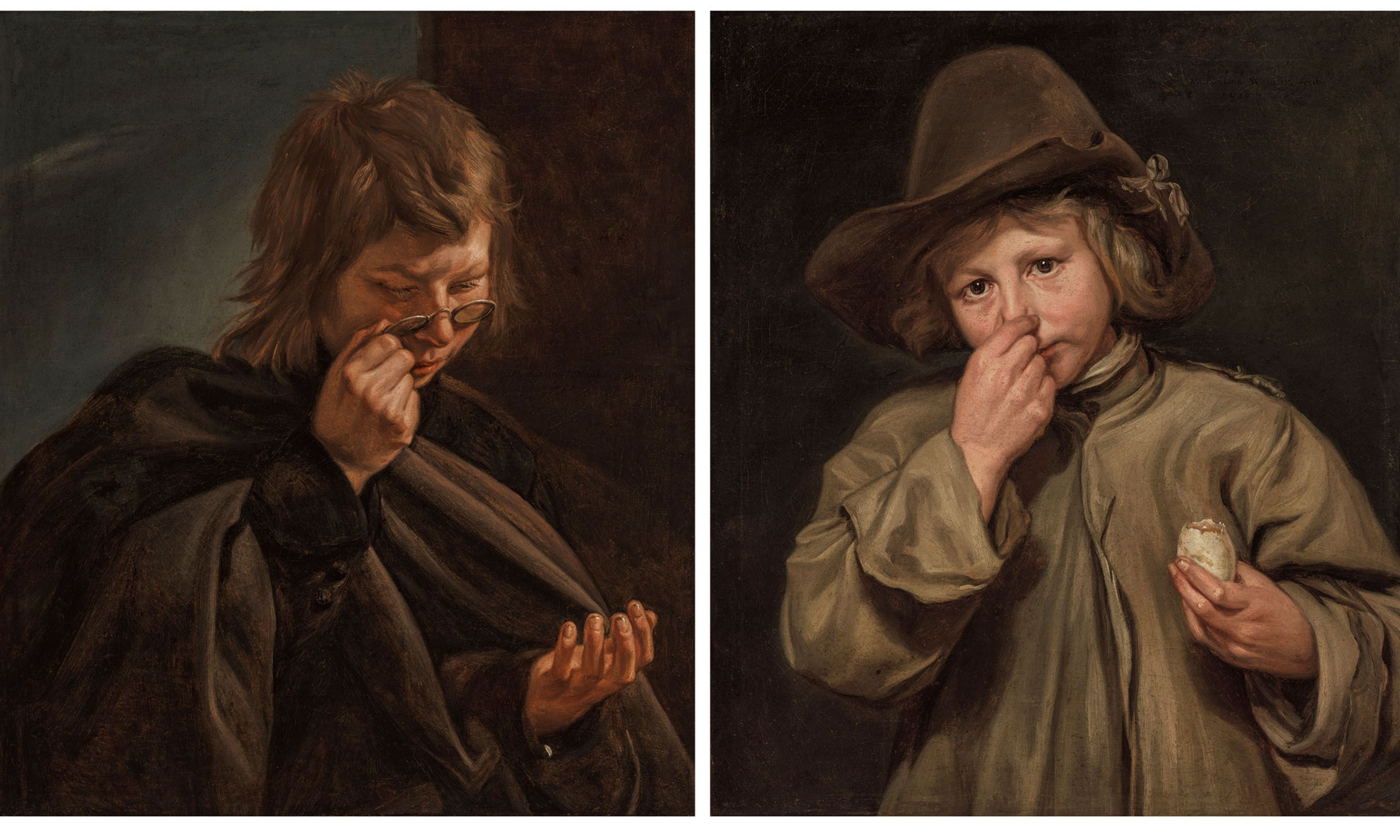
I had two lovely visits to the Museum of Fine Arts in Boston last week. I’d planned to write about both its new Dutch and Flemish galleries and its new Greek and Roman galleries but spent all my time among the ancients. I’ll look more closely at the Dutch and Flemish galleries next time. I expect them to be opulent and incisive. The MFA got two big gifts of Dutch and Flemish art in the last few years. It always had good things, but now the collection befits the most lavish of Dutch still lifes.
One gift is the superb collection of Rose-Marie and Eijk van Otterloo, which I saw at the Peabody Essex Museum a few years ago. “Wow, this is fantastic,” I said over and over. The other is from Matt and Susan Weatherbie. I’ve seen the art in their home in Boston a couple of times. It’s exquisite. On my last visit, they’d just gotten a Rubens oil sketch of the Coronation of the Virgin. Years later, I still think of it the way our dog thinks of food, though he’s not as particular as I, and the Rubens is sublime. It’s a sketch so not precisely finished, but in Rubens’s hand it’s a vision of Heaven. Now it’s at the MFA.





Comments