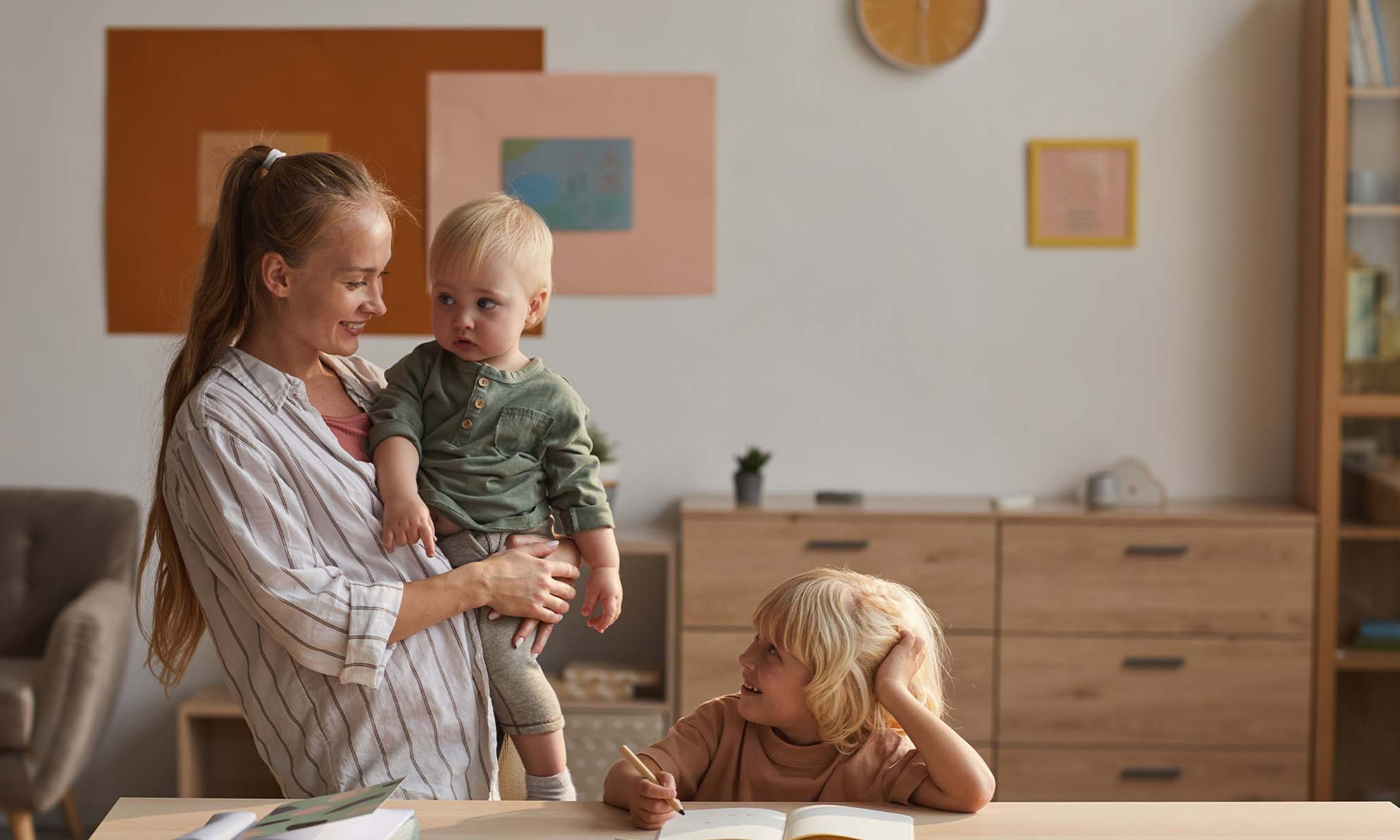
These days, the trope of the miserable housewife is pretty much ubiquitous. Betty Friedan famously termed the lack of fulfillment among traditional mothers as “the problem that has no name,” but in more recent decades there’s been no shortage of people willing to name it; indeed, our media landscape never seems to shut up about it. Nearly everyone seems to take it for granted that traditional housewives and stay-at-home moms are as depicted in endless movies and television shows: bored, wretched, anxious, and often relying on some form of “mother’s little helper” — prescription or otherwise. One of Friedan’s most unchallenged victories is that the immediate stereotype of the traditional mother that comes to the modern mind is Mad Men’s Betty Draper.
Feminist commentator Jill Filipovic summed up this widespread assumption when she declared on X: “Stay-at-home mothers are psychologically and emotionally worse off than working mothers by just about every measure, from depression to anxiety to anger; they are much more likely than working mothers to say that they are struggling, and less likely to say that they are thriving.”





Comments