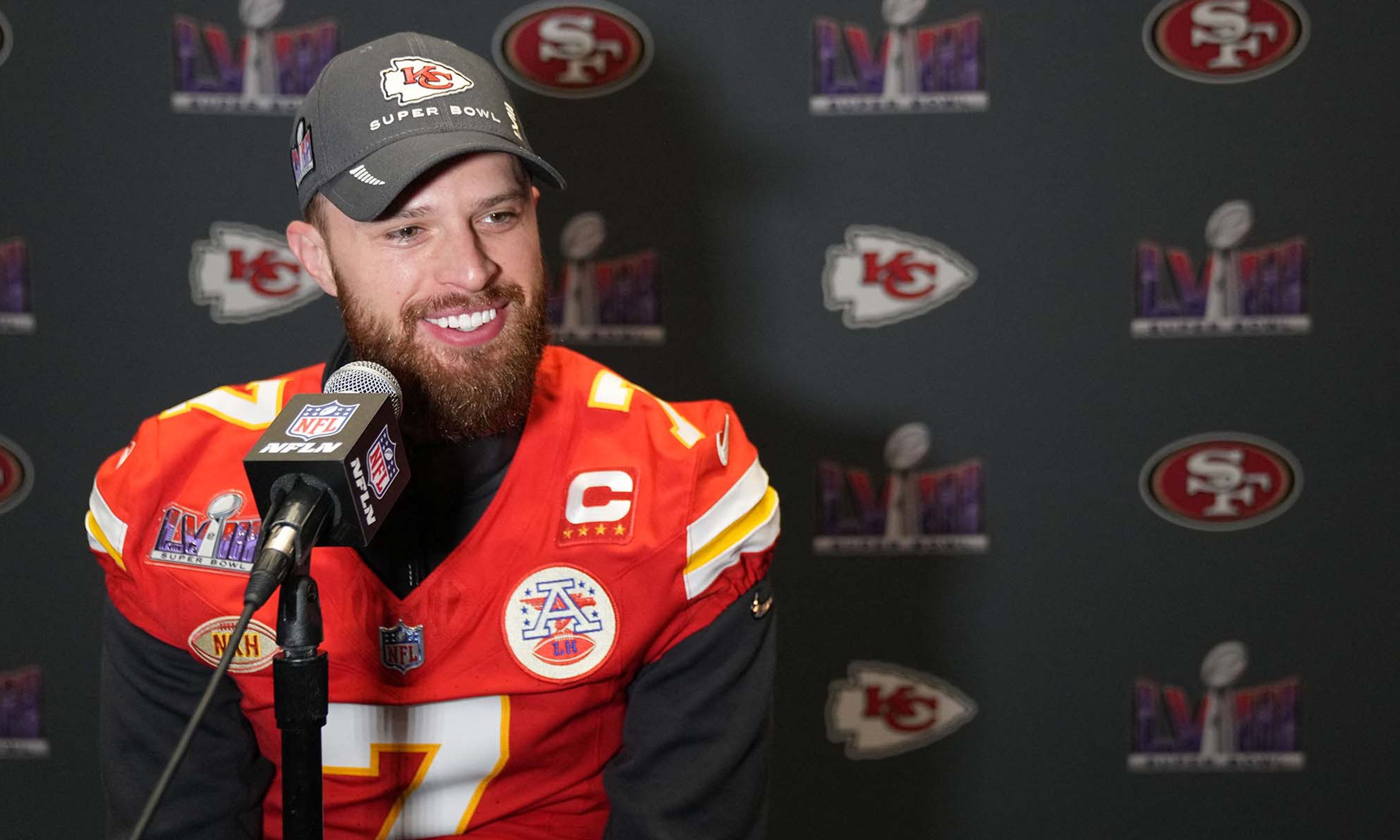
Over the weekend, Rich Lowry made a solid case that Harrison’s Butker’s now-infamous address to the graduates of Benedictine College was not, in fact, worthy of the controversy into which it has subsequently been bent. I agree with this contention, just as I agree with Samantha Lehman’s observation that, while the speech has by now been heard by anyone who wished to hear it, its intended audience was not the world and his dog, but the students to whom it was given. As is my wont, however, I’d like to step back from these details for a moment and make a more foundational inquiry of Butker’s detractors: What if, instead of having expressed a perfectly acceptable view in front of a narrow audience, Butker had ranged way out of the mainstream on a national television show? Then what?
That so many of Butker’s complainants have miscast his words matters because the truth matters — or ought to. Nevertheless, I am rendered profoundly uneasy by the unspoken implication of this defense, which is that Butker’s speech was acceptable because Butker’s speech was conventional. Suppose that, instead of offering up an allocation that was religiously infused but within the mainstream, Butker had expressed a collection of views that were indisputably unusual? Suppose that he were Amish. Hell, suppose that he were a member of some preposterous cult whose followers believes that all American women are actually repurposed panini toasters. Are we to presume that, in those cases, the disavowals that were offered up by the NFL and by the leaders of Kansas City would have been appropriate? I would argue: No.





Comments