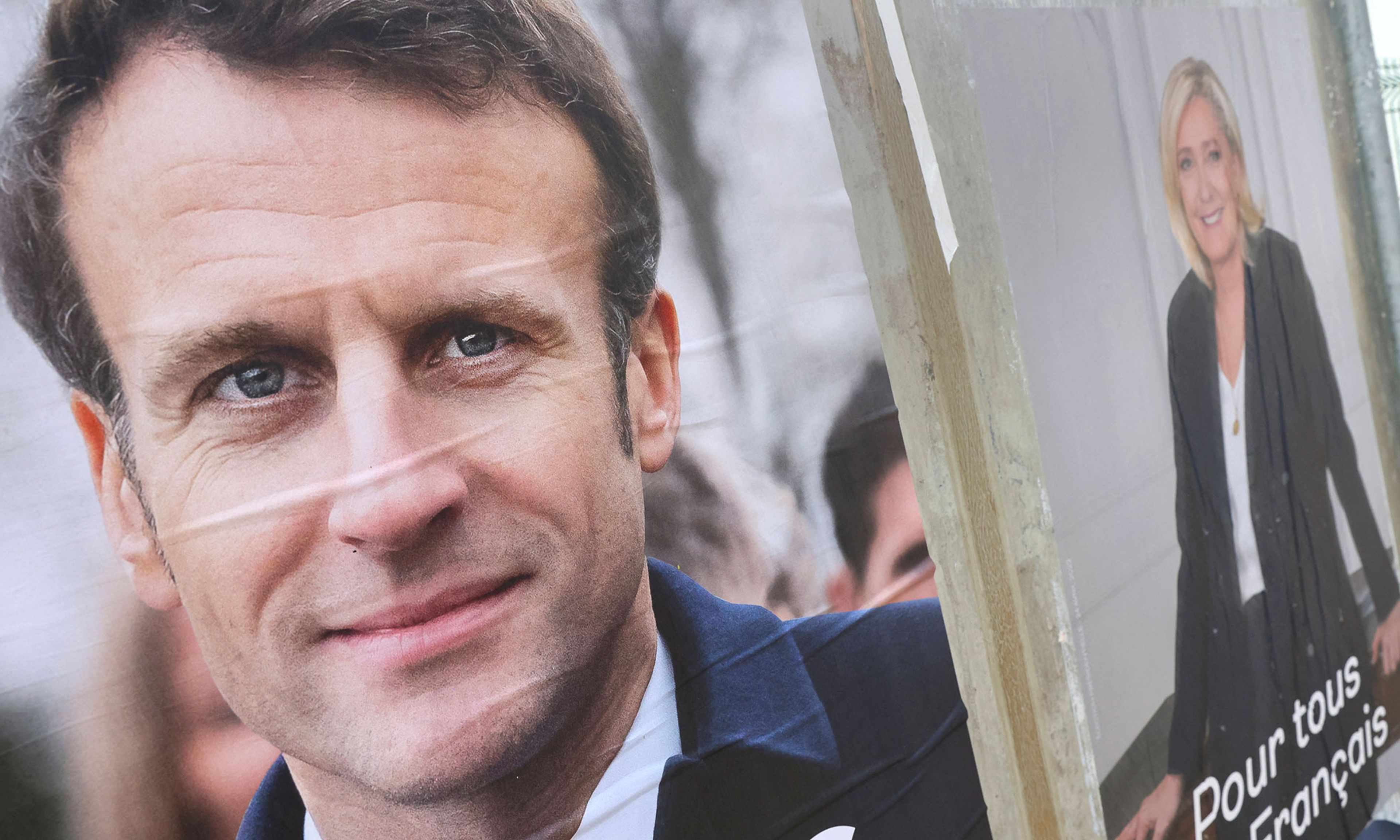
The media narrative about France’s presidential election on Sunday, which saw Emmanuel Macron reelected for a second term, has largely been complimentary. Macron, the centrist incumbent who won five years ago at age 39 with an upstart political movement called “En Marche!” (French for “On the Move!”), was the early front-runner. Citing the war in Ukraine, he didn’t campaign much this time around — hosting his first large rally just a week before voting on April 10. The war was also one of Macron’s strongest campaign arguments, as he emphasized the need for stability and continuity, claiming the “worst is yet to come” in the Russia-provoked conflict.
The media’s focus on this path to victory, however, has glossed over other details. In reality, Ukraine had allowed Macron to divert attention away from significant issues affecting his presidency. Macron was a weak incumbent, with an approval rating on par with or worse than Joe Biden’s — reaching, per Ifop, a low of 25 percent in 2018, the largest drop in popularity since Jacques Chirac in 1995, before rebounding into the 40s more recently. For Marine Le Pen and the populist Right, Macron’s failures were a big target.
Comments