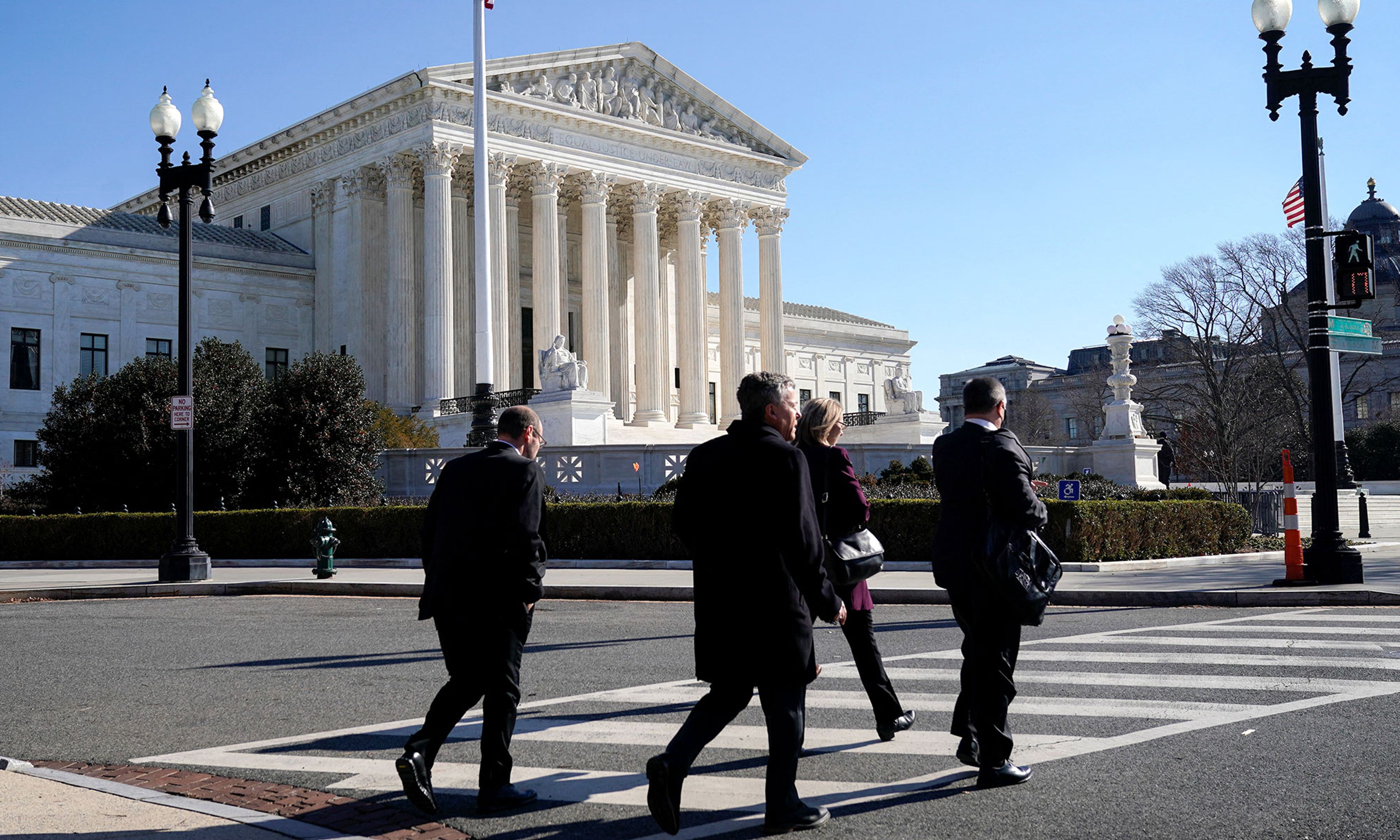
The Supreme Court resolved six cases on its docket this morning, after issuing five opinions on Monday. While none of these were the big, high-profile decisions, they did include some interesting subplots, and they revealed a Court still very much concerned about the executive branch and its administrative agencies pushing the limits of their power — and also with not overextending its own power. A quick roundup of the highlights:
The Court originally agreed to hear American Hospital Association v. Becerra in order to decide “(1) Whether deference under Chevron U.S.A. v. Natural Resources Defense Council permits the Department of Health and Human Services to set reimbursement rates based on acquisition cost and vary such rates by hospital group if it has not collected adequate hospital acquisition cost survey data; and (2) whether petitioners’ suit challenging HHS’s adjustments is precluded by [statute].” While the issues surrounding HHS’s Medicare-reimbursement rates are technical (and there are still two other Medicare-reimbursement cases left on the docket, Becerra v. Empire Health Foundation and Marietta Memorial Hospital Employee Health Benefit Plan v. DaVita Inc.), the Chevron issue is a big one that has been heavily contested at the Court in recent years: Should the justices defer to an agency’s interpretation of its own statutory power to enact a regulation, at least in a close case where the statutory language is arguably ambiguous?





Comments