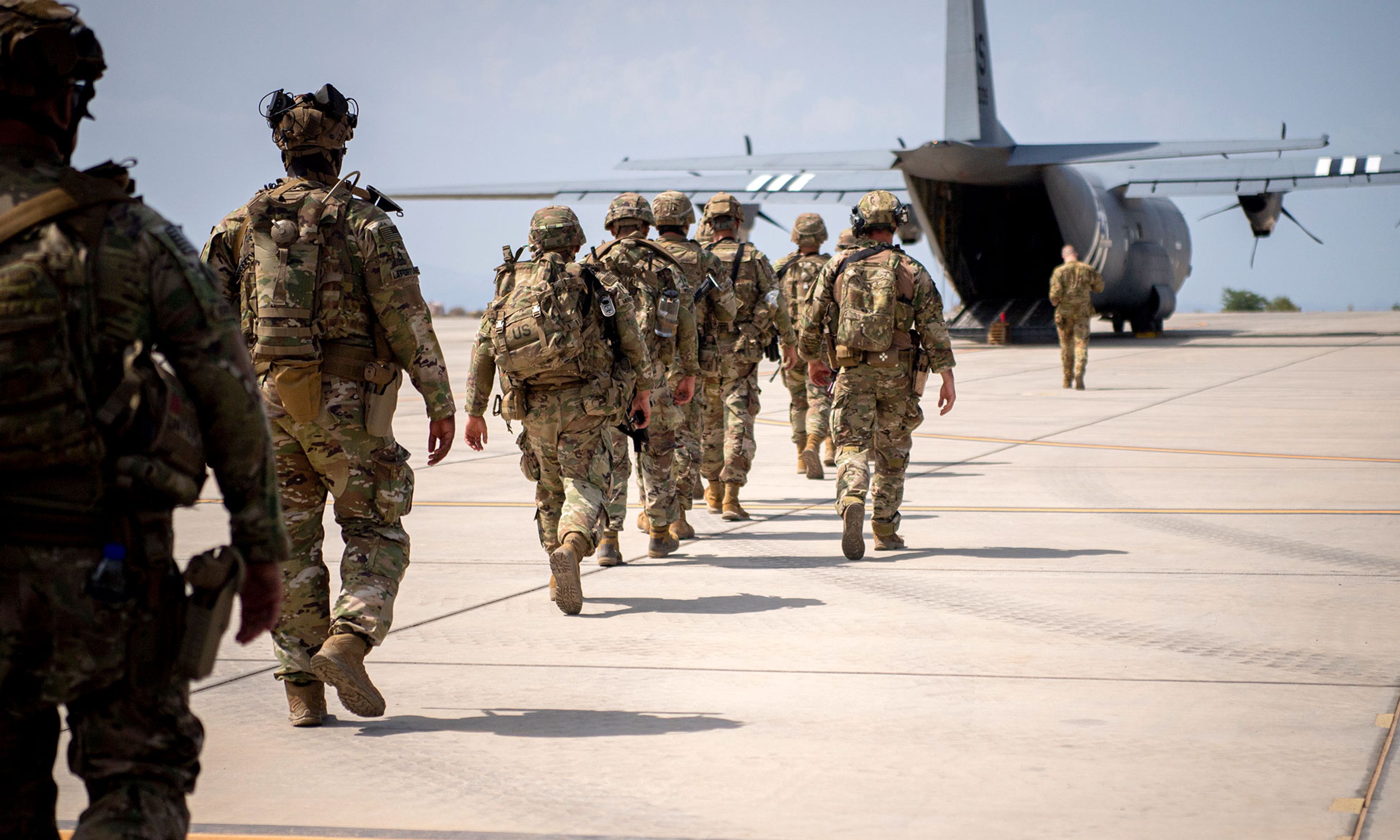
President Joe Biden’s May 16 decision to redeploy hundreds of U.S. special-operations forces into Somalia should not have come as a surprise. Despite months of inter-agency deliberation, it was abundantly clear that the Biden administration thought former president Donald Trump’s December 2020 order to withdraw from the Horn of Africa nation was a precipitous move based more on ticking off a campaign promise than on what best served the national interests of the U.S. Those views were even more hardened in the Pentagon; testifying to the Senate Armed Services Committee in March, U.S. AFRICOM commander General Stephen Townsend faulted the lack of a U.S. ground presence in Somalia on a more resilient al-Shabaab, al-Qaeda’s most lethal affiliate in Africa.
What General Townsend neglects to mention, however, is that Washington has been able to successfully manage the threat al-Shabaab poses to the U.S. without having to station U.S. personnel on the ground. This is borne out by the fact that there hasn’t been a single al-Shabaab attack perpetrated against U.S. interests in the year and a half since the Trump administration pulled U.S. forces from Somalia. Part of this is because the U.S. counterterrorism community has developed into a highly proficient terrorist-killing machine, where targets can be neutralized without having to place U.S. personnel close to the front line. But another reason is that al-Shabaab is more interested in local objectives than planning a 9/11-style attack against the U.S. The group’s leadership is aware of the power and breadth of the U.S. intelligence and military apparatus, which has proven time and again why a direct assault against the U.S. is a bad bet for terrorists. Look no further than al-Qaeda, whose founder, Osama bin Laden, practically put targets on the backs of his followers the moment he green-lit the so-called “planes operation.” For al-Shabaab to follow the same path and risk extreme retaliation from the U.S. military would undermine the organization’s dream of establishing control over Somalia.




Comments