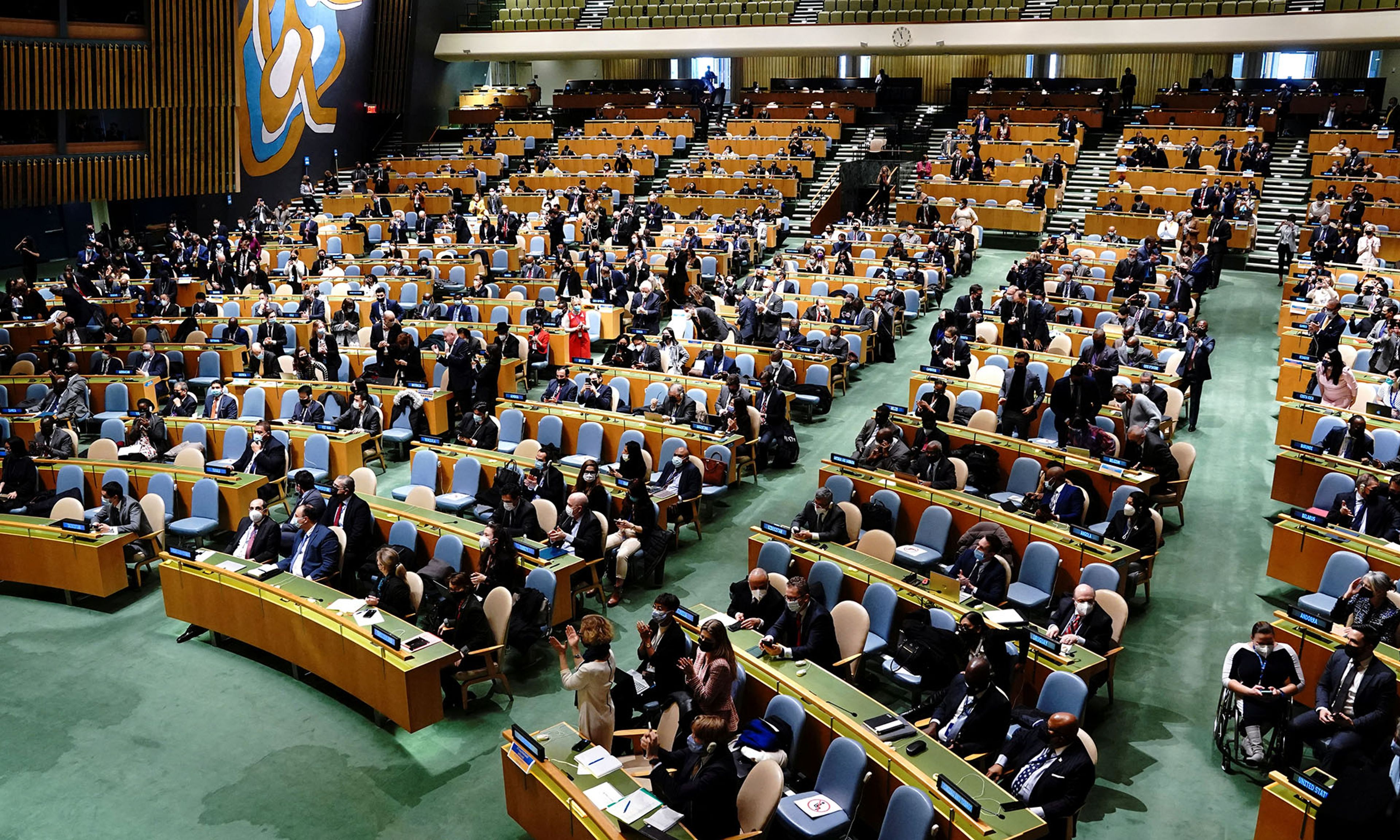
In the Turtle Bay neighborhood of Manhattan, overlooking the East River, stands a wretched hive of scum and villainy like no other in the country. It’s not one of Midtown’s open-air drug-injection sites or the neon hellscape that is Times Square, which is well to the west. It’s the United Nations headquarters.
Conservative criticism of the U.N. is, at this point, a given. From the organization’s frequent opposition to American interests in the General Assembly to the legitimization it gives to despotic regimes such as those of China, Iran, North Korea, and Russia, there is much fault to be found within the U.N. at present. But it’s worth remembering that its problems are not new. They can be traced back to its inception, when the U.N.’s founders committed a grave mistake that has plagued international relations ever since: the accession of China and the Soviet Union to permanent Security Council status. The ramifications of this unforced error are acutely felt today, as the Russian Federation and the People’s Republic of China continue to thwart the organization’s founding mission and promote anti-Western resolutions.


Comments