Thanksgiving is my favorite holiday, mostly for the food. Turkey smothered in gravy with clam stuffing is the triumph of fish and fowl. Very Yankee. Mashed carrots-and-potatoes add color and more comfort. Roasted brussels sprouts, crispy from a last-minute maple syrup drizzle, gooey green bean casserole, chunky cranberry sauce, glazed carrots, and pies. Yum, yum, yum. Yes, I’m thankful, too, for good health and grateful to live in America, which means I’ve won life’s Lotto.
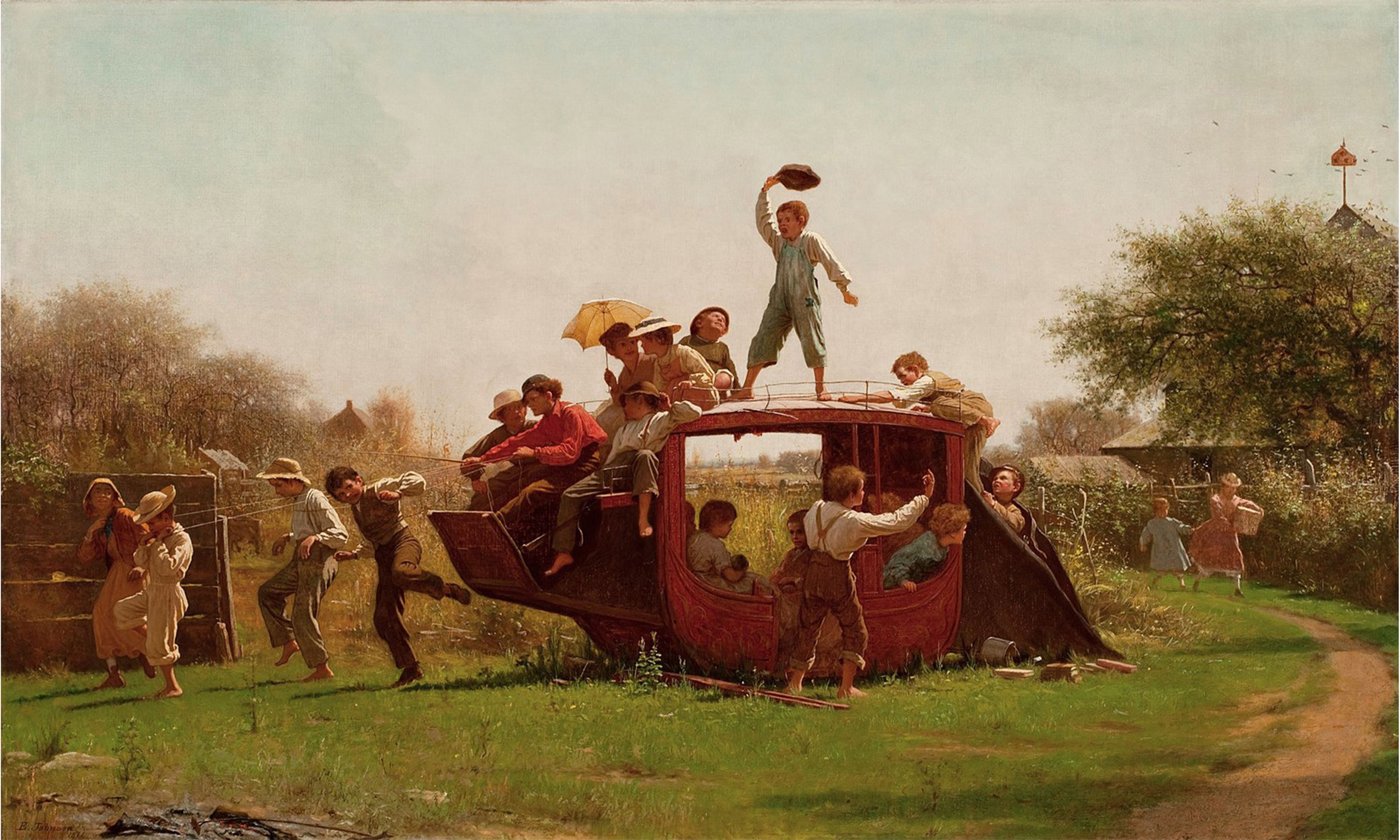
Tasty as Thanksgiving dinner might be, nothing exists in Brian Land without at least a few didactic dimensions, and there’s always room for art. Thanksgiving, of all our national holidays, most overtly fuses God, family, history, and civics. I’ve been wanting to write about Eastman Johnson, the artist whose 200th birthday is this year and who, coincidentally, most overtly fuses God, family, history, and civics. Johnson (1824–1906) was known in his lifetime as America’s Rembrandt for his ocher palette, hushed, Gilded Age parlor scenes, and wistful pictures of rural life. He’s a values artist — American values — and a memories artist, too. There’s not a roasted turkey to be found, or a Pilgrim, a football, or a float in parade formation. He’s still America’s premier Thanksgiving artist.





Comments