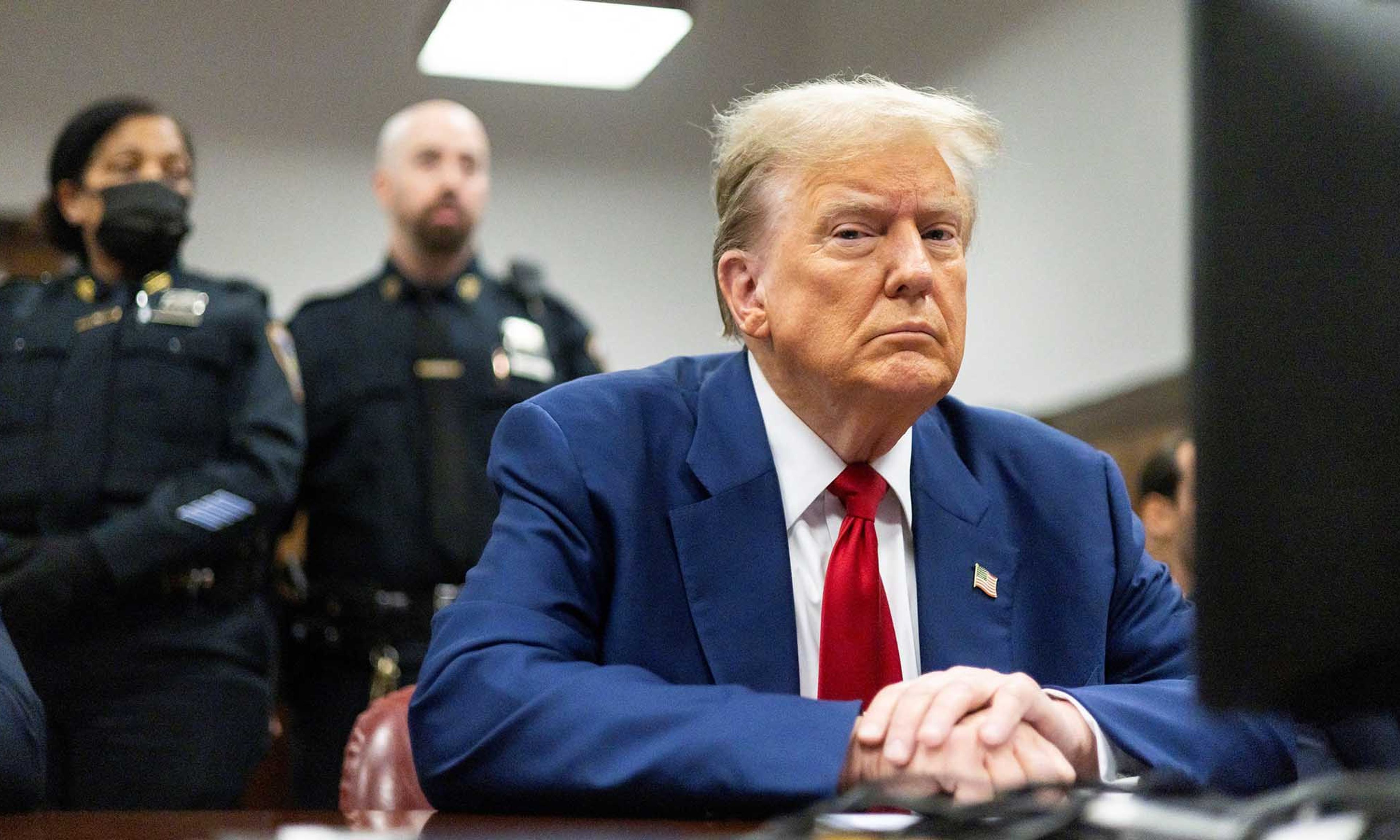
By this point, I have read a good number of takes on Trump v. United States, the “presidential immunity” case that is currently being considered by the Supreme Court, and, a week or so into that endeavor, I have precisely the same question as I did going in: Why, as a constitutional matter, would anyone think that the president of the United States enjoys any such thing?
As a purely practical matter, the president enjoys a de facto inoculation against federal prosecution for as long as he serves in his role. But that inoculation is a byproduct of our system of separated powers, not of some hidden “immunity clause” that can be inferred from the text and exquisitely delimited by the courts. In recent years, we have come to talk about the various agencies and departments that have been added to the executive branch of the federal government as if they exist independently of the president. But this, of course, is ridiculous. The president is the head of the federal executive branch, and, as a result, everyone who works there works for him — including, yes, those who work within federal law-enforcement bodies such as the FBI and the DOJ. To argue otherwise is to demand the establishment of a free-floating, unelected fourth branch of government that can wield the executive power that is vested in the elected president without actually being accountable to that elected president. In most cases, this arrangement is a boon to self-government, but does contain an obvious downside: That however strong the evidence of the president’s criminal guilt, he cannot be forced to do what he would need to do for a successful prosecution, which, under our system, is to bring a case against himself. Ugly as it may sound, by virtue of having won the prior election a sitting president can indefinitely prevent this state of affairs — and do so perfectly legally — simply by declining to assent to the process and then by removing anyone within the executive branch who would prosecute him.





Comments