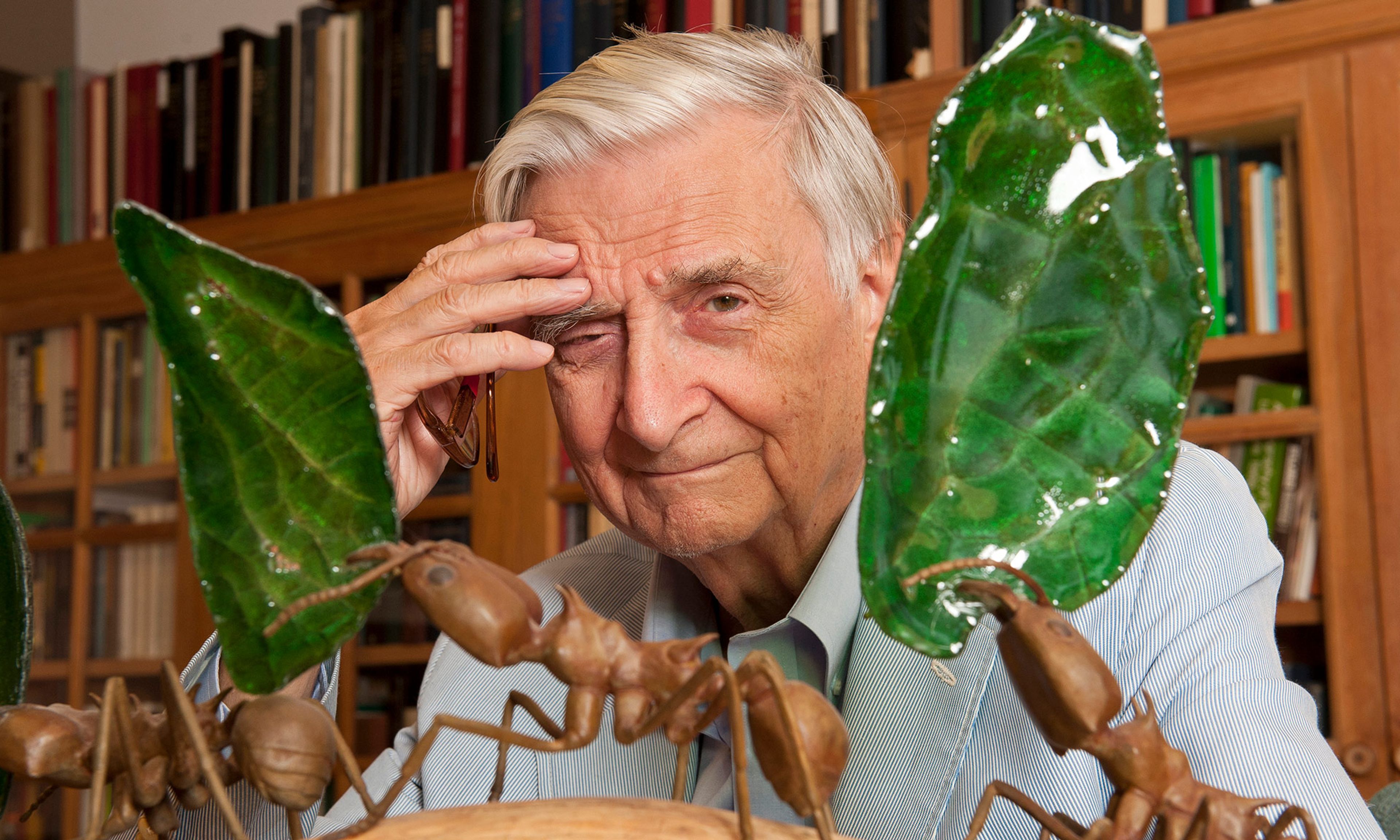
Have you ever wondered just what those ants are so busy doing all the time? Edward O. Wilson did, and by the time he was 30, he was the world’s leading authority on the subject. In a career that spanned 70 years, most of them at Harvard University, Dr. Wilson became one of the most influential — and, for a time, controversial — scientists in the world. When he died on December 26 in Burlington, Mass., he was hailed as “Darwin’s natural heir” by the foundation that bears his name. And that is no exaggeration. Wilson was perhaps the greatest zoologist in history, and certainly one of the finest writers the sciences have ever produced.
Wilson’s study of zoology and genetics widened his lens far beyond the study of insects, and he followed the science fearlessly. In 1975, he published Sociobiology: The New Synthesis, in which he theorized that the major aspects of social behavior among animals — from aggression and altruism to hierarchies and parenting — can all be explained by natural selection. He then demonstrated his theory by looking at the animal kingdom, starting with colonial microorganisms and social insects, and working his way systematically to primates and humans.





Comments