This Time, Roberts Sides with Conservatives to Blunt Election-Rule Tinkering

While Justice Amy Coney Barrett was being confirmed, the Court nixed a rewrite of Wisconsin election law – in contrast to last week’s deadlock in a Pennsylvania case.

Share this story

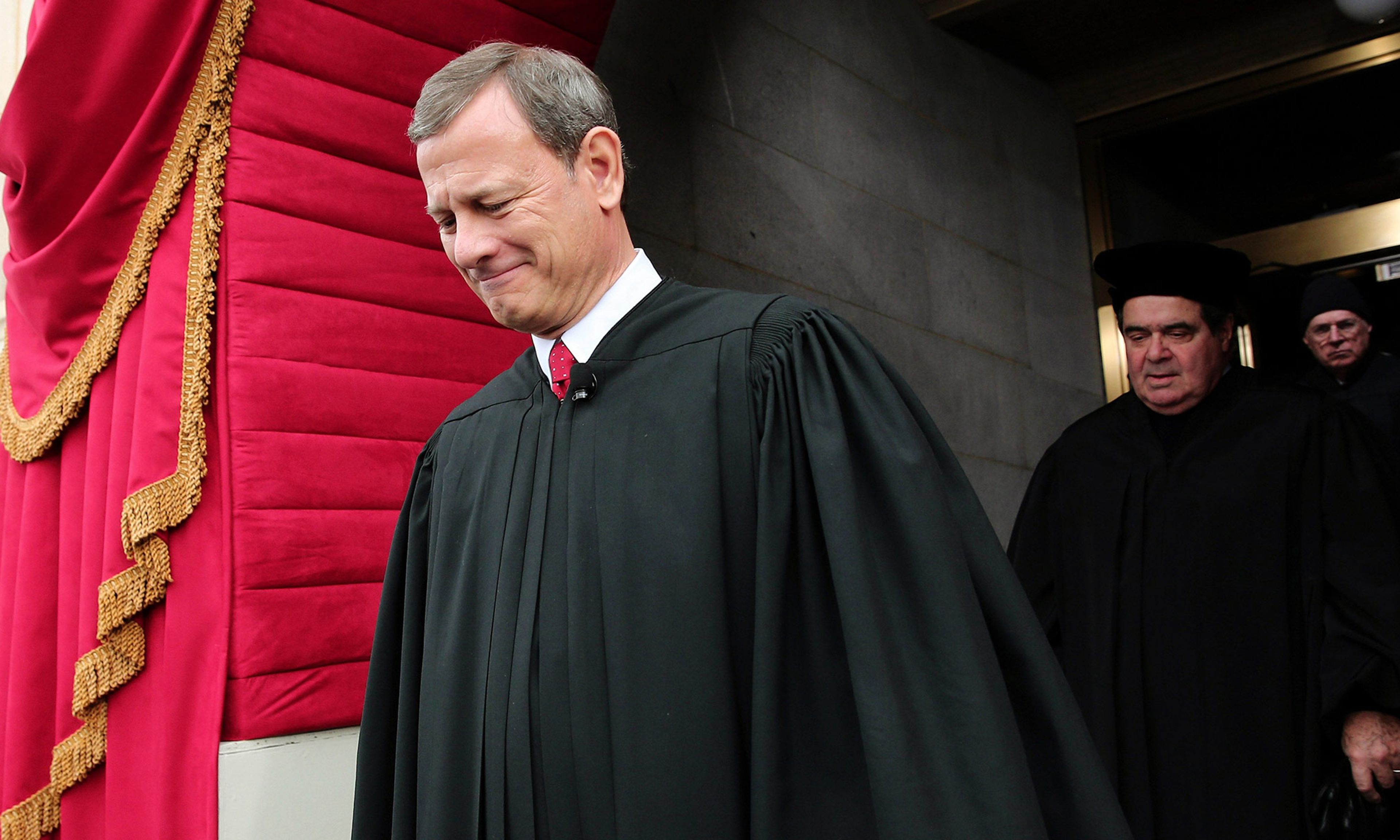
Supreme Court Chief Justice John Roberts and Justice Antonin Scalia arrive for the presidential inauguration on the West Front of the U.S. Capitol in Washington, D.C., January 21, 2013.

Win McNamee/Pool via Reuters

There are strict constructionists, but who knew Chief Justice John Roberts was a strict federalist?

That is one takeaway from the Supreme Court’s ruling Monday night, rendered as Justice Amy Coney Barrett’s nomination was being approved by the Senate. In a 5–3 decision, the Court declined to endorse a federal district judge’s rewrite of Wisconsin State election law. This time, the chief justice joined the Court’s four conservative justices — Clarence Thomas, Samuel Alito, Neil Gorsuch and Brett Kavanaugh — leaving the three liberals in the minority, with Justice Elena Kagan’s dissent joined by Justices Stephen Breyer and Sonia Sotomayor).

Andrew C. McCarthy

About the Author

Andrew C. McCarthy

Andrew C. McCarthy is a senior fellow at National Review Institute, an NR contributing editor, and author of Ball of Collusion: The Plot to Rig an Election and Destroy a Presidency.

Comments

Advertisement

Advertisement