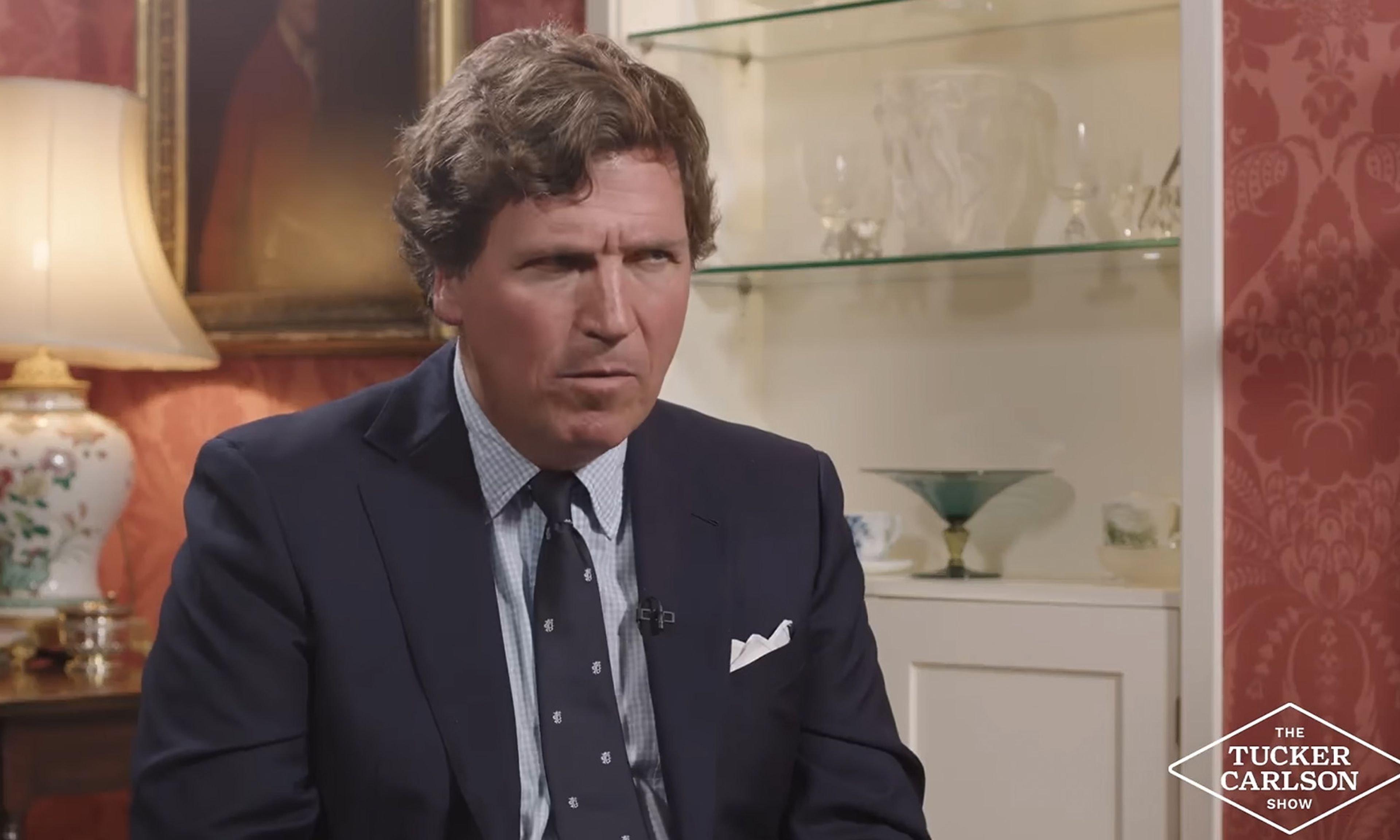
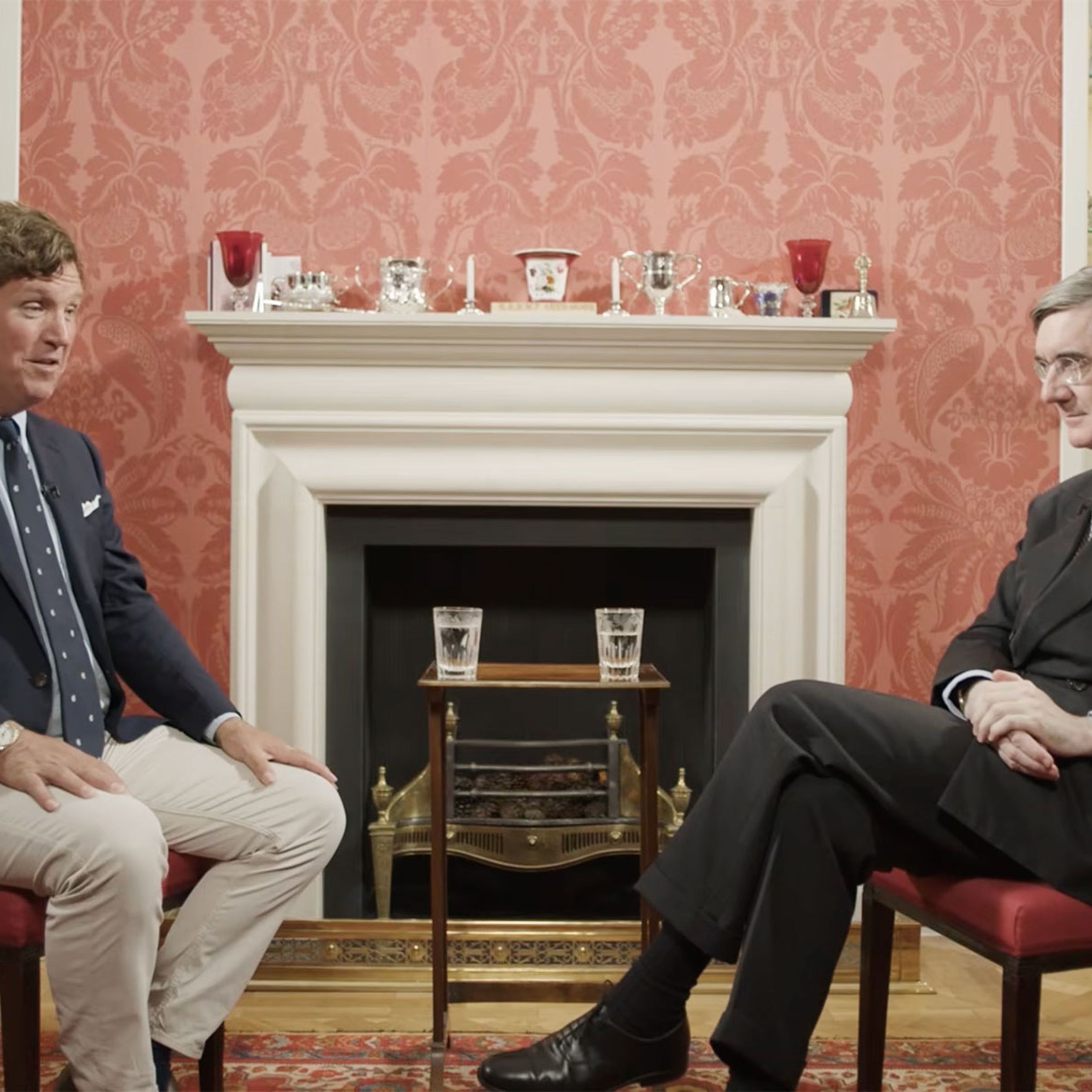
In the course of his interminable descent through Dante’s many circles, Tucker Carlson has gone from indulging crazed World War II revisionists to becoming one himself. In a conversation last week with the English politician Jacob Rees-Mogg, Carlson repeatedly inquired why it had been necessary for Britain to go to war with Nazi Germany when it did. “Hitler did not want to go to war with the U.K.,” he insisted. “You attacked the Germans; they didn’t attack you.”
That is, in a boringly literal sense, a true statement. But it obscures so much that, once any measure of context has been added, it becomes meaningless, misleading, and, above all else, indicative of a political agenda that has gone badly awry. I will confess that it feels rather extraordinary to have to rehearse this argument in public, but rehearse it I evidently must: Whatever Tucker Carlson might like to believe, Adolf Hitler could not be trusted to keep his word, and the existence of private statements, public declarations, or treaties that nodded toward peace with Britain in no way alters that fact. It is fair to conclude that Hitler did not want to go to war with Britain in the late 1930s. It is not fair to assume that Hitler would have declined to go to war with Britain later on, once his position was stronger. I am unashamedly of the view that Britain’s decision to stop Hitler’s advance early was morally imperative, irrespective of his designs on Britain itself. Among other things, I think that the discovery of the Holocaust bears that decision out. But even if one does not agree with that view, it ought to be patently obvious that, as a matter of realpolitik, the British Foreign Office was correct to consider every last one of Hitler’s assurances to be worthless.



Comments