Turkish commentator Mustafa Akyol writes internationally about religious freedom and Islam. Himself a Muslim, Akyol is author of Islam without Extremes: A Muslim Case for Liberty and the upcoming The Islamic Jesus: How the King of the Jews Became a Prophet of the Muslims.
Kathryn Jean Lopez: What do you make of the terrorist attack on Turkey, a Muslim-majority country, during Ramadan?
Mustafa Akyol: The Turkish government was quite belated in realizing the ISIS threat — because of its obsession with toppling the Assad regime and neglecting all else in Syria. Yet still, since last summer Turkey has actively participated in the coalition against ISIS, by opening a military base in southern Turkey to U.S. forces to hit ISIS, and later by shelling over the border too. So, ISIS wanted to hit Turkey to “retaliate.”
Moreover, they already see most people in Turkey as “apostates,” so it is not a problem for them to kill ordinary Turks.
On the other hand, however, it is still a hard sell for them to attack a Muslim-majority country during Ramadan, as you pointed out. That is why, I guess, they didn’t claim the attack, as they did not claim past attacks in Turkey. (When they his Paris and Brussels, or “infidels,” they clearly use this as propaganda material.) With regards to Turkey, I think, they want to hit but avoid the questioning it can create in its potential base.
Lopez: Is there an opening here for a reawakened coalition against ISIS? Safe havens in Muslim countries for religious minorities targeted by ISIS?
Akyol: Probably. Turkey will probably be more vigilant against ISIS now. This may include more arrests in Turkey of ISIS sympathizers, and more military action in Syria. In fact, the recent reconciliations Turkey initiated with Israel and Russia were partly to give Ankara the room to act more freely in Syria against ISIS. Safe havens? That would be nice, for anybody who is under threat, but unfortunately there is not enough military might and political will for that — neither in the Middle East nor in the West.
RELATED: Countering ISIS After the Istanbul Terror Attack
Lopez: What’s the best you’ve seen from people in the wake of this attack? In the face of ISIS?
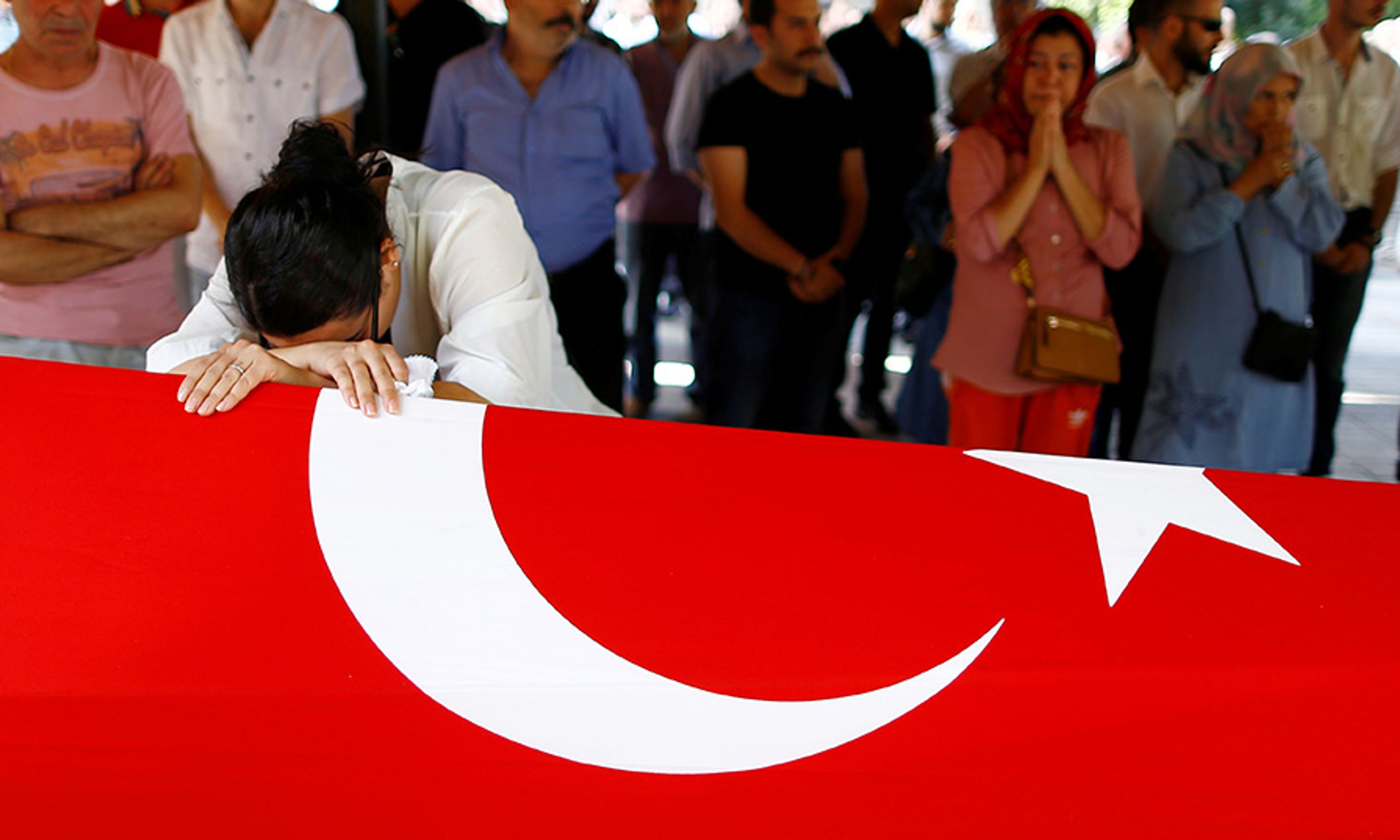
Akyol: Well, there were a few heroic Turkish policemen who entered in a shoot-out with ISIS terrorist right inside the terminal. One of them got killed. Another one got seriously injured and is now in the hospital. In Turkey, of course, people from all walks of life condemned the attack — although some resorted to cheap shots about whom to blame or not. I also appreciate Western support: Cities such as Amsterdam, Berlin, Mostar, and Paris light candles with Turkish colors to offer solidarity.
Lopez: People this morning in the U.S. are talking about the resilience of Turkey, that the airport opened up so quickly. What do you attribute that to?
Akyol: I am not sure if it is a good or bad thing, but I think we Turks got immune to terror attacks. In the past year, more than a dozen attacks took place, and more than 250 people got killed, and yet life went on as normal. I also think that the government wanted to make a point by quickly reopening the airport: We are here, functioning, and the tourists, which we lack badly this year, are welcome.
#related#
Lopez: How goes religious freedom and Islam, something very close to your heart?
Akyol: Not great. People like me are defending liberal ideas (in the classical sense) with Islamic arguments, and we do have some impact: Educated, moderate, modern Muslims find our views persuasive. But then there is a fierce fundamentalist movement, and also a silent majority who is neither fierce nor open-minded. (Sociologist Amitai Etzioni rightly called that large category of Muslims “illiberal moderates.”) Yet we should accept that a whole civilization and its attitudes do not change very rapidly. Remember that it took Europe centuries to develop religious tolerance, and liberal pioneers such as John Locke, who initially looked marginal, played a big role.





Comments