U.S. Power, Not International Law, Determines Whether the Strait of Hormuz Is Open

It has been historically open because the regime in Tehran understood that America would not tolerate Iranian restrictions.

Share this story

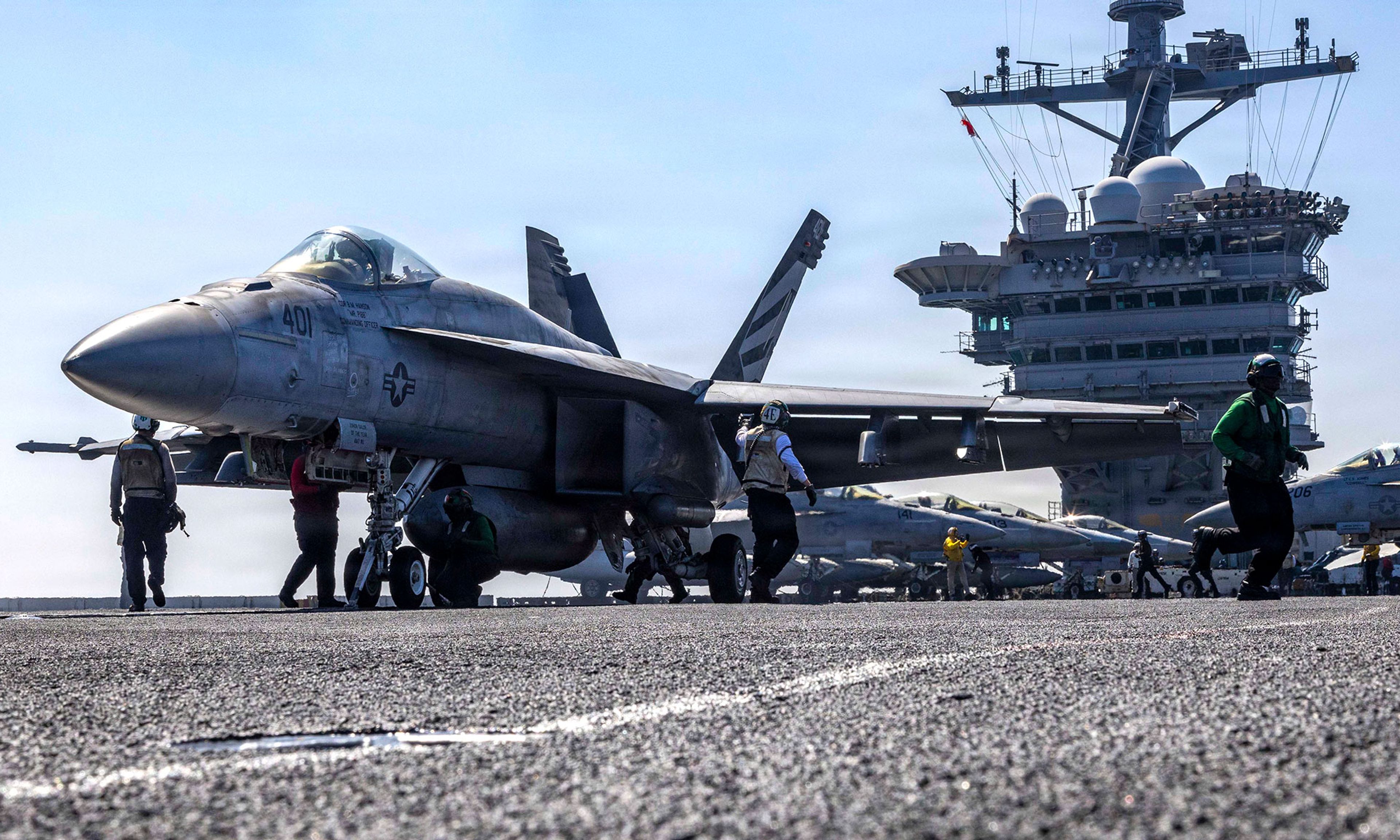
A U.S. Navy F/A-18E Super Hornet attached to Strike Fighter Squadron VFA-151 prepares to launch from the flight deck of the Nimitz-class aircraft carrier USS Abraham Lincoln (CVN-72), under way in the Arabian Sea, February 15, 2026.

Mass Communication Specialist Seaman Daniel Kimmelman/U.S. Navy

Combat in the Persian Gulf is once again tenuously paused, but it escalated over the weekend, after last Thursday when Iran’s Islamic Revolutionary Guard Corps forces conducted a drone strike against the Ever Lovely, a container vessel that was attempting to pass through the Hormuz Strait.

The weekend’s fighting is a timely reminder. The strait (a narrow international shipping channel that 20 percent of global sea trade, including vital energy commerce, passes through) has been kept open since Ayatollah Ruhollah Khomeini’s 1979 revolution by one thing and one thing alone: American power. There are no international law restraints to which the Iranian regime is or will agree to be bound.


Andrew C. McCarthy

About the Author

Andrew C. McCarthy

Andrew C. McCarthy is a senior fellow at National Review Institute, an NR contributing editor, and author of Ball of Collusion: The Plot to Rig an Election and Destroy a Presidency.

Comments

Advertisement

Advertisement


