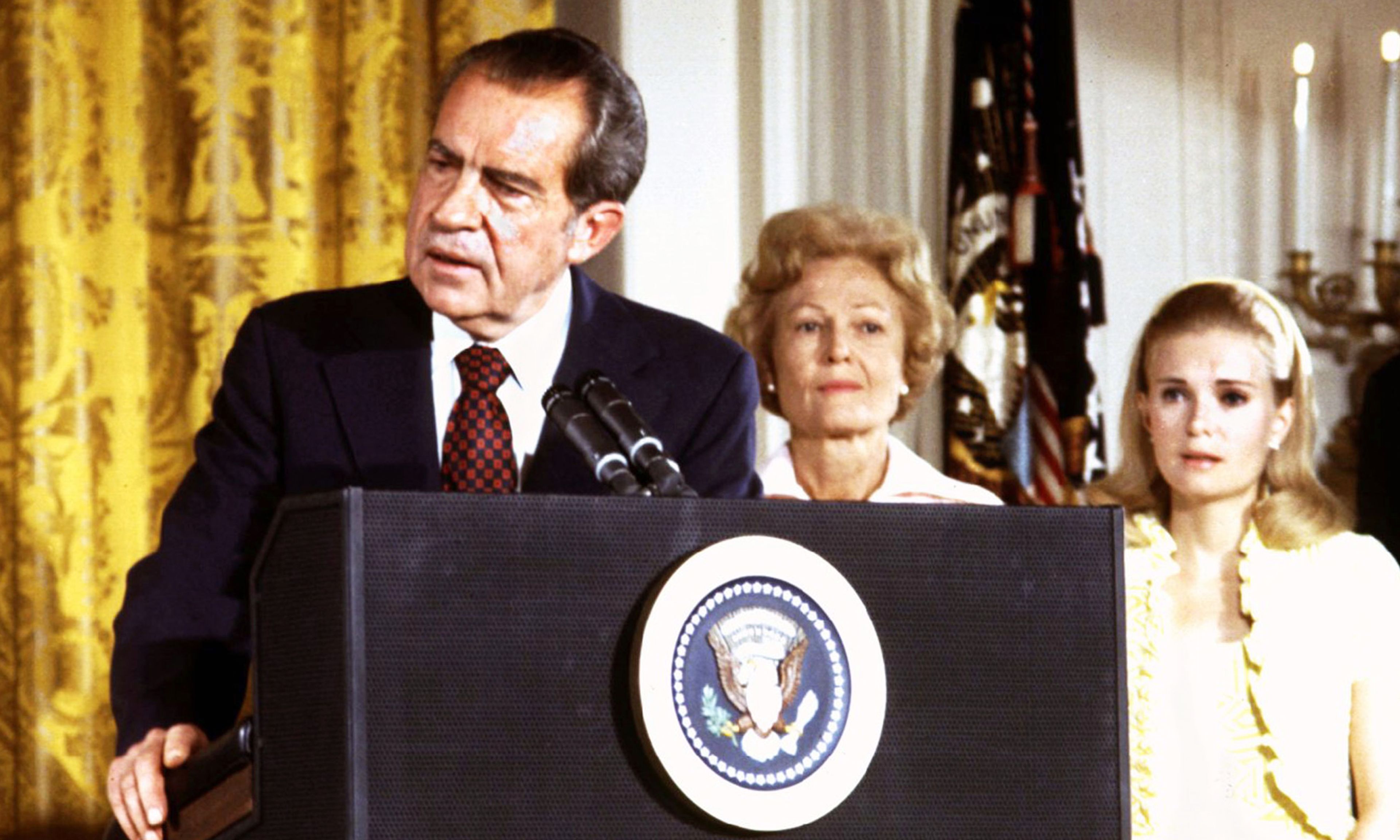
Kevin Kruse and Julian Zelizer, two professors of history at Princeton University, draw on Watergate to make a case in USA Today for “holding President Donald Trump accountable,” rather than flinching for fear it will cause a backlash or add to our polarization. In the name of healing the country, they note, President Gerald Ford pardoned his predecessor Richard Nixon for offenses against the U.S. committed during Nixon’s presidency. Rather than healing the country, the pardon outraged it. The professors write,
The nation has continued to pay for its failure to hold Nixon accountable. The divisions that Ford had hoped to paper over with his pardon have only continued to widen. Moreover, the general trend — toward a vague sense of “healing” instead of holding specific wrongdoers accountable — has only continued to erode the public’s faith in government over the ensuing decades.
Thus Democrats must “make sure that wrongdoing [by Trump] is set right.”
I’m in favor of holding presidents accountable for wrongdoing. If a president has committed a clear-cut offense that requires his removal, then I think congressmen are morally obligated to seek his removal even if that course is unpopular or divisive. Stated that way, the conclusion would not seem to be especially controversial. But Kruse and Zelizer have found an unconventional way to get there.
I think it is fair to say that Nixon’s forced resignation is generally considered a triumph rather than a setback for the cause of presidential accountability. Ford’s pardon, while initially extremely unpopular, has widely been considered in retrospect to have been an act of statesmanship. (Here’s how the New York Times put it a few months ago: “Most historians agree that Mr. Ford did the right thing for the country, which was reeling from the continuing war in Vietnam, economic stagnation, an energy crisis and the political turmoil left over from Watergate.”)
I don’t think the professors overcome either of these presumptions. It’s true, of course, that the pardon of Nixon did not keep the country from growing more polarized. But that is to set much too high a standard for it. The point of it was not to end all of the country’s divisions; it was to prevent the divisions of the counterfactual case in which prosecutions of Nixon were on the table. To believe that the pardon enabled wrongdoing by later presidents, as Kruse and Zelizer suggest, you’d have to think that those presidents saw Watergate as a case study in what they could get away with. I think they, much more sensibly, saw Nixon’s fate as an outcome to avoid.
Kruse and Zelizer also leave open the question of what would count as adequate accountability if driving a president from office through use of the impeachment power does not qualify. Their op-ed is fairly explicitly addressing Democrats who think that Trump may be guilty of impeachable offenses but are unsure about how aggressively to proceed. If such a Democrat reads the piece carefully, his main takeaway might be that for some Trump critics, nothing he does will be enough.




Comments