My day seemed to be working out well. I had attended a good meeting at the Federalist Society with Mike Horowitz, Gene Meyer, and five clever Harvard students about a projected conference next year on challenging the caricature of hard-hearted conservatism. I was looking forward to dining later with R. J. Smith, an old friend, a pioneer of “property-rights environmentalism,” and a first-class trencherman with an unrivaled knowledge of California and Australian wines. And having just settled myself comfortably into the Pret a Manger on K Street with a coffee and a pain au chocolat, I had more hours than I needed to complete my column and send it in. It felt good.
Of course, I began with all the usual time-wasting exercises to delay actually writing: checking essential e-mails, tweeting a witty Tweet at the expense of Europhiliacs; watching my stocks tumble. Why not? I had plenty of time. And when I did get started, the writing went fairly easily by my neurotic standards.
Only one thing nagged me. R.J. wasn’t responding to my calls to fix the dinner arrangements. I left message after message. No reply. It was a minor irritant but, well, it unsettled me. On second thought, the opening of the column didn’t quite work (too roundabout). I started again.
Where the hell was R.J.? No, I must concentrate on the column, especially since it was now going slowly. Things puttered along in this vein until I realized I would have to write off dinner with R.J. Pret a Manger would be closing soon. It would be best to return to McLean, Va., where I was staying with friends, and finish the column there.
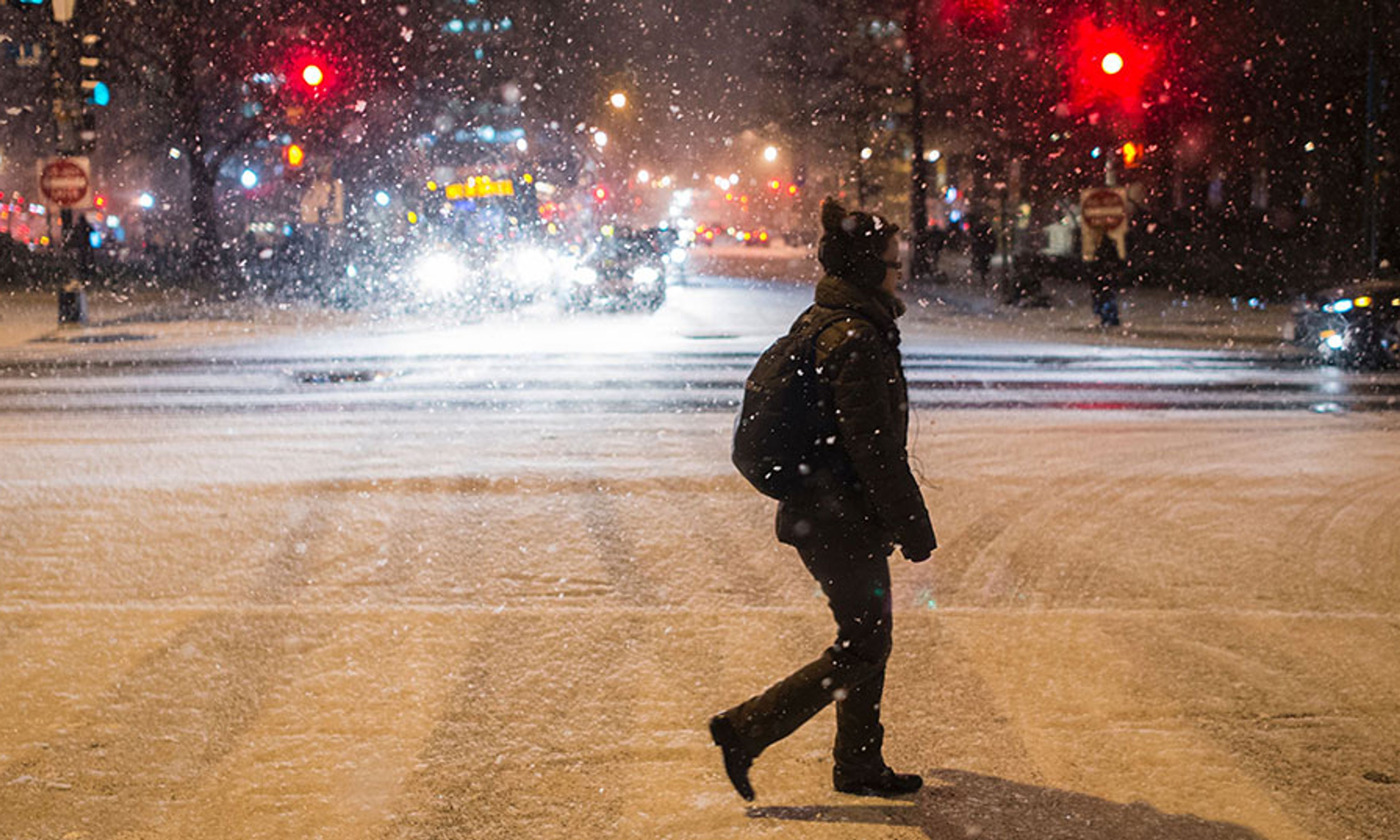
But as is well known, winter always catches Washington, D.C., by surprise. It caught me by surprise now. When I got up to leave and turned to the window, I saw that snow had been falling a while and now covered the ground. I would have to scramble for a taxi.
I was still scrambling 30 minutes later, and wet, when the phone rang.
“Where the hell are you?” asked R.J. “I’ve only just now realized that you might be a number ringing all day called Total Consulting Inc. [One of my employers.] Naturally I ignored the calls since I assumed they must be soliciting something or other. Let’s eat. I’m famished.”
It was too late for dinner, alas, if I was to finish the column. We exchanged good wishes. I managed to hail a taxi, which set off toward Virginia. After trying several approaches over the Potomac, all blocked by long lines of cars locked in jams, the taxi driver said in a kindly way: “Take my advice. It will take two hours and $200 to get you where you want to go. Go back downtown, grab a drink, and go later.”
Sound advice. I went back to the apartment building where R.J. lives, in the hope of rekindling the idea of dinner. Not so fast. According to the doorman, he had just set out to stack up on groceries because a friend had telephoned to tell him that the long-awaited snowstorm was finally on the way. Knowing the area, I guessed he had gone to Whole Foods and decided to follow him, stopping off in bars and restaurants along the way on the suspicion that he might have done the same.
A few minutes later, I was leaving the third such bar without success (or a drink) when somebody shouted “John.” It was another old friend from Central Europe and (now) the Cato Institute, Marian Tupy, who was as surprised to see me as I him. He offered me the drink that by now I really wanted, but I explained my quest and told him I would be back as soon as I could, with or without R.J., and sped on. It was foolish thinking, of course, I never met him again that night.
Whole Foods was like the railway-station scene in Casablanca, with hordes of refugees jostling one another in what looked like panic, piling up food, drink, toiletries, and paper towels in carriages, and lining up in long snaking queues to pay for them. They looked confused, desperate, afraid of what the morrow might bring. I ran up and down the lines, looking in vain for R.J., when someone shouted “John.”
“Karina,” I replied. It was another old friend, this time Karina Rollins from the New York office of National Review about a decade ago, now at Heritage. She faced a long, long wait to the till. I told her I would come back for her. She hadn’t seen R.J. But I did.
He was, characteristically, standing by the cheese counter. We greeted each other and agreed to have a late supper at Logan’s across the road. I tried to persuade him to leave right away. But he refused to go without getting his cheeses first. Karina too insisted on getting food for her cat right away. They would meet me later. They were cutting it fine.
I made my way cautiously through the Whole Foods crowds, by now feeling less like Rick in Casablanca than like Marcello in a Felliniesque dream-like movie. Would my childhood sweetheart suddenly appear in front of me, smiling enigmatically for several minutes before disappearing into the fruits and vegetables section? No one else appeared, however, and I made the long wet walk to Logan’s.
I was low, beaten, looking for a way out.
“What should I have?” I asked the waiter.
“Try a Bourbon Old-fashioned,” he said. “That usually works.”
“And to eat?”
He looked outside at the snow still falling and sticking where it fell.
“The meat loaf is selling very well tonight. It seems to suit people’s mood.”
I sat down. The Bourbon Old-fashioned arrived. So did R.J. He ordered the same. I tasted the drink. It was delicious. I smiled across at R.J. It felt good to clink glasses with an old friend and talk about old times. I could feel my spirits reviving. After the adventures of the night, order and harmony were being restored to the universe. Inside, I knew life was good.
“How’s the column going?” asked R.J.
The column, yes, the column. That column, in fact.
“Well,” I said, “No, I don’t mean ‘well’ exactly, but it’s been started, and I know what I’m going to say, that’s always the essential thing, isn’t it? So, one way and another, I’m pretty confident I can meet the deadline, assuming that nothing else goes wrong.”
In words that Michael Frayn put into the mouth of John Cleese: ‘It’s not the despair. I can stand the despair. It’s the hope I can’t take.’
I laughed lightly.
“And at this point I don’t see how anything else could go wrong.”
All the same, I ate and drank quickly, shook hands with R.J., and headed out to get another taxi. Time was getting short, but there was just enough to get the column written and delivered. I felt hope returning.
Again, getting a cab took a little time, but I got one eventually and we headed back toward the Potomac. The radio warned that there were still serious holdups, and when the cab driver saw the long line of red lights stretching over the bridge, he turned around and drove on the Washington side of the river toward the Chain Bridge. His instinct was correct, we met no obstacles, we passed some stationary vehicles on the incoming side of the road, and quite soon after leaving Logan’s, we turned from the highway onto the winding country road that leads to my host’s house. The cab driver began quietly muttering some anxieties, but I paid little attention. I was mentally writing the last lines of my column when the driveway came into view 150 yards away.
In words that Michael Frayn put into the mouth of John Cleese: “It’s not the despair. I can stand the despair. It’s the hope I can’t take.”
Suddenly the cab turned an unexpected circle and came to a halt in the middle of the icy road at right angles to cars coming in either direction, in a small valley between two hills. It resisted all the attempts of the driver and me to make it move. It was a both a road hazard and a devilish inconvenience.
I won’t detail all the activities of the next hour — the driver positioning himself to warn oncoming cars, my host telephoning the police and park services, two Harvard students with heavy boots coming to help shove the car out of danger, all of us slip-sliding on the treacherous road — because they were all helpful but failed to solve the problem. It was the arrival of a charitable neighbor driving a large tank-like vehicle with a crane atop that finally turned the car around, pulled it onto less icy ground, and released the anxious driver back to Washington.
“That was lucky,” I said.
“Not really luck,” replied Mike. “He drove out to help people caught in the ice. He’s a great neighbor. He’s Dick Darman’s son.”
A few thought connections were suddenly made in my mind: Dick Darman, the first Bush administration, one thousand points of light! My goodness. I’ve moved progressively tonight from a nightmare to a movie to a parable.
But not, alas, to a column.
So what makes God laugh? People making plans, especially people in Washington, D.C. And what about people in Virginia who set out to help their neighbors on the off chance they’re in trouble? Why, that makes God smile. And journalists struggling to catch a fleeing deadline? A little of both.





Comments