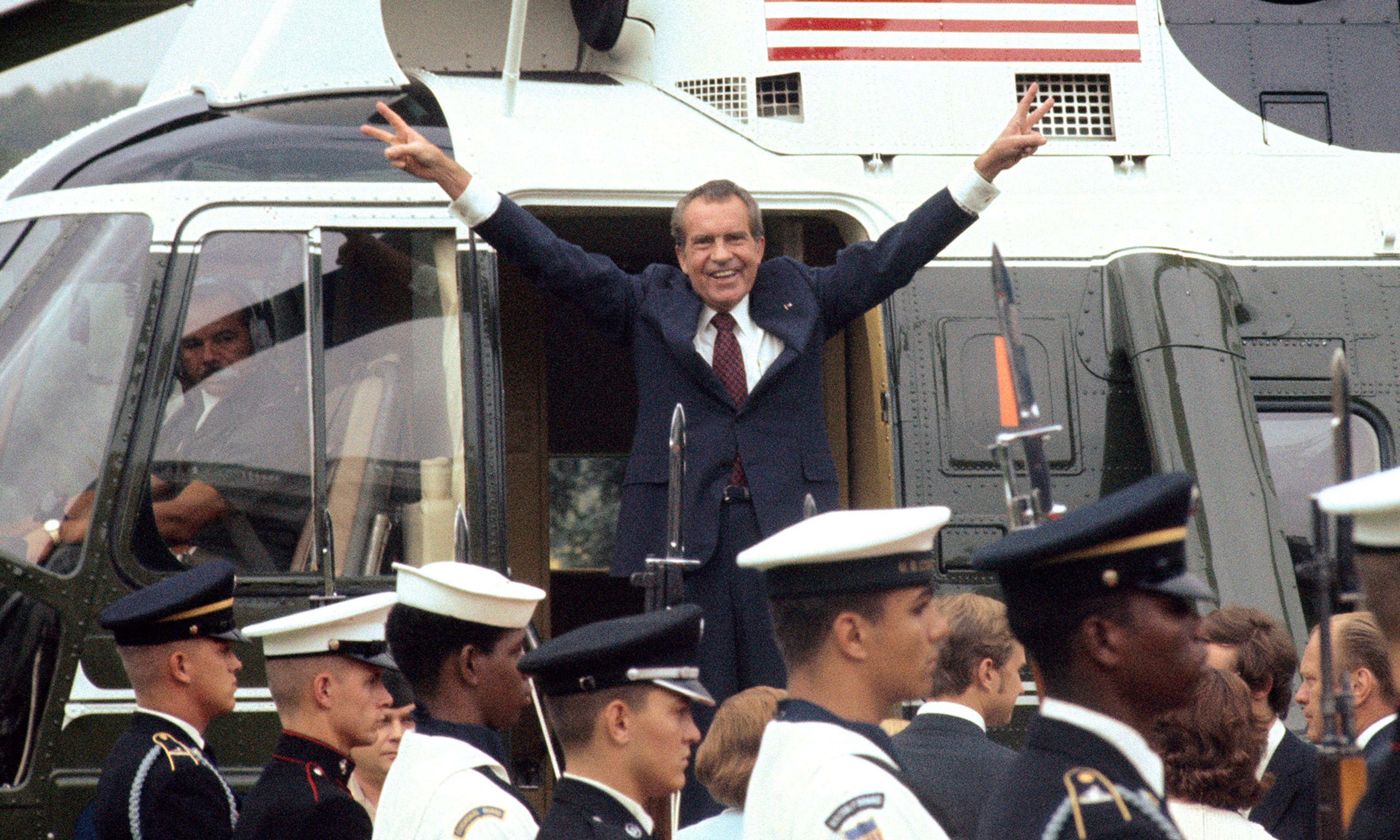
On the morning of August 9, 1974, when Richard Nixon boarded Army One on the South Lawn of the White House, his family and a few selected aides in tow, and flashed his V-for-victory wave, most Americans thought they were witnessing the end of Watergate.
The unprecedented resignation of an American president seemed like a fitting final chapter in what the new chief executive, Gerald Ford — freshly sworn in by Chief Justice Warren Burger, the only man to sit in the Oval Office who was never elected to the presidency or vice presidency — would call, in televised remarks that afternoon, “our long national nightmare.”





Comments