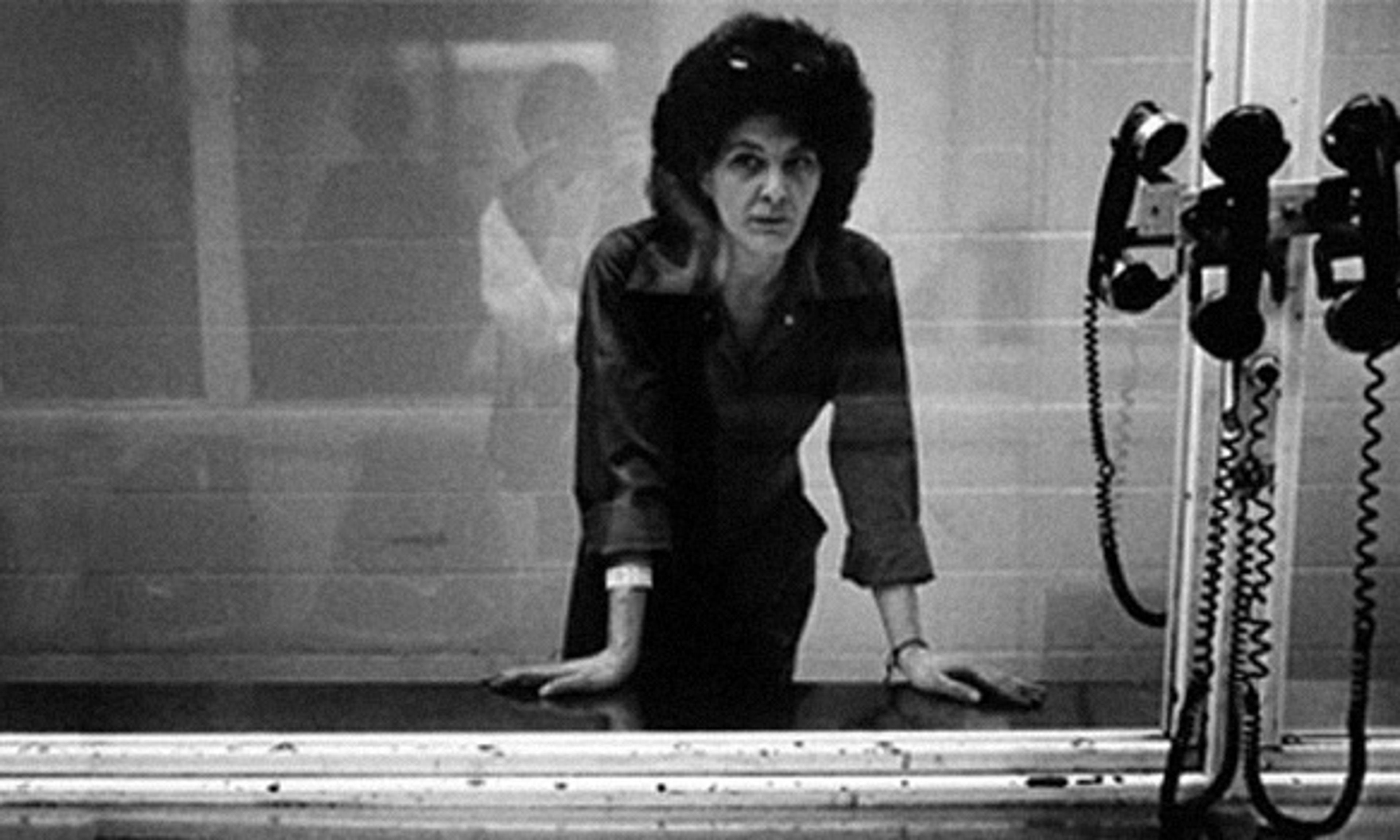
It is one of the touchiest, most inflammatory subjects I know, and if you get into it, you will be accused of McCarthyism, for sure. No problem. I’m talking about American liberals and their relationship with the violent Left. The subject has come up again because of Kathy Boudin: Columbia has hired her as an adjunct professor; NYU has made her a scholar-in-residence.
She is, of course, a Weather Underground terrorist, and largely unrepentant, as far as I can tell. Susan Rosenberg was, and is, unrepentant too.
I wrote about Rosenberg early in 2001, because of what President Clinton did: In the waning hours of his presidency, he granted clemency to both her and Linda Sue Evans. He did not do the same for Kathy Boudin. Maybe he regarded that as a bridge too far? Anyway, my piece is called “Clinton’s Rosenberg Case,” here.
In this period, I thought long and hard about liberals and leftist terror. Bill Clinton, the editors of the New York Times, the English department at Amherst College: They would never kill policemen. They would never blow up young people as they danced at Fort Dix. But they would be tender toward those who do, wouldn’t they? Haven’t they?
Bob Tyrell had a name for certain people he observed in college: “coat-and-tie liberals.” They were not the scruffy radicals, who were naked in their aims. They were respectable, but they were not far off in their thinking from the radicals. Perhaps they considered the radicals purer, in a way?
I also think of good ol’ Clinton, and what he wrote to that ROTC head, way back: “I decided to accept the draft in spite of my beliefs for one reason: to maintain my political viability within the system.”
Last year, I returned to the theme of liberals and terror, or liberals and “political crime”: I wrote a piece called “Aren’t They Cute? America and some special criminals” (here). The occasion for this piece was the reemergence of George Wright, who now calls himself by a Portuguese name — José Luís Jorge dos Santos.
Toward the end of this piece, I did some general ruminating:
Why is it that so many liberals are so tender toward Rosenberg, Evans, et al.? Why do these terrorists, who are generally unrepentant, receive such sympathetic treatment from the Times, The New Yorker, 60 Minutes, etc.? Is it because liberals, some of them, “hold their manhoods cheap” for not being part of the “struggle” themselves? Do they feel guilt over “preserving their viability within the system” (to paraphrase Clinton)? Do they regard The Family as “liberals in a hurry”? Rosa Parkses with itchy fingers?
Discussion of Bill Ayers and Bernardine Dohrn was essentially out of bounds during the 2008 presidential campaign. Question Obama’s friendship with them, and you were slammed as uncouth, at best. Ayers and Dohrn are considered almost quaint figures now — living mementos of a colorful past, of “crazy times.” Lincoln Diaz-Balart, the Cuban-American politician, has said he doesn’t know how Castro can seem cute after decades of torturing people. To many, Ayers and Dohrn seem cute, too.
Ayers once summed up his situation to David Horowitz in a memorable way: “Guilty as hell, free as a bird — America is a great country.”
It is, yes. But not because of the Weather Underground or the Black Liberation Army. More because of people such as their victims.
I’m not sure I have the full answer on American liberals and the violent Left. But I do know that some liberals will always defend, excuse, and honor these people — for example, by giving them prestigious jobs in universities.
Elie Kedourie once had some advice for David Pryce-Jones: “Keep your eye on the corpses.” It is good advice. It applies not only to genocidal killers such as the Khmer Rouge, but also to smaller fry such as Kathy Boudin and her gang: Keep your eye on the corpses.
Boudin is famous — she’s a professor, a venerated criminal. She stood up to the Man, you know. But do you know the names of the Men she and her friends managed to “off” in 1981? Peter Paige, Waverly Brown, and Edward O’Grady. Brown was a kind of civil-rights pioneer, the first black officer on his force.
Nice goin’, Kathy! Hurray Columbia! Hurray NYU! Rah!
‐Above, I mentioned the Khmer Rouge. I happen to have a piece on them in the current National Review. Or rather, I have a piece on the international tribunal meant to try them. Only one of them has been tried — and remember, the Khmer Rouge fell from power in 1979. The tribunal opened its doors in 2006. Its first trial began in 2009. Anyway, this is an interesting subject, if a painful and frustrating one.
The Khmer Rouge, recall, killed somewhere around 2 million people, or, in other terms, between a fifth and a quarter of the Cambodian population. This was all in the name of a bright Red tomorrow, you know. Plenty of Western intellectuals supported them: One was Jan Myrdal, Gunnar and Alva’s boy.
Where do you think Kathy Boudin stood? You don’t have to think for long.
In preparing my piece for NR, I talked to a survivor named Thida Mam. She is a software engineer in California. She said, “It may sound strange to say, but my family was lucky, because only my father was killed.” In other families, more were killed.
‐If you feel like something lighter, I don’t blame you — let’s talk about Barack Obama and Harry Reid. The president has apologized to California’s attorney general, Kamala Harris, for calling her “by far the best-looking attorney general” in the country.
I prefer the Senate majority leader’s randier language: Of the junior senator from New York, he said, “We in the Senate refer to Senator Gillibrand as the ‘hottest member.’”
That’s what I’m talkin’ ’bout.
‐On to basketball: In the NCAA Tournament, Michigan played Kansas. A Kansas player, Elijah Johnson, punched a Michigan player, Mitch McGary, in the groin. It was the most blatant thing you ever saw. Some observers were shocked that the refs didn’t throw Johnson out of the game. He played on, till the end.
Later, I had a thought: What if the Kansas coach, Bill Self, had thrown Johnson out of the game? Had said, “No, that’s not the way we in our program play basketball”? To me, the coach would have been a hero: to have expelled his own player, in a critical game, on a matter of principle.
But there is a great, great difference between the American society of my dreams and the American society we have. You can say the same thing, surely — so can most.
‐My team, Michigan, is constantly referred to as a “young team” — because of the prominence of freshmen and sophomores on it. This cracks me up a little: As though college juniors and seniors — between 20 and 22 years old — aren’t young too!
But I know what the commentators mean . . .
‐Before the 1992 tournament, Bill Walton picked the Fab Five to win it all. (The “Fab Five” were the starters for Michigan.) Someone, it may have been Brent Musburger, said to him, “But Bill, they’re all freshmen!” Walton said, “I know, but I’ll take talent over experience any day.”
The team made it to the final game and lost (to Duke).
‐Let’s end with another sports note — in which I will reveal that I am a lefty PC squish. (Some of my e-mailers have long thought so. It always amazes me that there’s someone to the right of me. Kind of a relief, actually.) A school district in New Hampshire has banned dodgeball. This has some conservatives ruffled, and I understand them. But . . .
Even when I was a child, I thought dodgeball was a stupid game, barely above simple barbarism. It may be the dumbest game in the history of games — and I’m even including soccer. (Uh-oh, I shouldn’t have said that. Some of my best friends are soccer devotees.) Let the young’uns play real games, maybe even a sport. Ever put a baseball bat in their hands? I mean, not to beat others with, but to hit a ball with?
If dodgeball disappeared from the earth, we wouldn’t be any worse off. Then again, we wouldn’t be any worse off if certain school boards disappeared.
Have you ever read a crotchetier Impromptus? Anyway, I wish you a good and relatively uncrotchety day!
To order Jay Nordlinger’s book Peace, They Say: A History of the Nobel Peace Prize, the Most Famous and Controversial Prize in the World, go here. To order his collection Here, There & Everywhere, go here.






Comments