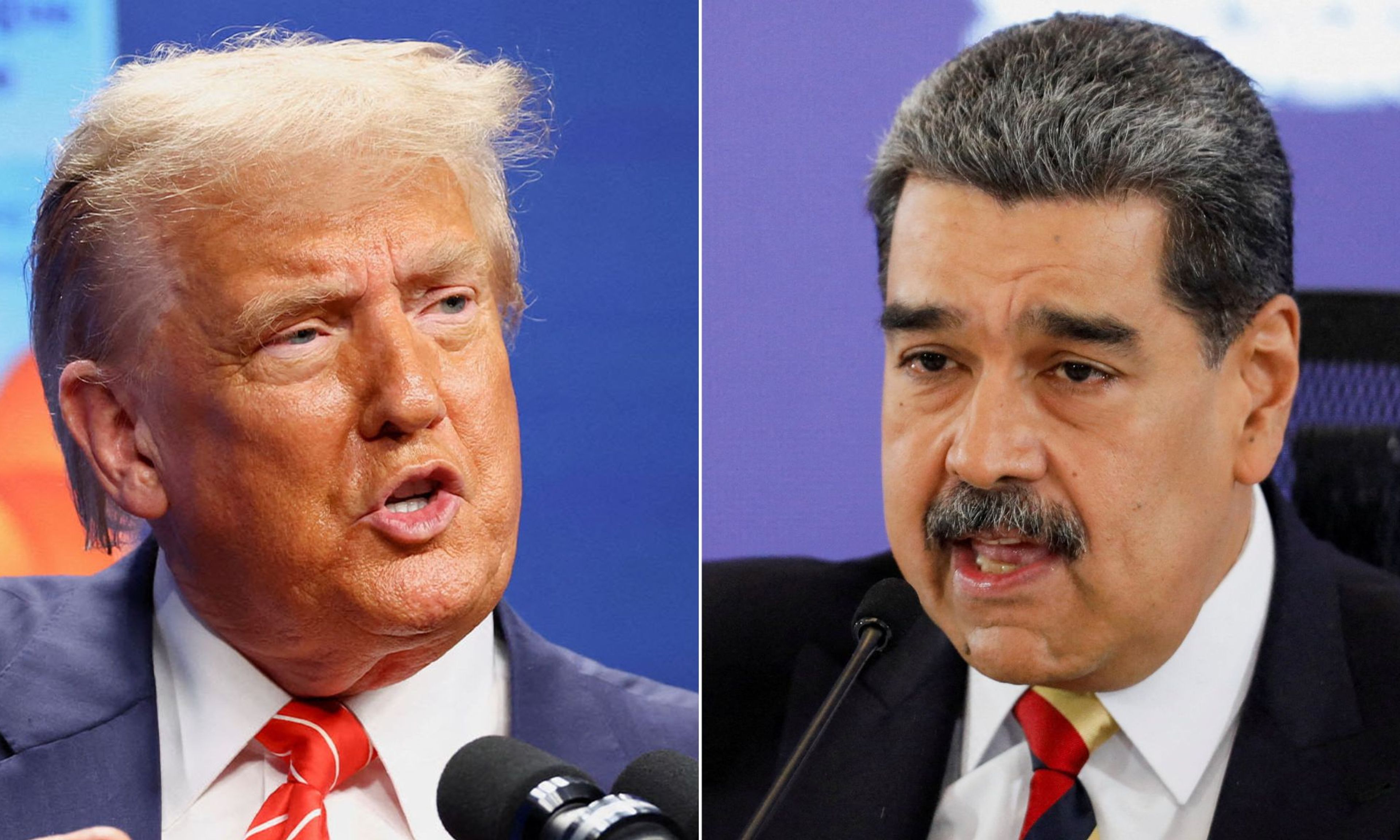
At this writing, the United States appears to be on the verge of military action against the Venezuelan regime. The president of the United States has de facto closed Venezuelan airspace — via Truth Social, of course — and the largest concentration of American military power in the SOUTHCOM area of responsibility since the 1989 Christmas season is gathered across the Caribbean basin. Naval assets are afloat to the north of the Venezuelan littoral, and American bases and facilities have emerged (or been reactivated) not just in U.S.-controlled territories like Puerto Rico and Guantanamo Bay, but in sovereign allies such as Trinidad and Tobago and the Dominican Republic. All this raises obvious questions, foremost among them: Why now, and why Venezuela?
Anyone outside of the administration who offers definitive answers to either is misleading at worst and incomplete at best. The decision-makers know their full rationales and will share them when they wish. For now, even the legal memorandum justifying the strikes on maritime traffickers remains undisclosed. What we may do, in that absence, is offer a framework for understanding what might be driving events, without the pretense of speaking for the White House or claiming unique insight into its policymaking.





Comments