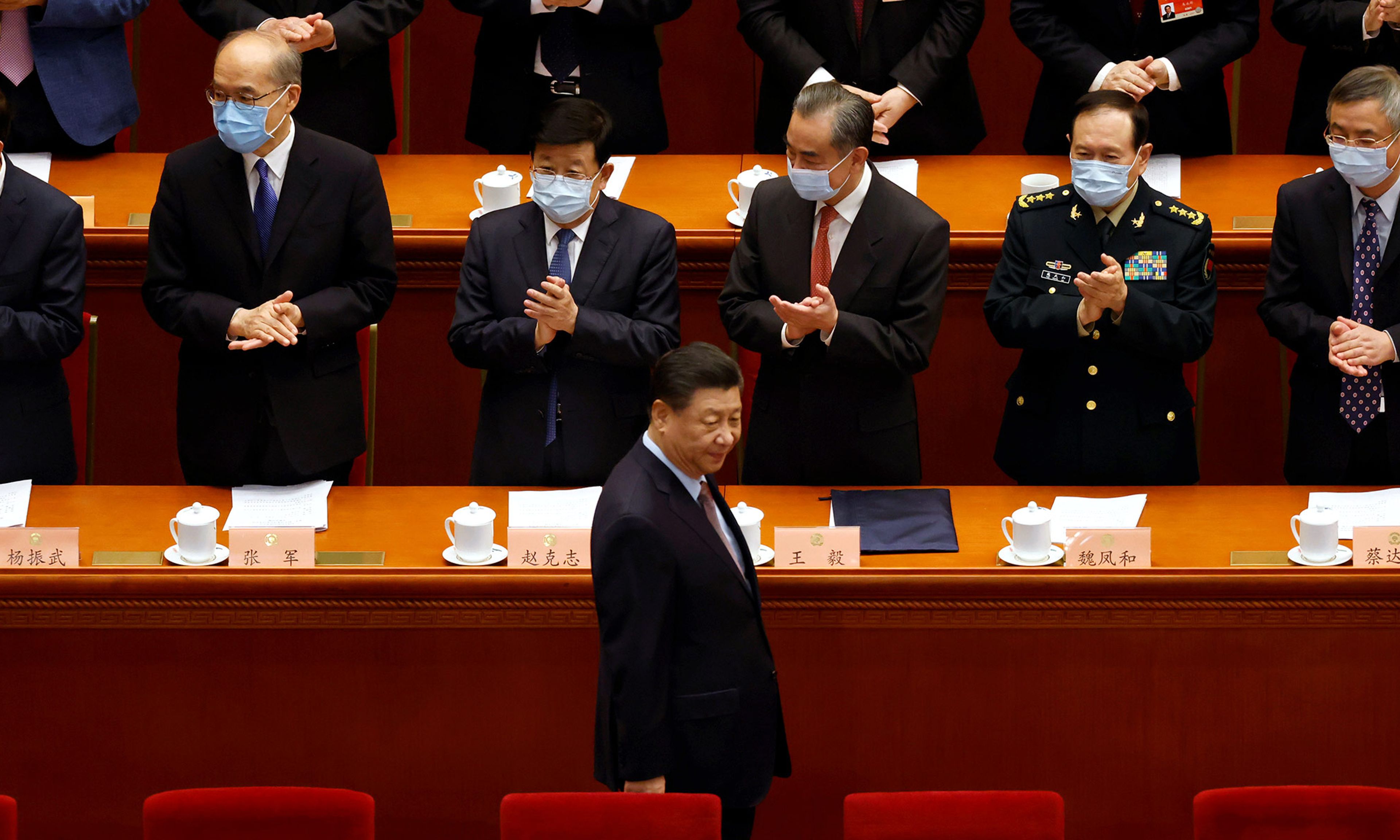
It is a truism that authoritarian and totalitarian leaders often arise at times of political and economic crises. The 20th century had many examples, including those totalitarian leaders whose defeat at the hands of democratic capitalism defined the century.
In our time, an emerging orthodoxy about China’s Xi Jinping stands this lesson on its head. As the 20th Party Congress of the China Communist Party approaches — at which Xi is expected to extend his power indefinitely — there are daily stories about how his strong-arm tactics have provoked a backlash: The economy is slowing, and China’s growth and prosperity are being derailed. According to this analysis, Chinese society’s adherence to the ideological dogmatism of “Xi Jinping Thought,” the disastrous zero-Covid policy, the weaponization of corruption charges to purge “moderates” who pose a threat to him, and other heavy-handedness has hardened the party apparatus. It is undoing the economic progress wrought by his predecessors and chasing off decades of global investment, which now is fleeing the country. Recently, social-media stories were trending about a possible “coup” against Xi, ostensibly at the hands of enlightened, market-driven moderates who are alarmed about the direction Xi is taking the country.



Comments