Each year, admissions officers at elite universities face an unhappy task. They are deluged with thousands upon thousands of applicants who are bright, enthusiastic, ambitious, and well-qualified — and most of whom must be rejected. There is no pretense that the weeding-out process operates strictly according to academic merit: Schools admit that they give preferences on the basis of race, ethnicity, nationality, socioeconomic standing, and “legacy status” (for the children and relatives of alumni). But even so, a public assumption of rough meritocracy prevails: Overall, the best students are supposed to end up at the best schools.
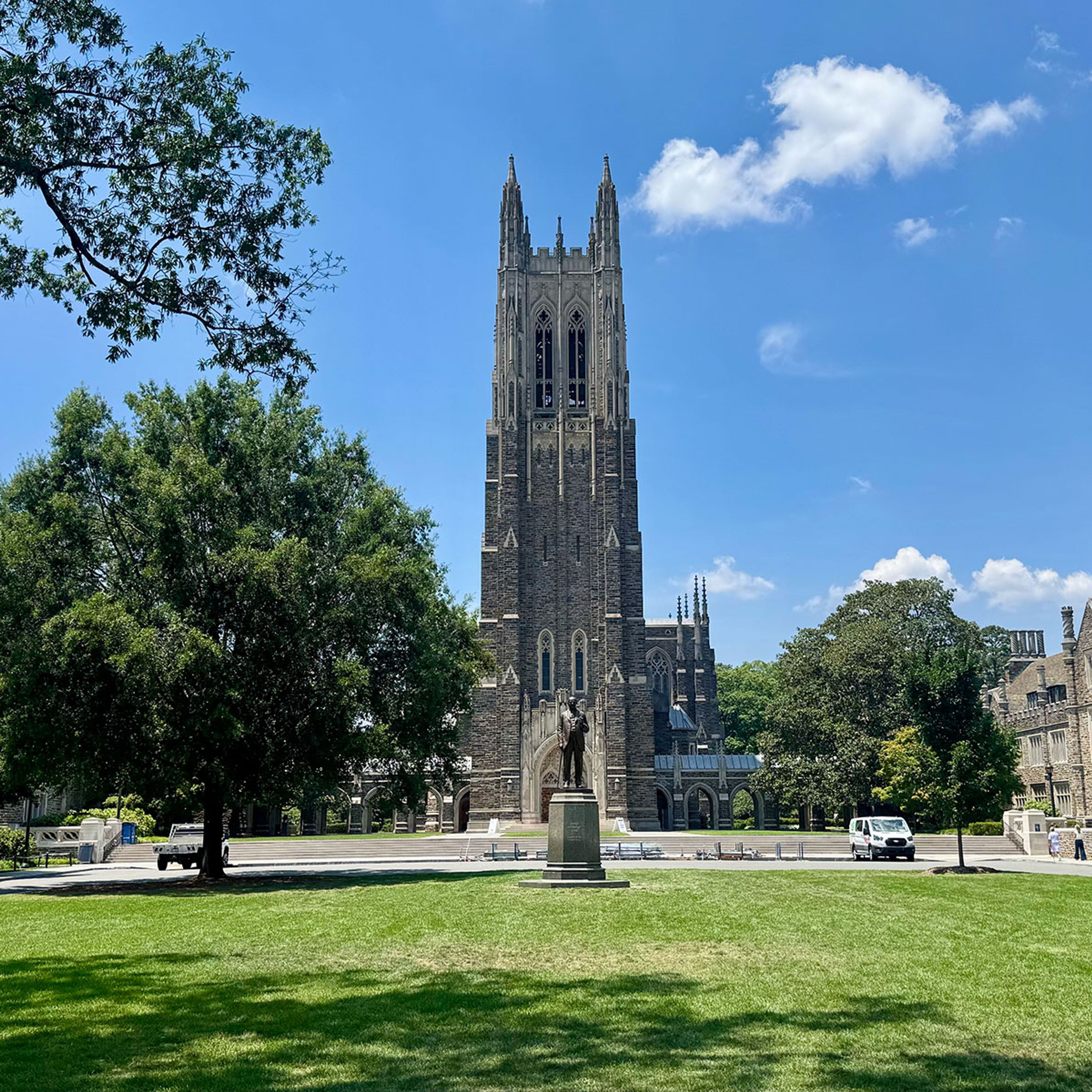
In The Price of Admission, Pulitzer Prize–winning Wall Street Journal reporter Daniel Golden sets out to explode this supposition. He argues that the college-admissions process has been deeply corrupted by the rich and the powerful. His mission, as advertised on the book’s inside cover, is to “explore[] favoritism at the Ivy Leagues, Duke, the University of Virginia, and Notre Dame, among other institutions.” From his exploration, he concludes that privileged applicants — the pampered children of wealthy parents and alumni — are given huge advantages in admissions offices at our nation’s elite colleges. This, he charges, is fundamentally unfair — and even downright un-American.
The meat of the book is investigative journalism, relying heavily on personal interviews and details of students who have been accepted at elite schools through some type of special treatment. Golden looks at the personal stories, SAT scores, and extracurricular activities of an impressive cast of characters: the sons of Bill Frist and Al Gore, along with the children of oil tycoons, Hollywood stars, and East Coast bluebloods. The narrative sometimes becomes a slog: Admissions anecdotes are piled end to end, with their individuating features often blurring together. Twenty pages into the book, you feel like you’ve already had enough.
But such dryness is perhaps inevitable with a volume of this type, and Golden’s meticulous reporting does serve a purpose: It proves beyond a reasonable doubt that many elite colleges do in fact lower their standards–much more significantly than they would admit — in order to enroll the children of prominent politicians, celebrities, and uber-wealthy parents (whom university fundraisers view as status-boosters and potential donors).
This practice is at least questionable, and schools that engage in it deserve to bear the full brunt of public scrutiny that Golden’s book will summon. But Golden gets into trouble when he uses his findings as a springboard to make sweeping claims about the state of American society. The substance of his social commentary is often dubious, and its tone betrays the presence of an ideological axe to grind. He asserts that “social mobility, once a defining American characteristic, is becoming as rare as the street-corner phone booth,”and that “the country is largely ruled by what I call the ‘legacy establishment.’” In discussing the effects of favoritism in higher education, he laments “the ingenuity of America’s upper classes, which have all too often enhanced their wealth — and power — across generations.” Colleges have played an instrumental role in the ossification of the American social structure, he writes, by perpetuating unfair privileges and closing the gates to the unconnected.
There are three main problems with this dramatic narrative. First, even allowing for the favoritism Golden identifies, a large proportion of slots at the nation’s top schools are still open to fair competition. Second, the overabundance of quality professors ensures that excellent educational opportunities are widely available, even at average state colleges. (In America today, no qualified students are denied quality college educations because of unfair admissions.) And third, and most important of all, America’s flourishing economy ensures that a top-tier college degree is not nearly as important for personal and professional success as Golden implies.
Golden himself is a Harvard graduate, and so it is understandable that his view of things might be skewed to overestimate the importance of such a credential. He has had a very successful career in journalism, and no doubt his Harvard degree has helped him along the way. Still, there is a measure of condescension in his project: It focuses on elite colleges as if they were the main components of personal success — as if Golden couldn’t imagine suffering through life without his gilded diploma. Objectively speaking, however, the name on a person’s diploma is hardly determinative of his or her life prospects.
Just last week, the Wall Street Journal ran a story addressing exactly this issue. The point is concisely made:
Most CEOs of the biggest corporations didn’t attend Ivy League or other highly selective colleges. They went to state universities, big and small, or to less-known private colleges. Wal-Mart Stores CEO H. Lee Scott, for example, went to Pittsburg State University in Kansas, Intel CEO Paul Otellini to University of San Francisco and Costco Wholesale CEO James Sinegal to San Diego City College. . . . Some 10 percent of CEOs currently heading the top 500 companies received undergraduate degrees from Ivy League colleges, according to a survey by executive recruiter Spencer Stuart. But more received their undergraduate degrees from the University of Wisconsin than from Harvard, the most represented Ivy school. . . . [B]y the time someone has been working for a few years, or held one or two jobs, their employment record counts more than their educational background, recruiters say.
In other words, market economies tend to reward competent performers. The free flow of capital provides endless possibilities for industrious individuals to circumvent the social barriers erected by nepotism and cronyism. This is why America’s socioeconomic structure has been historically, and remains today, one of the least rigid in the world — snobbery and favoritism be damned.
Yet in spite of its problems, Golden’s critique is not entirely baseless. Like any expansive credentialing system, America’s higher-education establishment inevitably interferes somewhat with the free market in human capital. Colleges and universities are imperfect evaluators of job-related ability — and Golden offers reason to think that they are even less perfect than most people believe. As a result, professional recruiters may be misguided when they choose to focus heavily on college prestige. They would likely be better served by relying instead on more objective measures of talent — such as standardized testing and rigorous interviewing — for sorting out prospective employees.
Fortunately, there are few people who will react favorably upon hearing of the blatant favoritism that Golden exposes in his book. This may yield the benefit of prodding admissions officers further in the direction of meritocracy — which almost everyone would applaud.
– Anthony Dick is an NR associate editor.
<em>The Price of Admission</em>, by Daniel Golden
http://www.amazon.com/gp/explorer/1400097967/2/ref=pd_lpo_ase/104-5505474-3943110?
http://books.nationalreview.com/images/golden_price.jpg




Comments