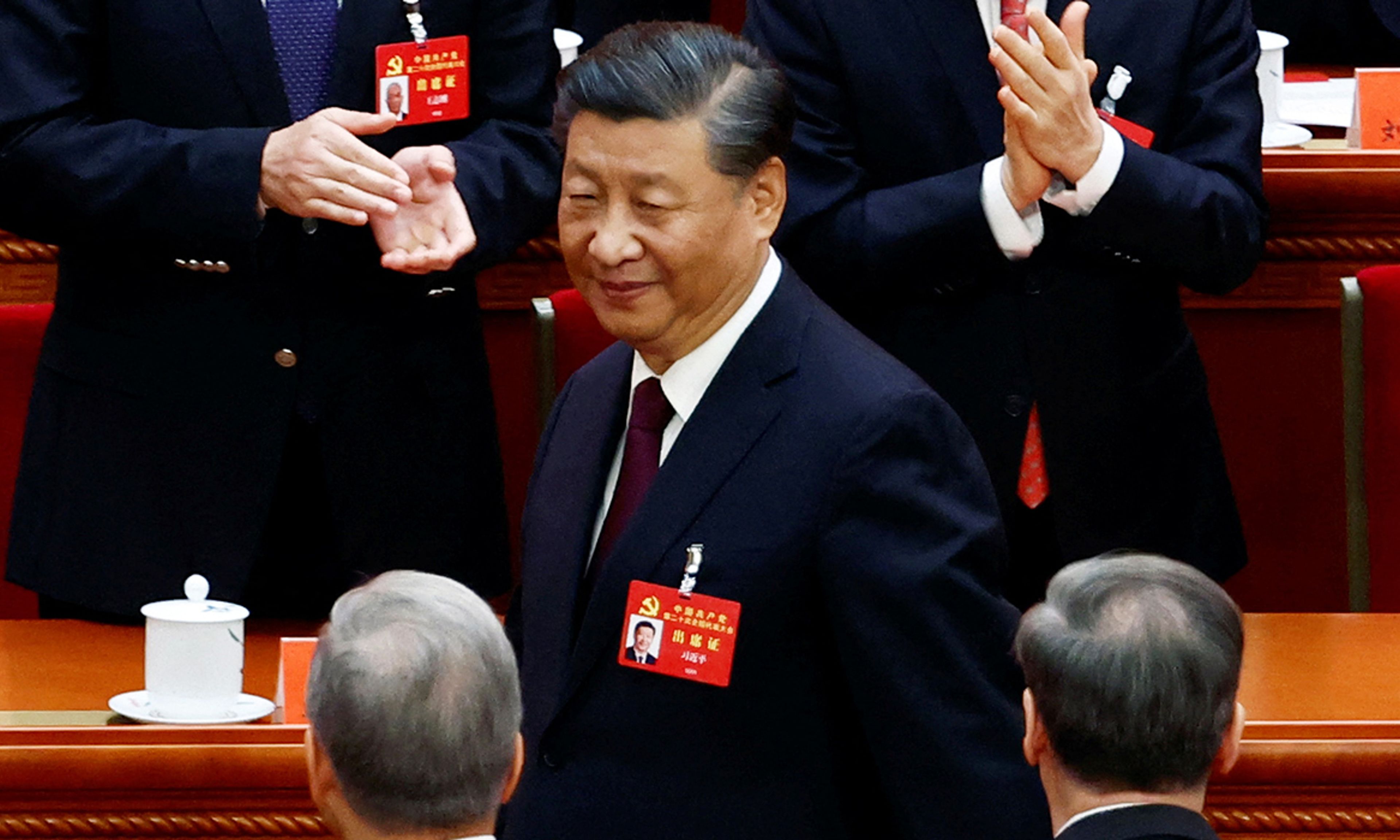
In describing the recent Chinese military moves around Taiwan following the swearing in of Taiwanese president Lai Ching-te on May 19, a spokesman for the People’s Liberation Army of the People’s Republic of China said that the exercises were intended as “strong punishment” for Taiwan.
“Punishment” is a curious choice of words for modern statecraft, but it reflects China’s worldview under Xi Jinping. Xi sees himself as a leader of destiny for a country whose recent history can be divided into two salient 100-year periods. (In the case of China, “recent” has a meaning all its own.) For Xi, the first period is the so-called Century of Humiliation, which began with the first opium war, 1838–42, and ended with the assumption of power by Mao and the Chinese Communist Party in 1949. It was a century of abuse and subjugation of China by foreign powers, who seized territory and indentured Chinese into servitude and shipped them overseas to help build foreign economies. This period peaked during World War II, when China, an ally of the United States, endured ruthless occupation by the Japanese Imperial Army. That included the six-week period in 1938 known as the Rape of Nanjing, which was the capital of the Republic of China. As many as 300,000 men, women, and children were brutalized and killed in the atrocity.




Comments