
James Madison would be proud of Justice Kennedy’s Tuesday performance. In yesterday’s hearing on the administration’s health-care overhaul, Kennedy went to the central issue: not whether Obama’s health care plan is simply constitutional, but whether it changes the government’s relationship to its citizens. In essence, he channeled James Madison.
Justice Anthony Kennedy went to the heart of the constitutional question by raising whether Obamacare was an “unprecedented act” — one which “changes the relationship between the federal government and the individual in an important way.”
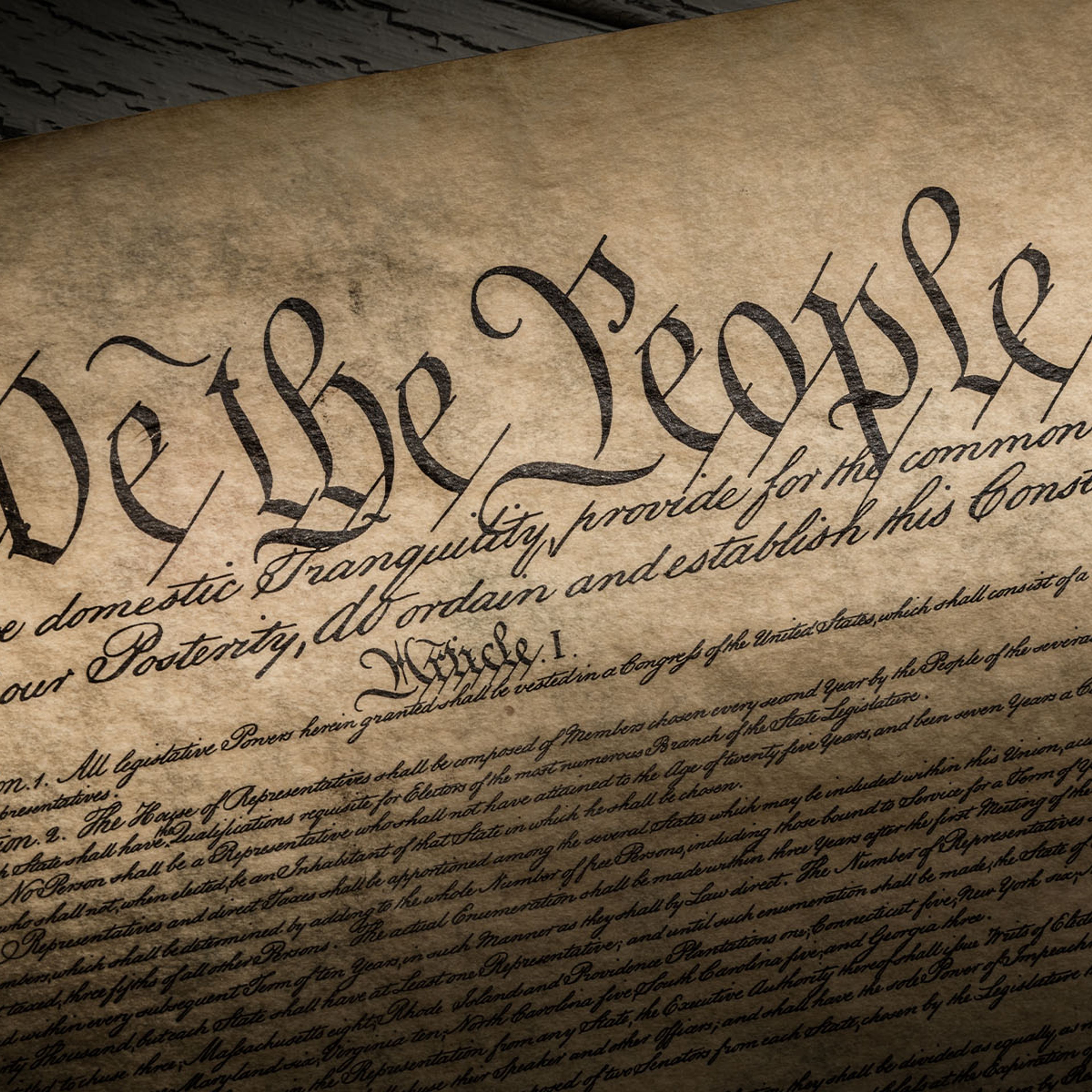
Madison, the “Father of the Constitution,” would have no doubt. Madison and the Constitution’s other authors put great store not simply in the document itself, but that it fundamentally altered how America’s government would be connected to its citizens.
The Articles of Confederation, which preceded the Constitution, were just that: a confederation of individual states. Outweighing all the Articles’ many shortcomings, the Constitution’s framers saw its ultimate failure as springing from this: The nation’s citizens were entirely separated from it. It was the states that were the direct participants in the national government. Individuals participated in it through the states, but not directly.
This left the nation’s government dependent on the states to do its bidding, which they all too often did not.
Of all the things the Constitution set out to rectify, this was its fundamental one. The Framers intended to give the new national government limited but direct access to its citizens. The result was not just a hybrid, but an unprecedented political product. As Madison wrote in Federalist Paper 39: “The proposed Constitution . . . is, in strictness, neither a national nor a federal Constitution, but a composition of both.”
Threading its way carefully between individuals and states, the Constitution strictly spelled out the government’s role and limited its relationships with both. The Constitution’s Bill of Rights, a precondition of its ratification, further strictly defines these limits. Because the new government had a new relationship with its citizens, the first eight of this first ten amendments were all are limits on the new government’s intrusion on the people.
Time and again, Madison assures the reader that the new government’s power would be limited — particularly on the citizens, which the nation’s government was to reach directly for the first time.
In Federalist Paper #45, Madison wrote: “The powers delegated by the proposed Constitution to the federal government are few and defined…[these] will be executed principally on external objects as war, peace, negotiation, and foreign commerce . . .”
Today, such a description of our nation’s government seems hardly recognizable. Long ago, its limited reach on the states was extended. However, its reach — at conception, a novel reach — to its citizens has been relatively restrained. The case before the Supreme Court now ultimately rests on whether this comparative restraint will be maintained.
Already commentators are trying to read into what Kennedy’s sharp questioning says about his vote — the widely theorized “swing vote” in this case. The Court is just two days into this trial, with months to go before it renders a verdict. It’s still early and hardly clear how Kennedy, let alone the Court, will rule.
However, while it may be unclear how Justice Kennedy will rule in this case, there is no question as to how Madison would. Nor the rest of his Philadelphia colleagues who wrote the Constitution.
— J. T. Young served in the Treasury Department and the Office of Management and Budget from 2001 to 2004 and as a congressional staff member from 1987 to 2000.



Comments