
In a day of Supreme Court decisions that saw much unanimity, two opinions from the Court (and authored by liberal justices, no less) merit particular attention and credit to the justices.
Ames v. Ohio Department of Youth Services addressed the question of whether civil rights laws protect members of a majority group equally to those of a minority.
Two years ago the Court confirmed in Students for Fair Admissions v. President and Fellows of Harvard College that universities can’t discriminate against white or Asian students in favor of their preferred minorities. While Ames came up in a different context—employment law—it affirmed a similar principle. The Civil Rights Act protects all people equally, regardless of whether they belong to a majority or minority group.
Justice Ketanji Brown Jackson, writing for a unanimous Court, succinctly and straightforwardly rejected the Sixth Circuit’s “background circumstances” requirement which adds an additional non-statutory hurdle for majority-group plaintiffs who file employment discrimination claims under Title VII of the Civil Rights Act of 1964. That requirement added for members of a majority group—in this case, a heterosexual woman claiming that she was denied a promotion and demoted because of her sexual orientation—the need to show circumstances that “support the suspicion that the defendant is that unusual employer who discriminates against the majority.”
Circuit courts were split on the issue, and the Court looked to statutory text for its judgment: “As a textual matter, Title VII’s disparate-treatment provision draws no distinctions between majority-group plaintiffs and minority-group plaintiffs.” Congress gave “the same protections for every ‘individual’—without regard to that individual’s membership in a minority or majority group” and thus “left no room for courts to impose special requirements on majority-group plaintiffs alone.” The Court’s decision affirms the principle that discrimination is discrimination and that judges should not concoct atextual rules that treat different plaintiffs differently.
In Catholic Charities Bureau v. Wisconsin Labor & Industry Review Commission, penned by Justice Sonia Sotomayor, the Court reversed the Wisconsin Supreme Court’s egregiously incorrect decision that Catholic Charities was not operated primarily for a religious purpose, and therefore not entitled to an exemption from Wisconsin’s unemployment-insurance tax levied on employers.
That Catholic Charities, which was subject to the plenary control of a bishop of the Catholic Church, had to take its argument that it is a religious organization all the way to the U.S. Supreme Court reflects the extent of the state supreme court’s rejection of common sense. Sotomayor’s opinion highlighted that the court below had “imposed a denominational preference by differentiating between religions based on theological lines.” It did so by holding against Catholic Charities the fact that its employees and participants in its charitable programs “are not required to ascribe to any particular religious faith,” and recipients of charity are also not subject to “proselytization.” Never mind that this limitation reflected Catholic doctrine that considered proselytization in this context a misuse of charity; for the state supreme court, this demonstrated that Catholic Charities was “not operated primarily for religious purposes.” That analysis meant that the charitable operations of different religious denominations, which have different approaches to proselytization or differentiating participants by religion, would be treated differently “along theological lines,” and “that paradigmatic form of denominational discrimination” defies the clear commands of the First Amendment’s religion clauses.
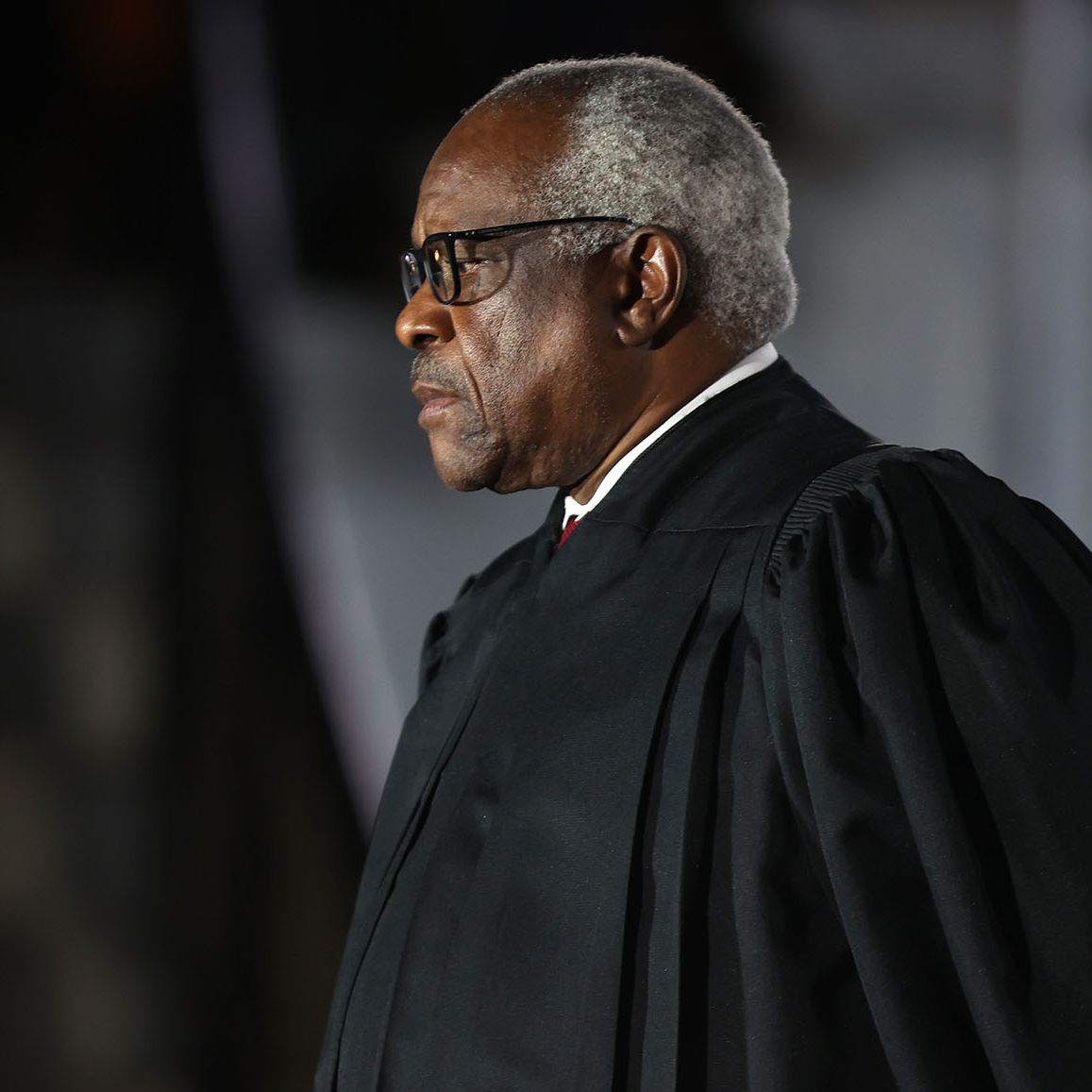
Justice Clarence Thomas issued a concurring opinion to make an additional argument for the “church autonomy doctrine”—the First Amendment guarantee of “broad autonomy” for religious institutions “to conduct their internal affairs and govern themselves” without state interference. So in this case it is irrelevant that Catholic Charities and the Diocese of Superior were separately incorporated; the charitable institution and its subentities “are, as a matter of church law, simply an arm of the Diocese.” The religion clauses’ embrace of church autonomy doctrine derives from the right of association, the close linkage between “faith and doctrine” and “matters of church government,” and “the understanding that church and state are ‘two rightful authorities,’ each supreme in its own sphere.” The history of the founding period “confirms that religious institutions are more than the corporate entities that they form.” So the “government may not use such entities as a means of regulating the internal governance of religious institutions.”
Yesterday’s decisions are a reminder that the Court has come a long way since the judicial excesses that marked many of its cases for the past half century.




Comments