
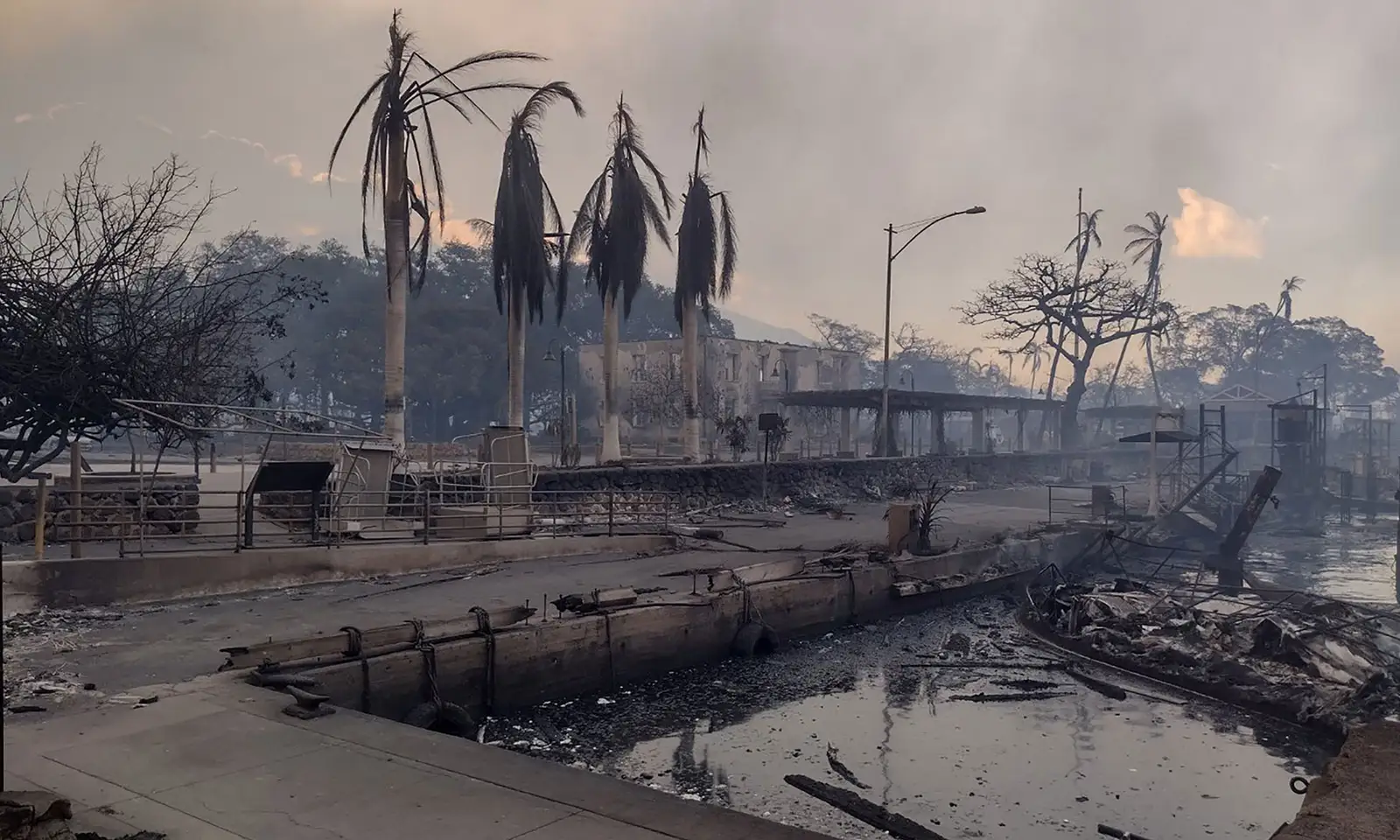
Tragedy struck the state of Hawaii, on the western side of the island of Maui, last week. Fierce winds from a passing hurricane whipped off across the island, knocking down power lines and sparking a wildfire during a dry season. Wildfires are nothing new on the islands, but the normal warning sirens did not activate — a matter of extreme controversy right now — and thus hundreds of residents of the western peninsula of the island were rapidly engulfed in onrushing flames without warning, caught in “hurricane fire.” The town of Lahaina on the coast (where the fire burnt its way toward) has basically been razed altogether.
If you have the stomach for it, you can read this heartbreaking Associated Press piece discussing some tales from what must have been the pit of hell. It is the deadliest forest fire in a century, so far. For only 96 are confirmed dead as I write this. More — many more — will likely be added to that total. We know from the stories of survivors that people died on the beaches and in the water, fleeing the flames, suffocated by the heat. I have seen ashen-grey videos filmed by survivors on Twitter that look like scenes from Pompeii, circa a.d. 79, or the Battle of Blackwater Bay. If ever any people deserved to occupy a space in your prayers tonight, then surely it is the people of Maui and especially Lahaina. Roughly 1,000 are reported missing; imagine how many of those may remain so. It looks to be one of the worst American natural disasters in modern history in terms of loss of life.




Comments
On “A Disaster, a President, and the Limits of Consolation”