
Waad al-Kateab is a journalist, filmmaker, and activist from Syria. She has lived in exile since 2016. (“Waad al-Kateab” is a pseudonym.) I recorded a Q&A podcast with her in 2021 and subsequently wrote a piece about her: “Witness from Syria.” She is an amazingly brave woman. And she is my guest once more on Q&A, here.
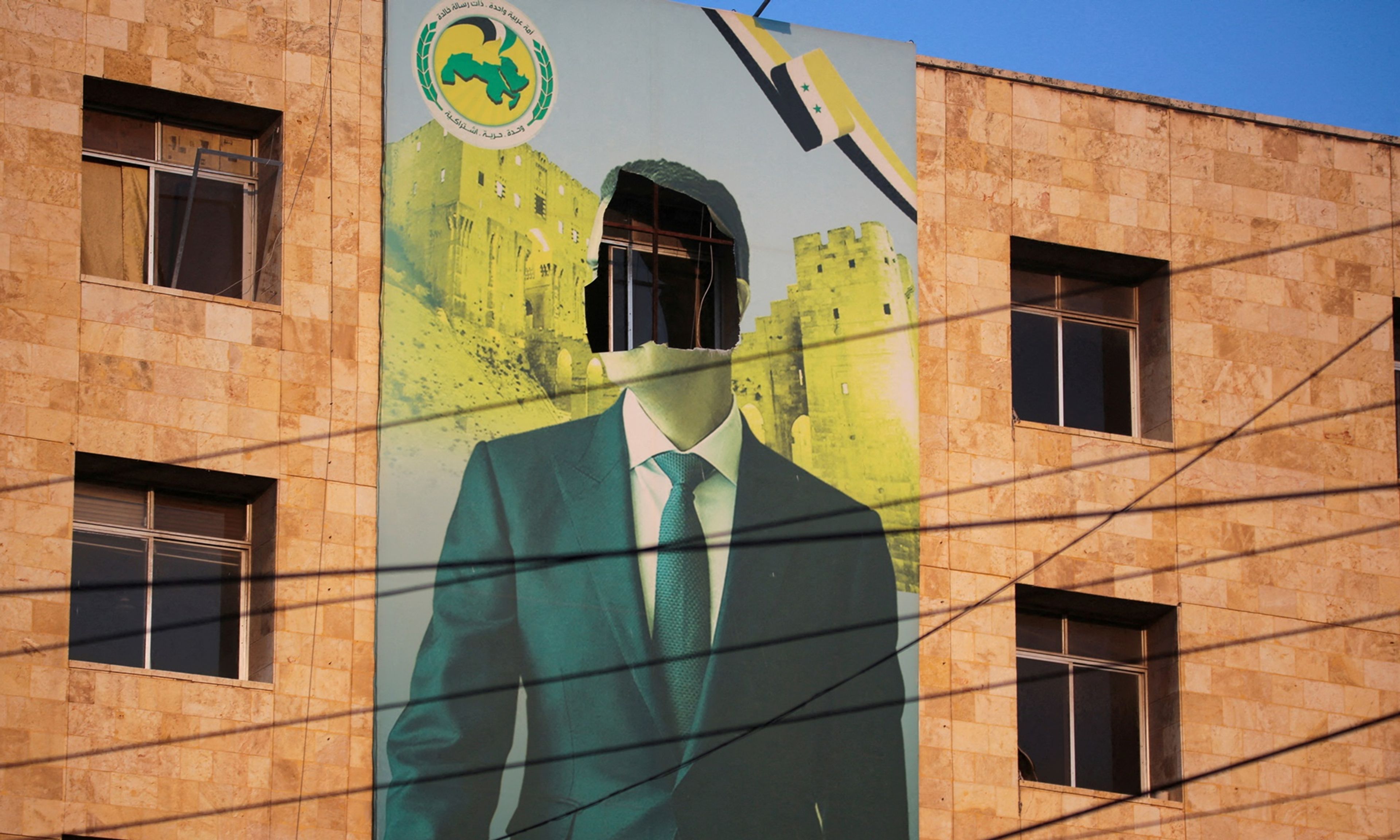
Bashar al-Assad fled to Russia on December 8. The Assads, father and son, ruled Syria for about 55 years: from 1970 until the end of 2024. Their tyranny was ghastly and blood-soaked. Syria was, to borrow a well-known phrase, “a republic of fear.” People were afraid even to say that their loved ones had been killed, lest their tongues be cut out (literally).
I have an opening question for Waad: “How do you feel?” I will paraphrase her answer (though closely):
I think we’re still in shock. In a “positive shock,” I would call it. I’ve spent maybe the last eight years, since the Fall of Aleppo, since the loss of our city, just trying to find meaning in my life, trying to find something to hold on to, trying to hold on to the belief that our story is not over. It has been really hard.
Everyone was telling us to “move on,” to forget about Syria. “Syria is no longer important in the world,” they said. “It’s no longer in the news. Assad is winning.” Even some European and Arab countries were normalizing with Assad, rebuilding their relationships with him, as if nothing had happened.
But our story is not over! There is a future ahead of us.
Assad and his family, and lots of cash from Syria’s central bank, are in Russia. Is that disappointing? Should he be held accountable in Syria?
For many years, we tried to imagine, “How will this end?” We imagined various scenarios. And what happened in December is not a bad one. Even the few remaining groups that supported Assad, and believed his propaganda, have had their eyes opened. He simply left behind everyone who was fighting for him. We want his supporters — even people who committed crimes for him — to feel that they have been on the wrong side.
Do Assad supporters feel betrayed by him?
Oh, they say so! And the ironic thing is, they can talk freely now!
Did you expect Hafez II (Bashar’s eldest son, the grandson of the first Hafez) to be the third Assad on the throne?
Definitely, definitely. It was being planned. People were resigned to it. Western countries treated it as “realism.”
In 2011, the population of Syria was 22 million. Now, some 13 million are displaced. Half of those are refugees abroad. The other half are internally displaced. Will the millions who are abroad return home?
We’ve been longing for this moment, craving it, dreaming of it, for years. And when it happened, we were confronted with questions of identity: Who are we? Where do we belong? What should we do? We parents are one thing, but what about our children who have never lived in Syria?
People are going to have to make these decisions for themselves, and it may not be easy.
What about the future — the future of Syria, and its present, for that matter?
The Assads ruled Syria for over a half a century. And they set us back hundreds of years. Everything is so backward. We have to rebuild the country, and the path to justice is going to be very long and hard. It will require a lot of patience. Syria is like a huge crime scene. You have to live within this crime scene. But I do believe things will be better.
So, that is a taste of what Waad al-Kateab has to say. There is a lot more, obviously, about crucial issues. Again, to hear her, to listen to this Q&A, go here.






Comments