
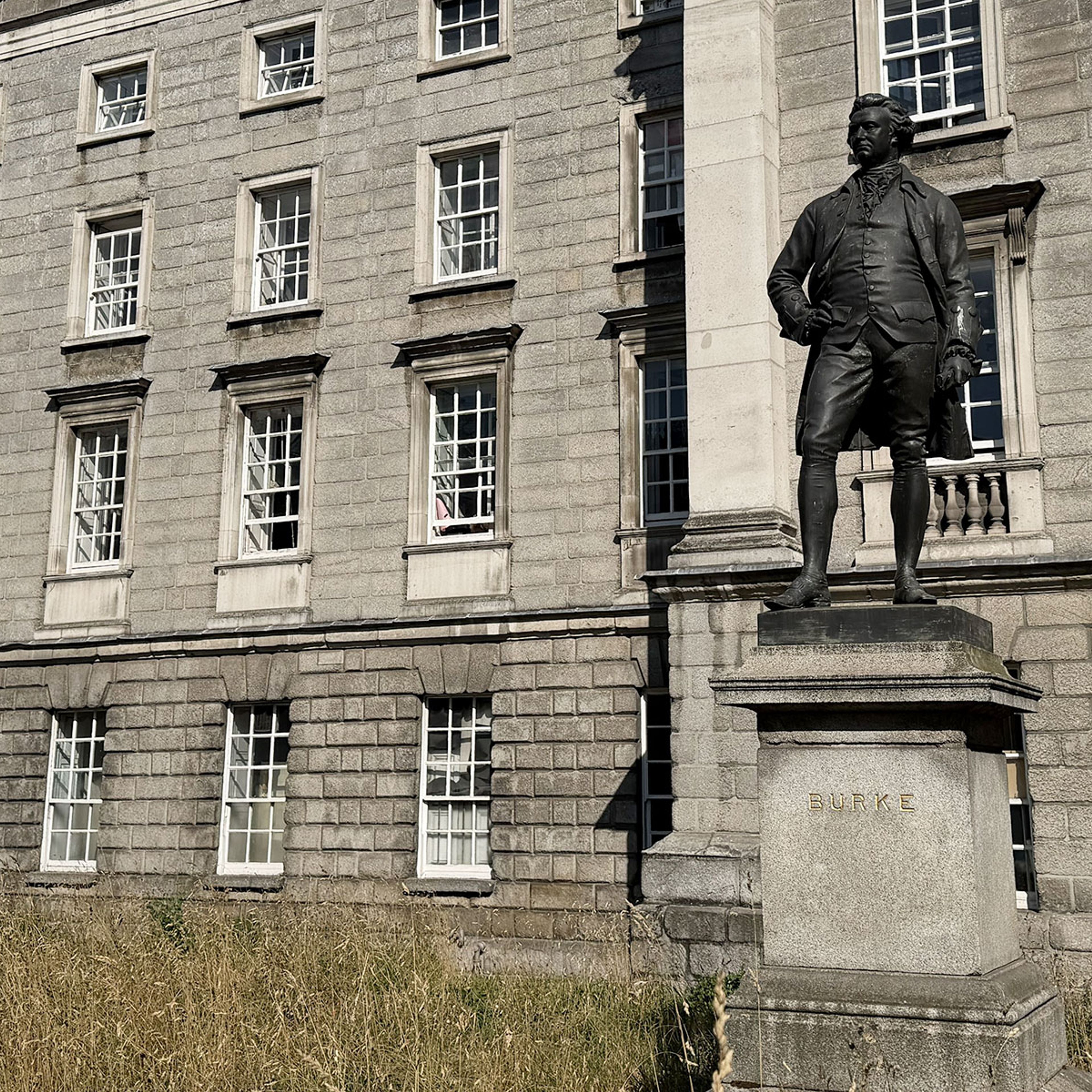
Edmund Burke explained his anti-revolutionary view as a “hereditary principle,” which is that society exists as a kind of communion between the dead, the living, and those yet to be born. As Roger Scruton has explained:
In Burke’s eyes the self-righteous contempt for ancestors which characterized the Revolutionaries was also a disinheriting of the unborn . . . respect for the dead was, in Burke’s view, the only real safeguard that the unborn could obtain, in a world that gave all its privileges to the living. His preferred vision of society was not as a contract, in fact, but as a trust, with the living members as trustees of an inheritance that they must strive to enhance and pass on.
By contrast, thinkers such as Marx and Engels taught that the entirety of human history can be reduced to “class struggle,” oppressors and the oppressed, while those such as Foucault reduce culture and knowledge to mere “discourses” of power. I wonder where people are to find the antidotes to this — religion, patriotism, and culture — when they have been so effectively vanquished in schools and universities?





Comments