
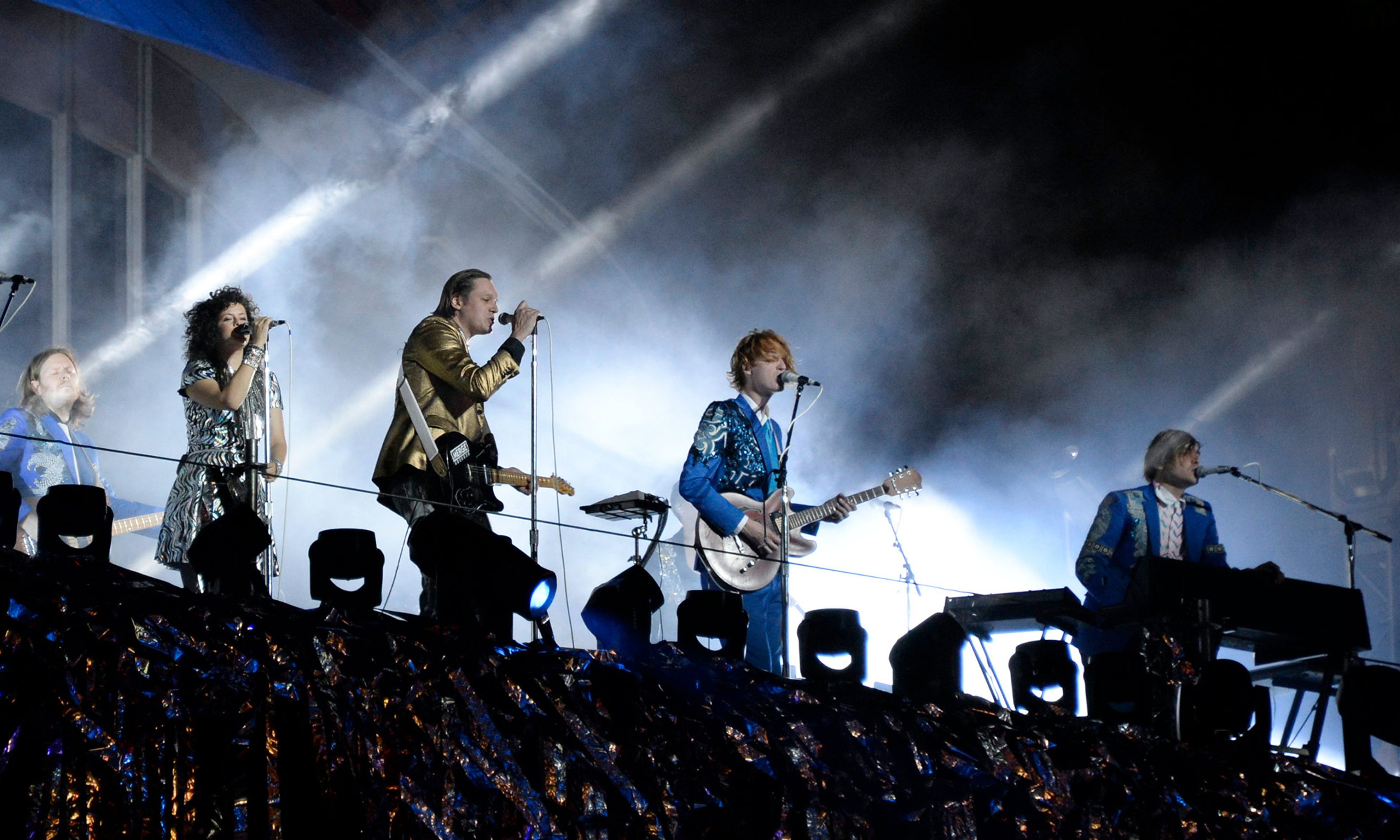
Writing in the Spectator World, Alexander Larman praises Arcade Fire’s latest album, We, as a “return to form.” “We has proved, once again, that Arcade Fire is still capable of a joyful noise,” Larman argues, returning to the biblical allusion that he used to describe the band’s earlier work.
As a fan of Arcade Fire, especially Funeral, the band’s debut album, and The Suburbs, arguably its best, I really, really wanted to like We. I’d been looking forward to its release in May and listened almost as soon as it became available. Unfortunately, aside from some stand-out moments on individual tracks and some profound lyrical work, We just washed right over me. I forgot about it almost instantly. And so, out of mercy to one of my favorite bands of this century that’s still producing new material, I simply declined to say anything about the album.
Larman, however, has forced me to reassess my own feelings about We. Having re-listened to it, I still mostly stand by my initial assessment, though with some movement toward greater appreciation. Larman is right to identify “End of Empire” as the “centerpiece” of the album. He describes it as a “a multipart epic orchestral ballad that owes a substantial debt to the Beatles and John Lennon,” so it’s no wonder I like it best of the album’s tracks. Alas, the band’s gift for crafting tunes that both push you and stick with you is muted, or absent. So many tracks from prior albums are instantly recallable; I’m not sure any song from We reaches this status.
Where I will give We credit is that it shows Arcade Fire with its heart on its sleeve. That’s been a trait of the band from its start, of course. Funeral’s emotionally charged mix of mourning the loss of the past and embracing adulthood was inspired by band members having lost family before its recording. Neon Bible was a kind of Iraq War–era cri de coeur. And The Suburbs was a powerfully wistful recollection of childhood in subdivisions. So it’s not unusual for an Arcade Fire album to be so emotionally explicit about something: in this case, the state of the consumerist, information-drenched world.
In praising We, Larman compares it unfavorably with Everything Now, the band’s last album, which he says “was a selection of solipsistic and often irritating songs that were so deeply in love with their own metaphorical conceit . . . that they neglected to have anything so vulgar as tunes or thought-provoking lyrics attached.” But I see a thematic consonance between the two works. The main difference between the former’s lamenting of “infinite content” and the latter’s simple, powerful rejoinder to modernity — “I unsubscribe” — is one of degree, not of kind. Or perhaps of superior execution. The moral universe of We seems more coherent and specific in its challenge to our “age of anxiety,” to borrow the opening track’s title. There is a spirit of defiance against the age and its defects in the album’s lyrics, and a desire to return to things that matter more.
So even though Arcade Fire’s latest album just doesn’t stick with me as I wish it would, I certainly admire its spirit. And I share Larman’s hope that Arcade Fire, “representing a heroic last stand for a kind of artistry that is now an endangered species,” might “restore some sanity to the world, even now.” Goodness knows we can’t expect most of the band’s ”peers” in the music industry to do it.





Comments