
There is only one country in the world — the U.S. — that has a definition of free speech as strong as that based on the First Amendment.
And from that amendment flows the idea that no person or institution should be forced to express or support views with which they are not in agreement. That principle applies, with rather more wrinkles, so far as corporations are concerned.
It would be interesting to know how a U.S. court would react if an equivalent to this proposed idea from Ofcom, a British regulator, were to be enacted by federal or state government in the U.S.
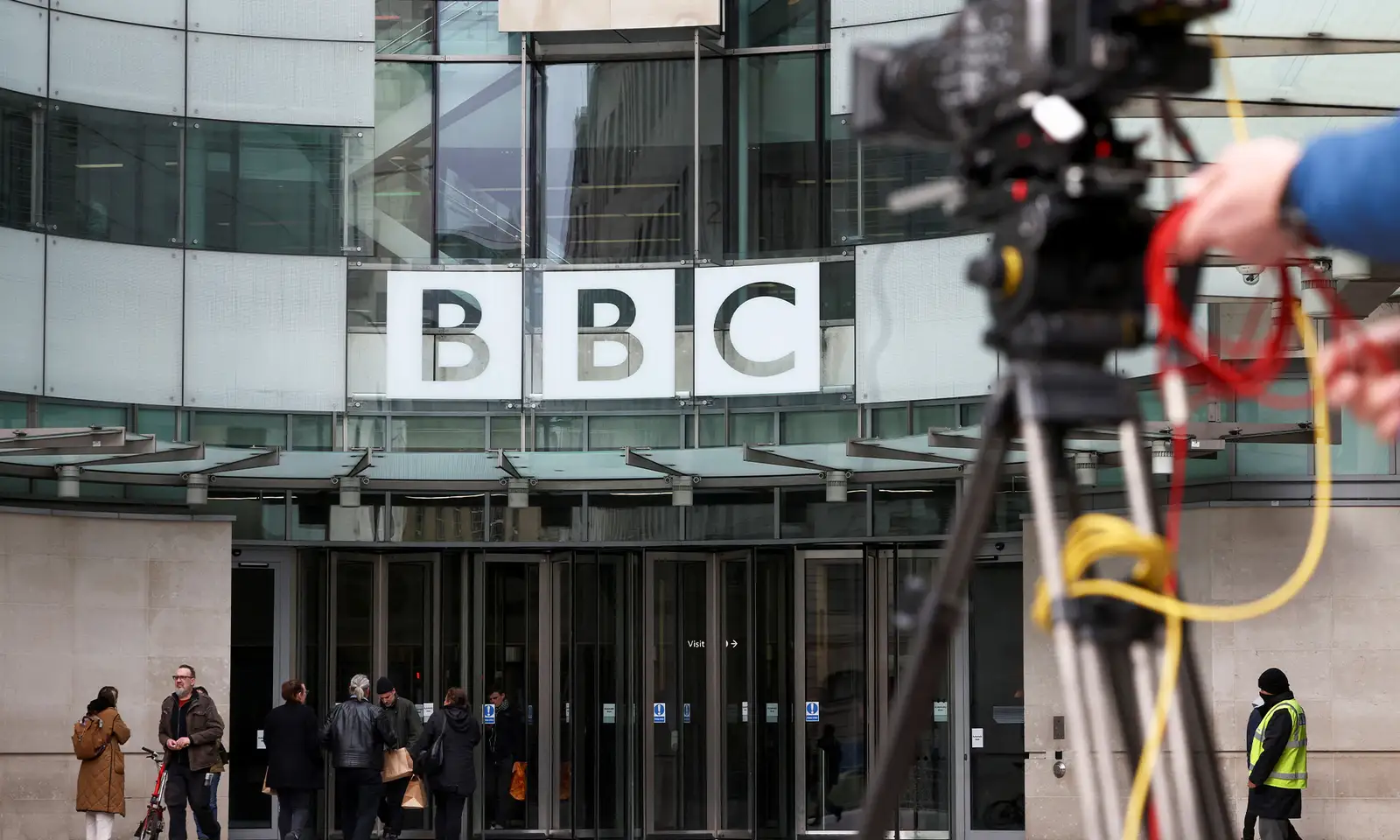
Digital platforms such as YouTube could be forced to make programmes from UK public service television channels “prominent” to protect “endangered” networks such as BBC and Channel 4, according to the British media watchdog.
Some terms used by the FT need translating to cut through the bland technocratic language that the newspaper and other parts of the British establishment prefer so as to camouflage the way in which power is wielded in the U.K. Yes, Ofcom is a “watchdog,” but that function can, on occasion, degenerate into direct censorship, indirect censorship, or the encouragement of self-censorship.
The FT reports that Ofcom has said there needed to be “prominence and discoverability” for content from public service broadcasters (PSBs) on the likes of YouTube. Ofcom has added that, in particular, it was “critical that the public service broadcasters and YouTube . . . work together to ensure that PSB content is prominent on its service, and on fair commercial terms.”
Ofcom has suggested that the British government should examine whether there should be “legislation to give statutory backing to PSB content on YouTube, especially news and children’s programmes.”
“For the children,” of course.
And “news,” of course, so long as this comes from the left-leaning (to be kind) BBC and the left-leaning (to be kind) Channel 4, and thus can never be “misinformation” (although an error might occasionally be admitted — if enough people complain). Channel 4 is, like the BBC, a state broadcaster (a description to which both object), but, unlike the BBC, which is funded by a kind of poll tax, Channel 4 relies on advertising.
Requirements of the kind being floated by Ofcom might be justifiable in the case of broadcasting spectrum, where space is limited, but there is no legitimate (nonpolitical or commercial) argument for carving out such territory on the wide-open spaces of the Internet.
The BBC, which also has a strong presence online, remains the leading source of news in the U.K., but Ofcom is clearly worried that the BBC’s gate-keeping power may get diluted as, above all, younger audiences turn to YouTube, Netflix (more on that in a moment), and XiTok. As noted, the BBC does have an online presence, as do other PSBs, but, the FT frets, they have to compete “with vast libraries of rival content.”
Oh no! Not competition!
Apparently, “public service companies’ video-on-demand players only account for 9 per cent of all viewing, according to Ofcom data.”
That’s odd. Brits have long been told that the BBC (like “their” NHS) is the envy of the world.
Ofcom warns that “if no action is taken, the very existence of the PSBs will be threatened. Time is running out to save this pillar of UK culture and way of life.”
But if the BBC is as good as it and its advocates say . . .
And, as the inclusion of Netflix, which offers documentaries but no news content, shows, a good part of the motive for Ofcom’s suggestion is protectionist — to protect BBC and Channel 4 content from “too much” commercial competition — as well as political.
YouTube says what it has to, which is that it is “proud of [its] relationship with British broadcasters and [is] committed to ensuring that they thrive in the digital era.”
That’s fine. Nevertheless, Ofcom’s ideas are yet another reminder that Europe’s technocrats want the internet to be fenced in and much more tightly policed, an extension of state control that the U.S. is right to be criticizing.


Comments
On “BBCTube”