
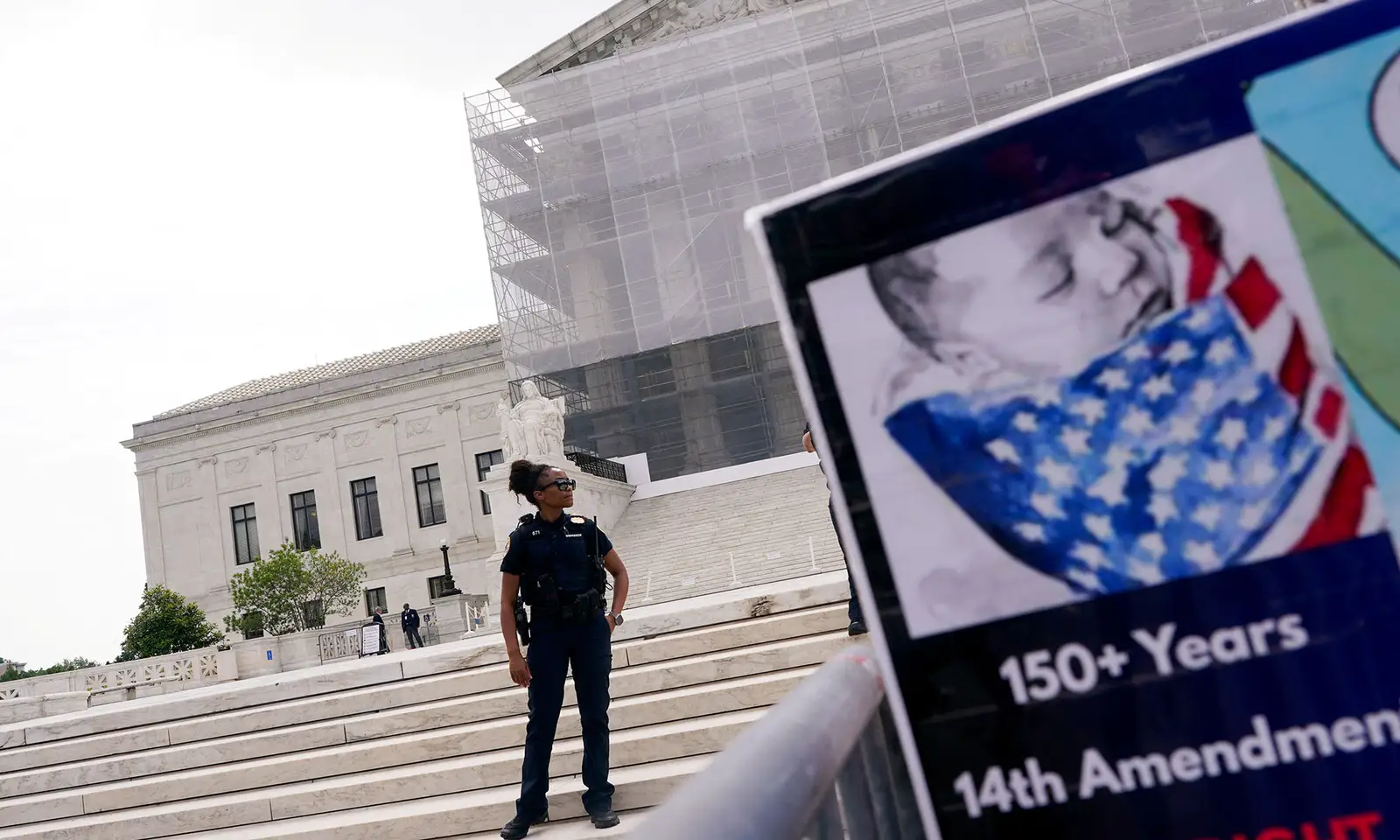
My column looks at the constitutional birthright citizenship issue facing the Supreme Court in Trump v. Barbara. But even if the Trump administration has the better argument on the 14th Amendment, and even if it persuades the Supreme Court to work around or overturn its 1898 precedent in Wong Kim Ark, it must still overcome one more hurdle: the argument that Congress has effectively codified Wong Kim Ark in 1940 and 1952 statutes by repeating the language of the 14th Amendment’s citizenship clause after half a century in which Wong Kim Ark was considered to have settled the issue.
The case for reading the 1940 and 1952 statutes as incorporating and endorsing the holding of Wong Kim Ark is summarized at SCOTUSBlog by Akhil and Vikram Amar and Jason Mazzone. It is a mixed bag that raises a methodological question. On the one hand, it is fairly clear that Amar et al have the better argument that Congress in that era believed that Wong Kim Ark settled birthplace as nearly the sole determinant of citizenship as a constitutional matter, with only the narrowest of exceptions discussed and debated in 1866-68. The administration’s defenses to the contrary are wholly unconvincing. On the other hand, Amar et al cite nothing to suggest that Congress in that era intended that the statutes be read to give birthright citizenship to anyone other than those entitled to it under the Constitution. Congress can do that: Everyone agrees that the 14th Amendment doesn’t give birthright citizenship to Native Americans, but Congress extended that by statute in 1924. The absence of any evidence of intent to go beyond the constitutional text is a strong case against the Court today concluding that even if Wong Kim Ark is bad law, it has been extended by Congress in a way that only Congress can change. It seems unduly timid as a basis for the Court to avoid ruling on whether or not Wong Kim Ark got the citizenship clause right and applies in its reasoning as far as opponents of the Trump executive order would like it to.





Comments
On “Birthright Citizenship: The Statutory Problem”