
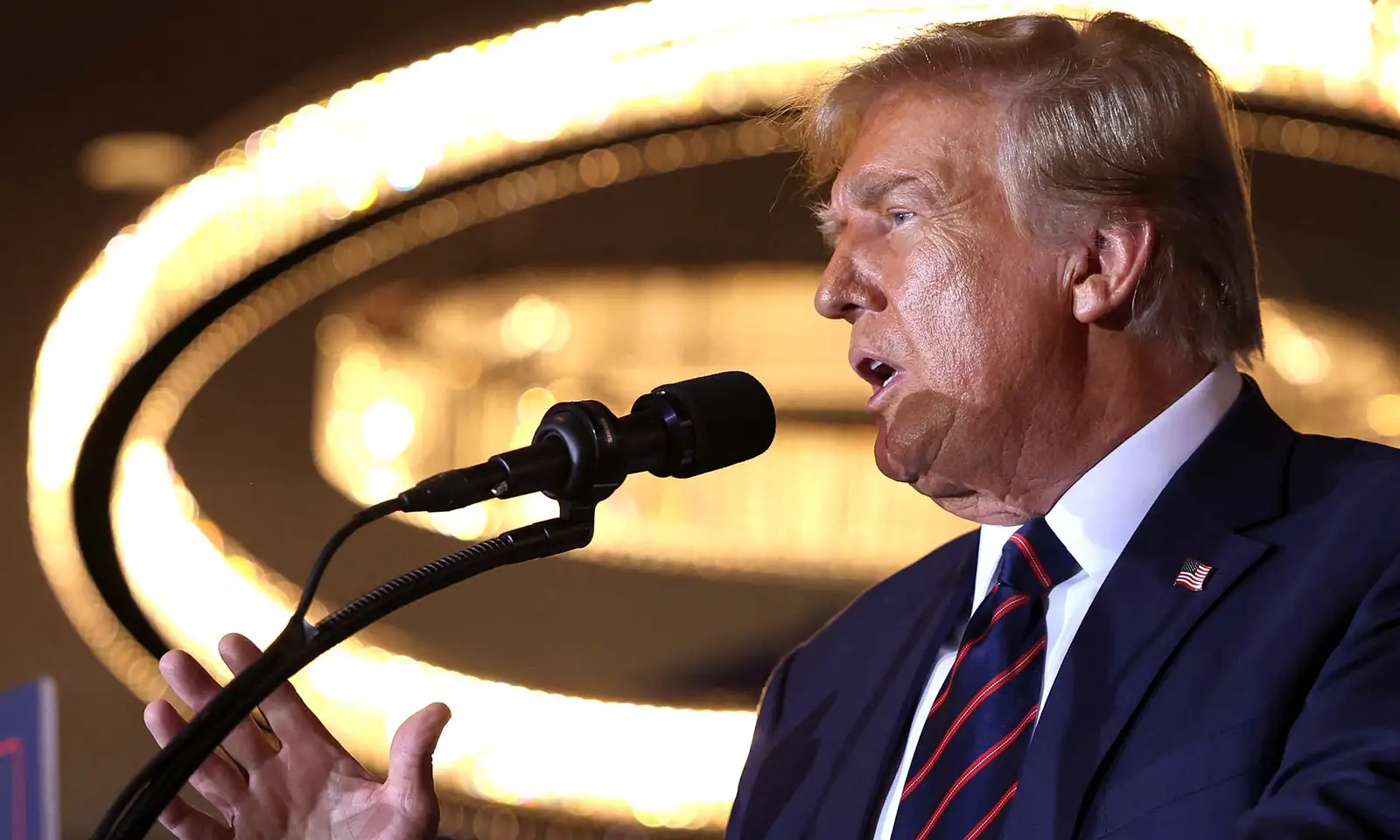
The results of New Hampshire’s primary proved only marginally less definitive than Donald Trump and his allies apparently hoped. The former president defeated Nikki Haley handily, but Trump’s eleven-point margin of victory failed to satisfy the former president. If we can glean anything from Trump’s graceless, gratuitous goading of his all-but vanquished opponent in a post-vote speech in which he complained carelessly of Haley’s refusal to concede her defeat (she did, explicitly, and congratulated Trump on his victory), he is overcome with insecurity. He should be.
The race in New Hampshire was characterized by unexpectedly high turnout on both sides of the Trump question. Registered Republicans turned out in droves to ratify Trump’s role as the leader of their party, and the former president won nearly three-quarters of the GOP vote, according to exit polling. Indeed, he won the highest raw vote total of any candidate in the New Hampshire primaries ever. But anti-Trump forces were just as enthused to register their dissatisfaction with Trump. He won just one-third of unaffiliated voters — a pronounced drop off from the 2020 election, in which he won 37 percent of the independent vote and still lost the state to Joe Biden. In 2016, Trump won 36 percent of independents in the primary and 45 percent in that year’s general election (when he also lost the state to Hillary Clinton).




Comments
On “Can Trump Heal the Republican Rift?”