
In response to the charge the conservatism is not providing answers to the troubles of the moment—and in response to the “reform conservatives” who are trying to fix that, Andrew Sullivan writes:
Conservatism is not, to my mind, about solving problems, which is why it remains a very problematic governing philosophy for modern Americans. It is about a modesty toward what problems government can ever solve. Its responses to emergent questions will not be an attempt to “solve” them, but to ameliorate them with a narrow set of tools. And the narrower the better.
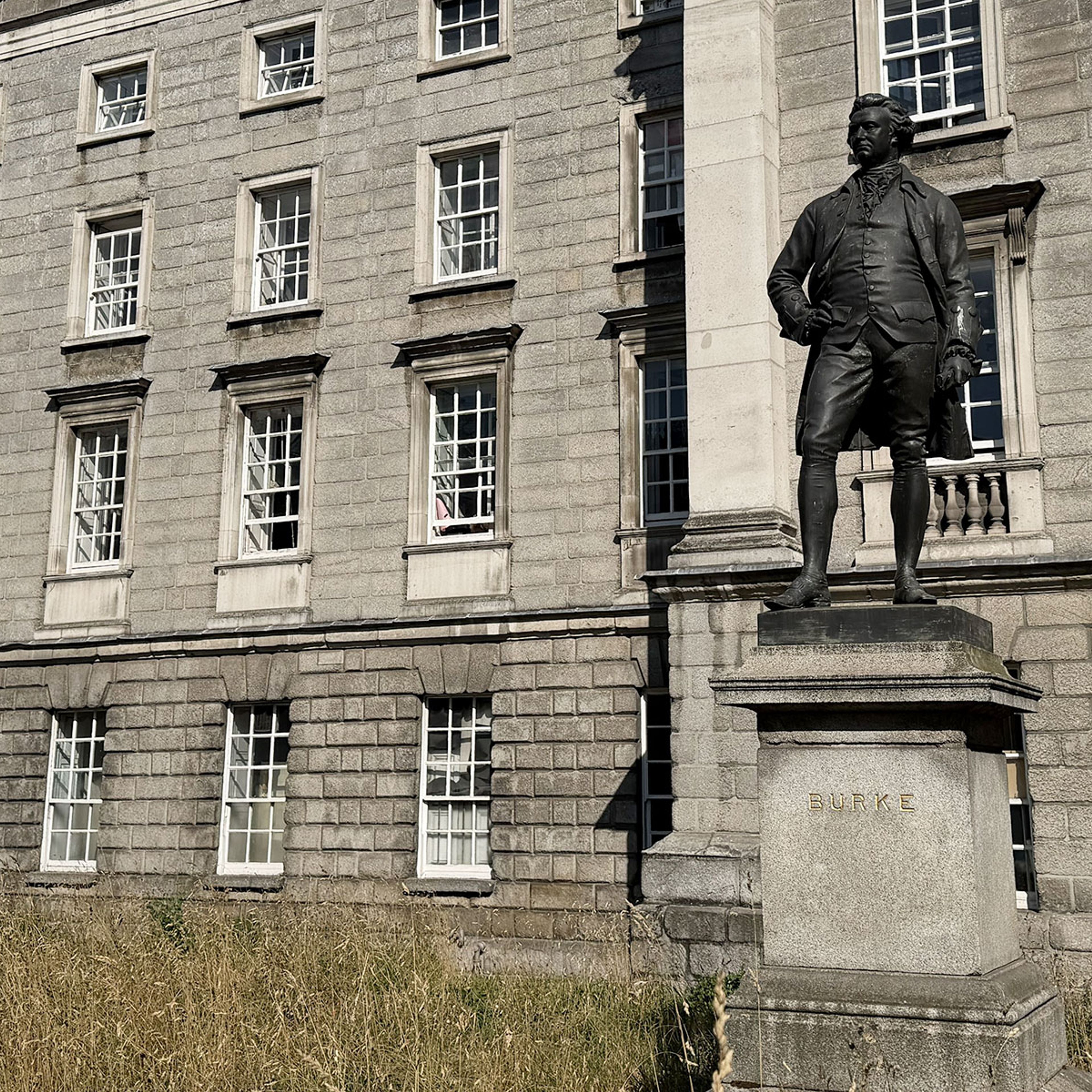
The particular charge Sullivan is answering (from Ezra Klein) is, I think, misinformed and off base. But Sullivan’s response seems not quite right to me either. This is an issue he’s given a lot of thought to, and his point is one with serious foundations in the history of conservatism. But alongside his post he has a painting of Edmund Burke, and if Sullivan is arguing that his definition of conservatism as modesty is also Burke’s, then it’s probably worth a few words of disagreement. This is a larger and more complicated subject than can readily be taken up here, but I think Burke actually wouldn’t agree with the notion that his politics are not about solving problems. What does the modesty Sullivan is after conserve, by itself? Is it merely a negative worldview, aimed at avoiding something? Or does it try to sustain a strong and free society, and respond to challenges to that strength (by government, and by others) with reforms aimed at preserving? It seems to me that Burke’s is more like that kind of reform conservatism—which does seek to solve problems both to avoid avoidable harms AND to prevent more wholesale or radical reforms that would seek to undermine the institutions and practices that keep society strong and free; that is, in the terms of our time, because problems should be solved if they reasonably can be, and because the left’s solutions would be worse than the problems in many instances and should be averted.
Burke actually lays this out in roughly these terms in (among other places) his Letter to a Noble Lord in 1796, in referring to the purpose behind his economic reforms of a decade and a half earlier. He argues that his aim was both to solve a problem in a responsible and modest way (by “a direct application of a remedy to the grievance complained of”) and to prevent others (who had far less responsible and more radical changes in mind) from using the occasion of the problem to persuade the public to accept such changes. He calls his approach “reform” or “reformation” and the opposite “change” or “innovation”. The distinction between this kind of conservative reform and broad vague calls for “change” is still relevant and telling, in my opinion.
Here is the relevant section from Burke, below the fold. I think this is a case that should be very familiar in a great many respects to contemporary conservatives:
I found a great distemper in the commonwealth; and, according to the nature of evil and of the object, I treated it. The malady was deep; it was complicated, in the causes and in the symptoms. Throughout it was full of contra-indicants. On one hand Government, daily growing more invidious for an apparent increase of the means of strength, was every day growing more contemptible by real weakness. Nor was this dissolution confined to Government commonly so called. It extended to Parliament; which was losing not a little in its dignity and estimation, by an opinion of its not acting on worthy motives. On the other hand, the desires of the People (partly natural and partly infused into them by art), appeared in so wild and inconsiderate a manner, with regard to the economical object (for I set aside for a moment the dreadful tampering with the body of the Constitution itself) that if their petitions had literally been complied with, the State would have been convulsed; and a gate would have been opened, through which all property might be sacked and ravaged. Nothing could have saved the Public from the mischiefs of the false reform but its absurdity; which would soon have brought itself, and with it all real reform, into discredit. This would have left a rankling wound in the hearts of the people who would know they had failed in the accomplishment of their wishes, but who, like the rest of mankind in all ages, would impute the blame to any thing rather than to their own proceedings. But there were then persons in the world, who nourished complaint; and would have been thoroughly disappointed if the people were ever satisfied. I was not of that humour. I wished that they should be satisfied. It was my aim to give to the People the substance of what I knew they desired, and what I thought was right whether they desired it or not, before it had been modified for them into senseless petitions. I knew that there is a manifest marked distinction, which ill men, with ill designs, or weak men incapable of any design, will constantly be confounding, that is, a marked distinction between Change and Reformation. The former alters the substance of the objects themselves; and gets rid of all their essential good, as well as of all the accidental evil annexed to them. Change is novelty; and whether it is to operate any one of the effects of reformation at all, or whether it may not contradict the very principle upon which reformation is desired, cannot be certainly known beforehand. Reform is, not a change in the substance, or in the primary modification of the object, but a direct application of a remedy to the grievance complained of. So far as that is removed, all is sure. It stops there; and if it fails, the substance which underwent the operation, at the very worst, is but where it was.





Comments