
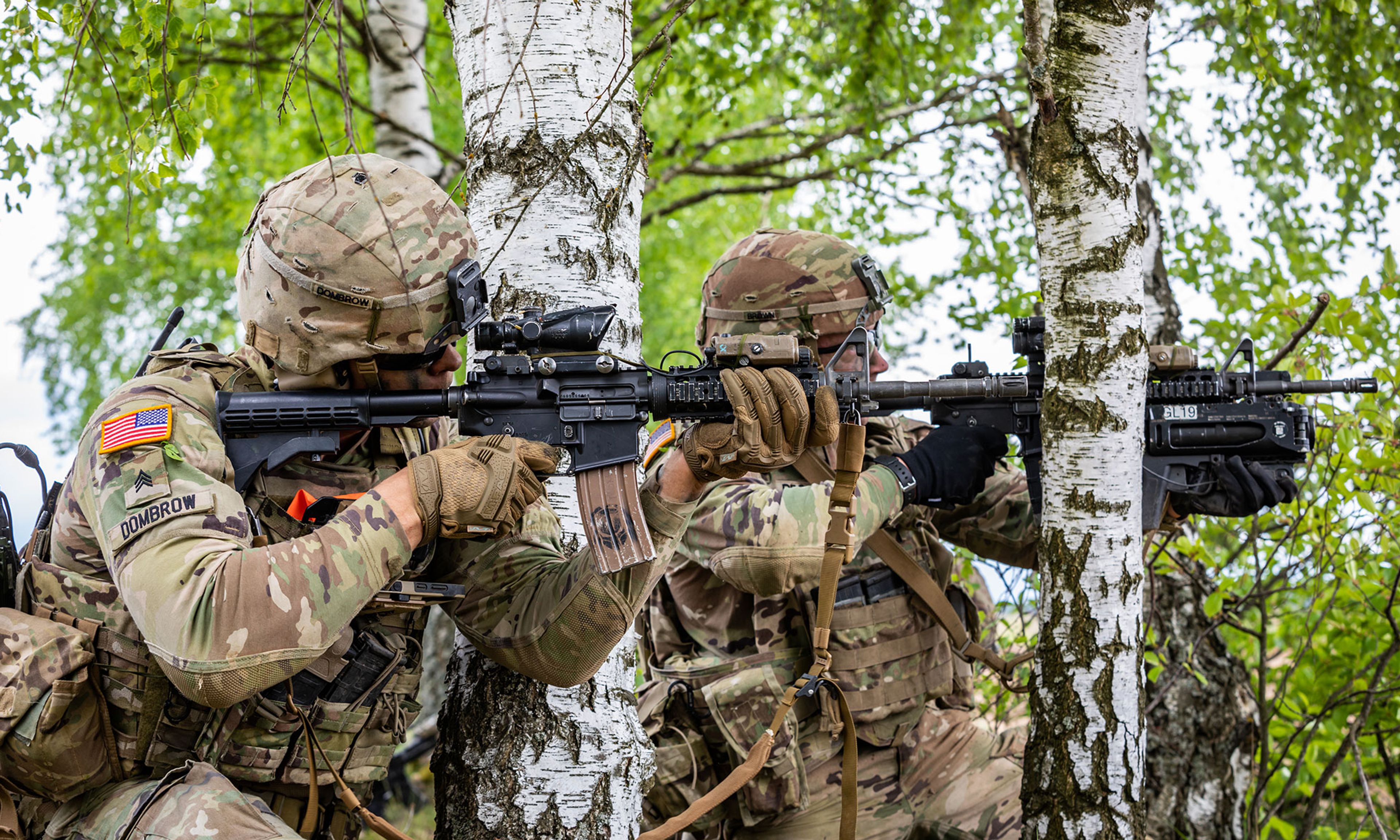
Deterrence has worked very well for NATO. This is because it has been backed by enough military power to make its response something to fear. Second, potential aggressors believed that there was a high probability that NATO (as is — more or less — provided in Article 5 in its treaty) would react to an armed attack on any of its members with military force. The higher the probability of a military response from the alliance, the lower the likelihood that the potential aggressor would risk attacking any one of its members. Deterrence preserved the peace in Europe throughout the Cold War, something that benefited the U.S. politically and economically and saved countless American lives.
The lynchpin of NATO’s ability to deter an aggressor is, obviously, American military might — and America’s willingness to use it. For someone who may be the next president to cast doubt on whether the U.S. would hit back in the event of a Russian attack on a NATO member risks increasing the chance that the Kremlin will be tempted to risk taking a bite (or worse) out of one of the alliance’s smaller members such as, say, Estonia, a nation that is a long-standing irritant to Russian revanchists.




Comments