
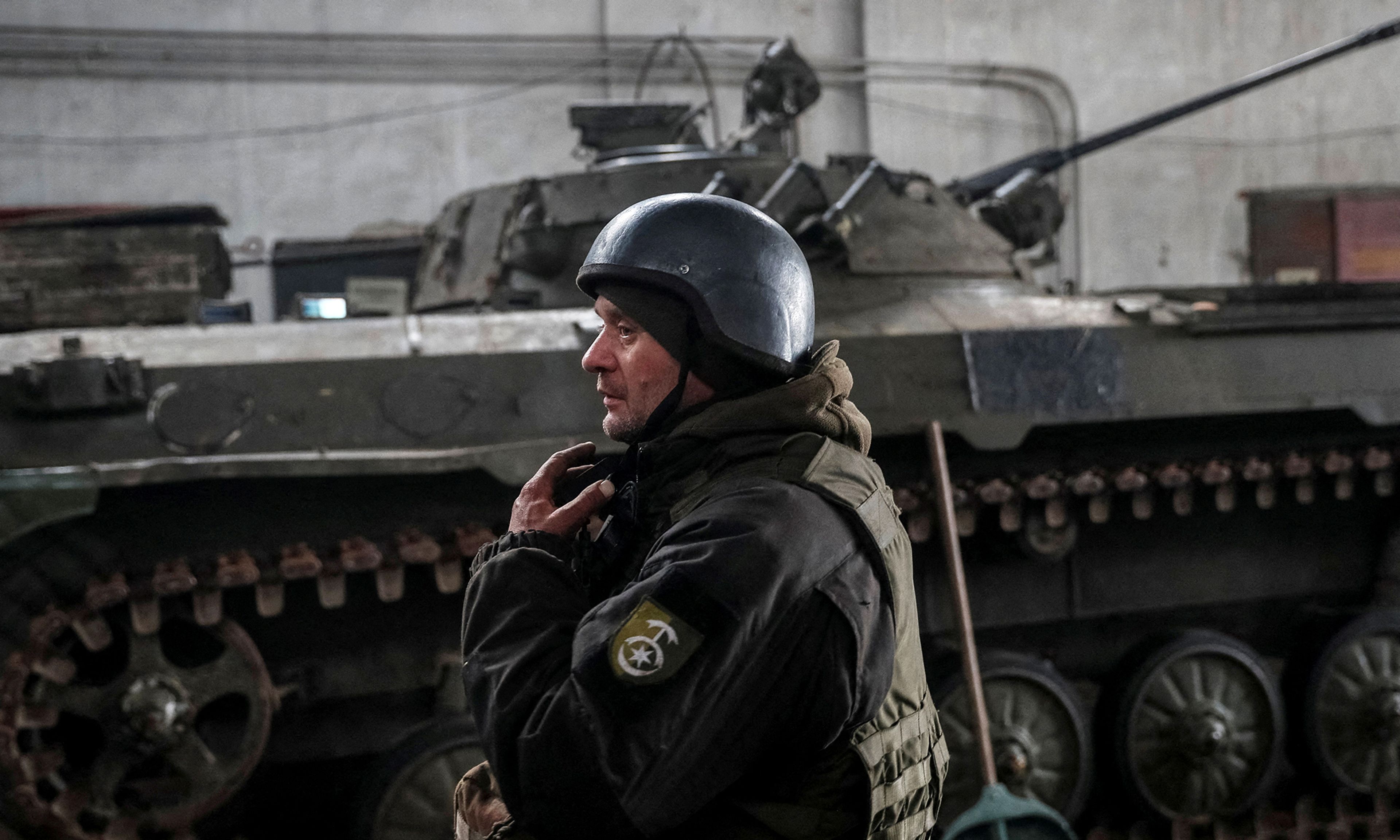
Since 2014, Donetsk in eastern Ukraine has had the melancholy distinction — not really the word — of being the capital of the Donetsk People’s Republic, a Russian puppet statelet that has now been officially recognized by Moscow.
In the New York Times today, there’s a beautifully written piece by Sasha Vasilyuk, a Russian-American writer, remembering how Donetsk was, telling how it is now, and, as she does so, explaining a great deal more.
An extract:
The Donetsk of those visits always felt like a refuge. Located an hour and a half drive from the Russian border in Ukraine’s southeastern rust belt, it was a modernizing industrial city of about a million people that was somehow still quiet and welcoming. People spoke Russian with a Ukrainian accent, ate Ukrainian gray bread with frozen lard slices, and planted elaborate flower beds to liven up the Soviet-era squares, theaters and boulevards. My cousins would take me swimming in the Kalmius River or strolling past open-air cafes. Even now, the sound of doves takes me back to those warm afternoons . . .
Back in 2014, my cousin Anna was the first person I knew who realized that this was going to turn into a long conflict. Many in my family tried to convince her that she was panicking for no reason, that the idea of a war between Russia and Ukraine was preposterous. She didn’t listen. She took her two young sons and fled. My other cousin, Mikhail, held on for a few more months, but when it was clear that his hobby store — selling model airplanes and tanks — would not survive, he also left. Who has time for toys when there are real tanks on the streets? They went to Kyiv . . .
In 2016, after several cease-fire agreements, I visited them with my brother for the first time in three years. Donetsk no longer felt like a refuge. It was boarded-up stores, empty apartments, broken windows and women with their hair no longer colored in salons that no longer existed. Bullet holes punctured everything — apartment buildings, newspaper kiosks, closed kebab stands. In downtown, a huge poster depicted a soldier holding an ecstatic child and the words “Happy Donbas Liberation Day!” (Somehow, I’d never realized that my family needed to be liberated.) . . .
Years of war had left my aunt somewhere between traumatized and amused, a quintessentially Soviet attitude. “It’s terrible to realize how used to this war we’ve become,” she told us. “It isn’t right. It’s inhuman to feel this way.”
. . . But then Mr. Putin ordered his military into Ukraine, and the regional conflict they lived with stoically for so long grew into an international calamity, and the last of my aunt’s composure evaporated. Now when I call her, she is in tears.
“I’m not afraid for my own life anymore after eight years of war,” she says. “But my heart aches for my children.”
My cousins Mikhail and Anna are in Kyiv waiting for the fallout of the second Russian invasion of their lives. They tell me their experience in Donetsk has made them less panicky than most Ukrainians who’ve never seen war. I can’t bring myself to tell them that my fear is that their whole country will be turned into Donetsk, an unlivable unplace.





Comments