
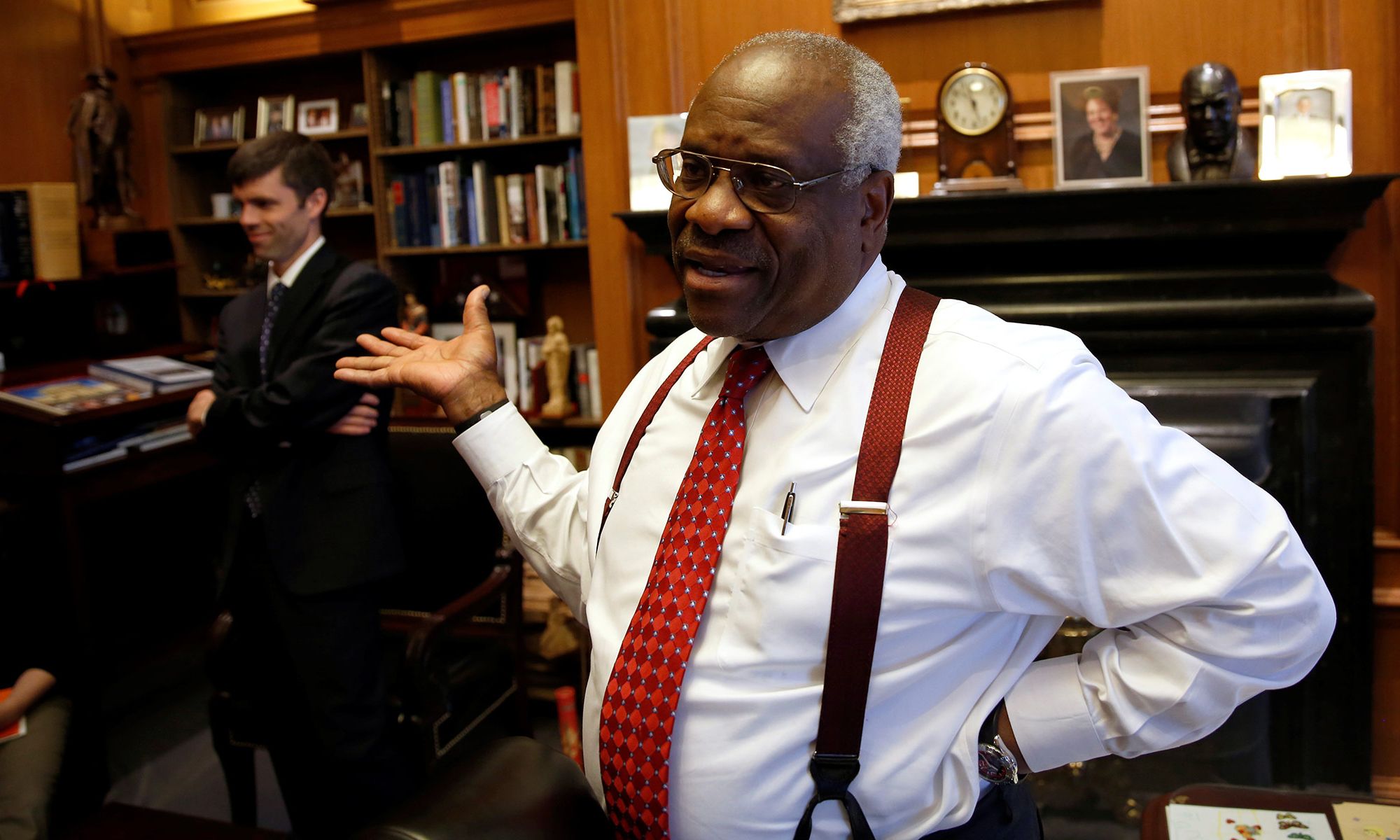
Seventy years ago, in Brown v. Board of Education, the Supreme Court ruled state-imposed racial segregation of schools unconstitutional. The ruling has become canonical. Opposition to its holding is now considered a mark of extremism, although criticism of its reasoning has persisted. In an opinion issued yesterday concurring in a ruling about race and gerrymandering, Justice Clarence Thomas also suggested that the effort to enforce Brown, starting with the successor case known as Brown II, had led the Court to adopt a dangerously broad view of its powers.
Note that Thomas is not saying Brown (Brown I, that is) was wrong in finding school segregation unconstitutional. He’s not even saying that the remedies the Court embraced in Brown II were unjustified. He’s saying that extraordinary remedies are not justified as a general matter. Not every case is Brown, and emergency powers have a way of outlasting the emergency.



Comments